
“I Thought It Meant I Was Making Real Profits; That’s Why I Paid the Tax."
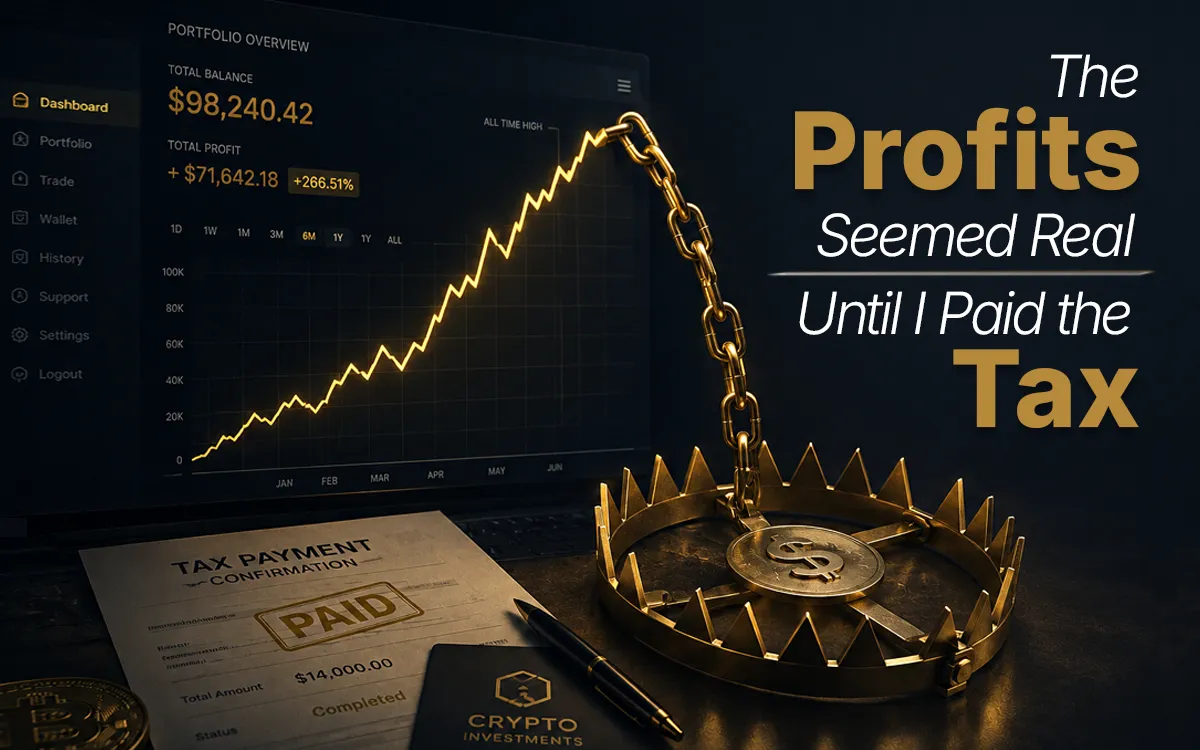
My name is Kevin, I’m 39, and I’m based in California. I had some experience with investing, but crypto was still relatively new to me. I came across a trading platform through an online group, and from the start, everything about it felt structured and reliable.
There was regular communication, guidance on trades, and a dashboard that showed steady growth. It didn’t feel rushed or risky. If anything, it felt like I was finally doing something right.
Over a few months, I ended up investing around $98,000. My account kept growing, and I was seeing what looked like significant profits on that investment.
That’s when the conversation around taxes came up.
I was told that because of the profits I had made, a tax payment was required to keep the account compliant and active. It wasn’t framed as urgent or suspicious. It was presented as a normal part of the process.
They even showed breakdowns and documents that explained how the amount was calculated.
At that point, it made sense to me.
If the profits were real, taxes would naturally follow. So I paid an additional $14,000.
After that, something changed, but not in a way that felt obvious at first.
My account balance stopped growing. It didn’t move at all. At the time, it felt like things had just stabilized after the tax process.
But the communication started to shift.
The regular guidance I used to get turned into shorter, delayed responses. Conversations felt less structured, more vague. Updates that once felt clear started to feel random.
It wasn’t enough to raise an alarm immediately, but it was different.
It was only when I tried to log back into my account one day that things became clear.
I couldn’t access it.
At first, I thought it was a technical issue. Then I tried again and again, but there was no response. No support. No explanation.
That’s when everything finally came together. I started looking things up, nothing too specific at first. Just questions aroundfake crypto platform scams,crypto tax payment scams,whether upfront payments were normal, or why a platform would ask for tax upfront.
The more I read, the more things started to feel off.
Some of the actual processes I was seeing didn’t match what I had experienced. The way the “tax” was handled, the way payments were asked for, I can finally see it for the crypto tax scam it was.
Even then, I didn’t act on it right away.
I think I was still trying to make sense of it. Part of me felt like I might be overthinking it, or that I had missed something obvious.
I waited a bit, tried accessing my account again, and even expected some kind of response.
Nothing changed.
Looking back, that time I spent waiting, hoping for clarity instead of acting on doubt, made the situation harder to deal with later.
At some point, I stopped trying to figure it out on my own and started looking for a professional who deals with situations like this. That’s how I came across Global Financial Recovery.
What stood out was how straightforward everything felt. There were no promises about getting everything back, no pressure to act quickly, just a clear explanation of how these scams work and what could realistically be done.
They reviewed my case in detail and were upfront about the impact of the delay. That honesty made it easier to move forward. There were no upfront fees, and the initial evaluation gave me more clarity than anything I had found on my own.
The process took time, and it wasn’t simple. Because I had waited, there were limitations.
In the end, I was able to recover around $35,000. It wasn’t close to what I had lost, but it was more than I expected at that stage.
If anything, it showed that even partial recovery is possible, especially when the situation is assessed properly and the next steps are clear.
Many scam victims hesitate to talk about what happened or worry they will be judged, rushed, or pressured. At Global Financial Recovery, the goal is to understand your situation first. Just explain how things started. You can speak openly at your own pace through a free and confidential case evaluation.
Book A Free Consultation

From case evaluation to financial investigation, Global Financial Recovery provides transparent guidance to help you understand your case and explore your options.