
Fake Celebrity Investment Ads: How Scammers Use Famous Faces to Steal Money
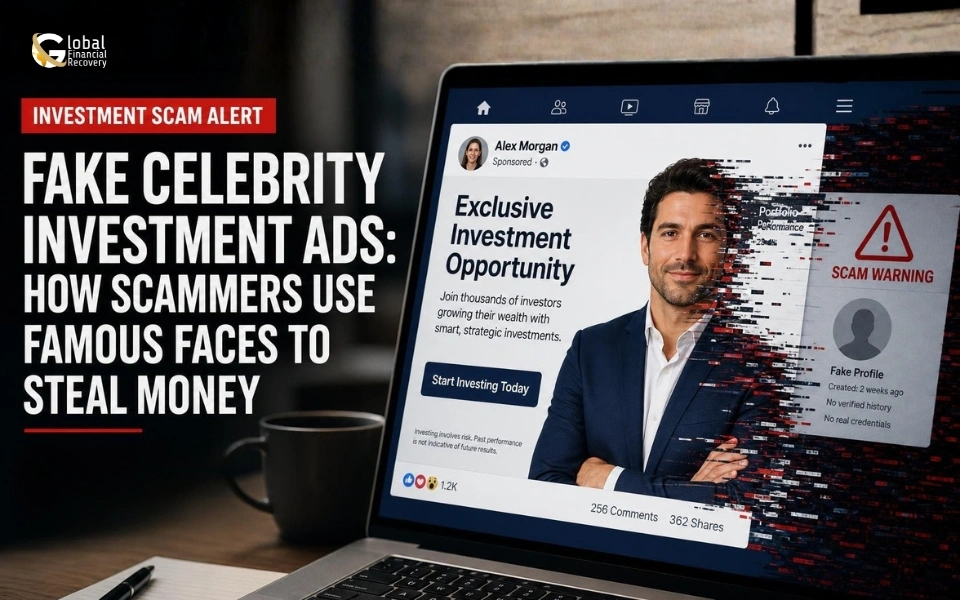
Seeing a celebrity in an investment ad can make an offer seem safe. After all, if a famous person is talking about it, why would anyone think it is fake? That is the trap scammers are using.
Across social media, criminals are creating ads that use the faces and voices of well-known people without their permission. The ads may show a celebrity talking about a new investment, claiming to have earned huge returns, or encouraging viewers to visit a website. The person may look completely convincing, but the investment itself may not exist.
These fake celebrity investment ads often lead people to websites that look professional. Some even show fake account balances and profits after a person deposits money. When the victim tries to take the money out, another payment may be demanded. By then, the scammer has already taken the money.
The scale of the problem is difficult to ignore. A report based on Meta's internal data estimated that around $16 billion, or 10% of Meta's 2024 revenue, was linked to ads involving scams, illegal gambling, and banned goods. The report estimated that about $7 billion came from ads that Meta viewed as high-risk for fraud. Meta has disputed the figures and said the estimate does not accurately reflect its business.
There are signs of the same problem outside the United States. Poland's internet watchdog NASK said the images of at least 121 public figures were used in online fraud during 2024. The people involved included politicians, doctors, journalists, and religious leaders.
Meta says it is taking action against scam advertising. The company reported removing more than 159 million scam ads in 2025. It has also been testing ways to identify advertisements that use people's faces without permission.
The money involved in social media fraud is also growing. According to the US Federal Trade Commission, people reported losing $2.1 billion to scams that started on social media in 2025. Investment scams made up roughly $1.1 billion of those reported losses.
These numbers show why celebrity endorsement scams should not be taken lightly. A familiar face is not proof that an investment is genuine.
There are a few things worth checking before sending money. Be suspicious of ads promising huge profits with little risk. Do not rush because an advertisement says the offer will disappear soon. Look up the investment company separately and check whether the celebrity has actually mentioned it through a verified account.
A private message asking for money is another warning sign. So is a request to pay through cryptocurrency or another method that is difficult to reverse.
The rise of deepfake investment scams has made fake celebrity promotions harder to spot. Still, the basic rule has not changed: stop, check the offer, and never invest simply because a familiar face appears on the screen.
Book A Free Consultation
Recent News





From case evaluation to financial investigation, Global Financial Recovery provides transparent guidance to help you understand your case and explore your options.