
Financial Scams Cost Americans Billions, Leaving Emotional Scars Behind
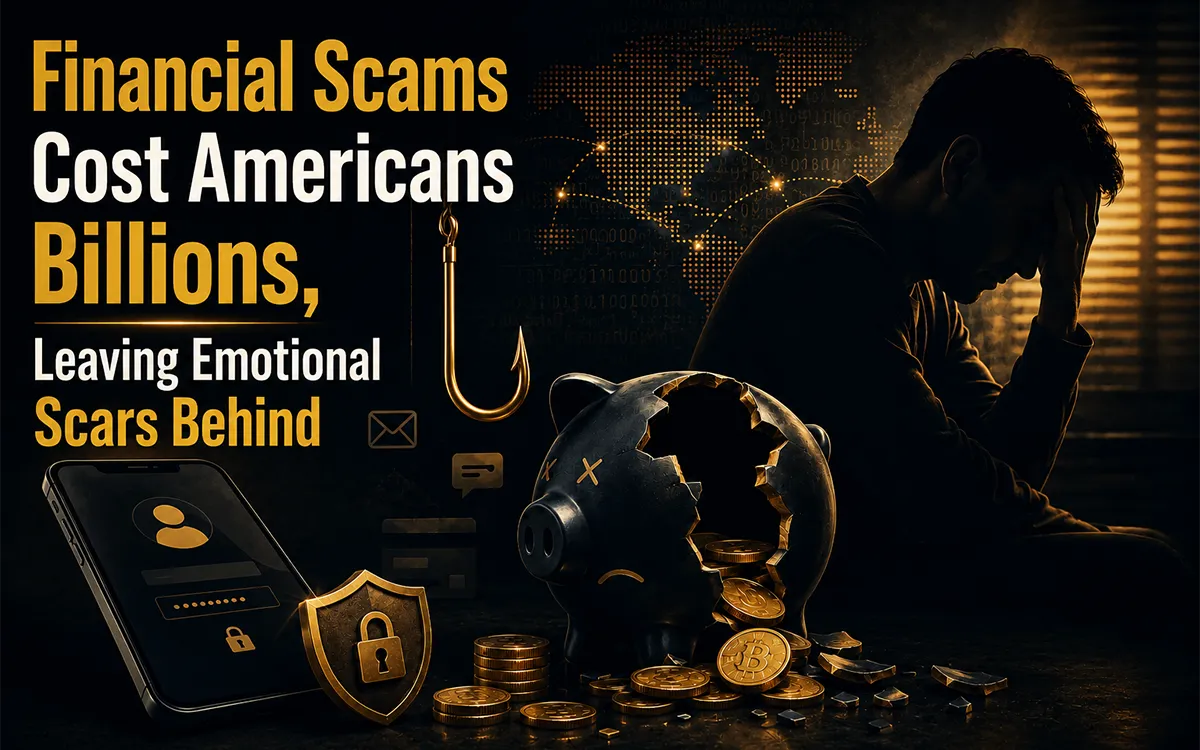
When people think about scams, the first thing that comes to mind is usually the money that disappears. But for many victims, the financial loss is only part of the story. After the scam ends, many are left dealing with worry, sleepless nights, and the feeling that they can no longer trust anyone.
The problem is getting bigger. The FBI's Internet Crime Complaint Center (IC3) says Americans reported $20.9 billion in cybercrime losses during 2025. The highest amount ever recorded. Much of that money was lost through investment scams, which alone accounted for about $6.5 billion. These numbers show that financial scams and online scams are continuing to affect people across the country.
A recent report from ACA International paints a similar picture. Nearly 4 in 10 Americanssaid they had been approached by a scammer, and about 1 in 5 said they ended up losing money. What stood out most was not just the financial loss. Many scam victims said the experience changed the way they felt about other people. Some became more suspicious, while others admitted they felt embarrassed or blamed themselves.
Scammers do not rely on just one trick. Phishing scams use fake emails, text messages, or websites that look real enough to fool almost anyone. Romance scams often begin with friendly conversations that slowly build into what seems like a genuine relationship. Cryptocurrency scams and other investment scams usually promise easy profits, but once the money is sent, it becomes almost impossible to get back.
The emotional impact of scams is not discussed enough. The victims tend to relive all their conversations and ask themselves what they could have possibly missed. Some of them may have lost confidence in making financial decisions, while others stopped using online services that they once trusted. According to specialists, such reactions are quite common. Emotional recovery from scams is as important as reporting the crime itself.
However, there are precautions that can be taken to minimize such risks. Scam awareness begins by taking things slow. Anything that requires you to act quickly, promises you an unrealistic return on your investment, or someone requesting money from you right after meeting online needs to be treated suspiciously. Such precautions are some of the best means of scam prevention.
Anyone who has already lost money should report it as quickly as possible. Those searching for cryptocurrency scam recovery should be cautious, because some fraudsters target victims a second time through fake investment group scams that promise to recover lost funds in exchange for another payment.
These scammers change their methods, but there is one aspect that has stayed constant. Keeping yourself well-informed and asking questions can go a long way in protecting you from both losing your money and your peace of mind.
Book A Free Consultation
Recent News




From case evaluation to financial investigation, Global Financial Recovery provides transparent guidance to help you understand your case and explore your options.