
Crypto Wallet Tax Scam: Why Withdrawals Get Blocked
- Cryptocurrency
- Updated On: February 23, 2026
Table of Contents
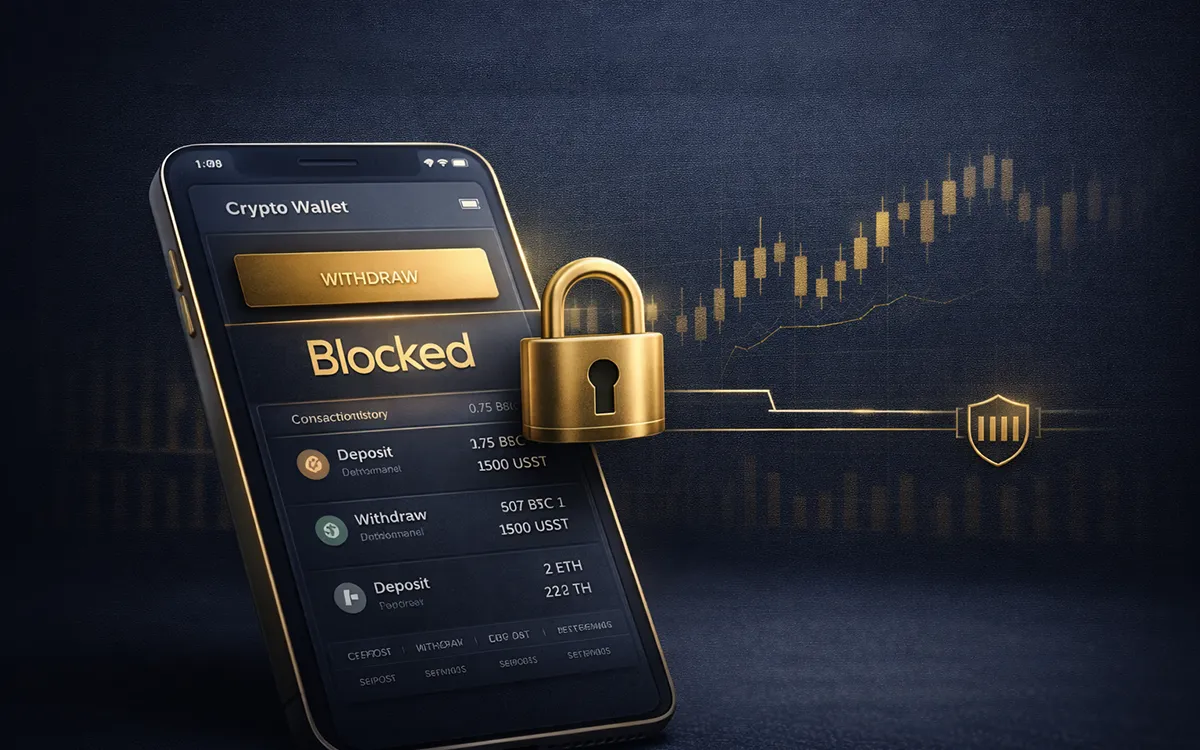
A crypto wallet tax scam happens when fraudsters claim your cryptocurrency cannot be withdrawn until you pay a tax, regulatory, or compliance fee. The demand is fake, but it’s designed to sound legitimate.
These scams typically follow a pattern. First, a platform shows profits. Then a withdrawal attempt is blocked. Next, you’re told to send cryptocurrency to “clear” a tax or verification requirement. After payment, additional fees appear.
This tactic works because many people are unsure how crypto fees and taxes actually work. Scammers exploit that confusion using technical language like “blockchain verification,” “AML clearance,” or “withdrawal tax.”
Important: Blockchain networks do not freeze wallets for unpaid taxes, and legitimate platforms do not require separate crypto payments to unlock funds.
Below, we explain the most common wallet-based tax and compliance scams, how they work, the most common types of cryptocurrency wallet tax scams, how to avoid and report them, and how to protect yourself.
What Is a Crypto Wallet Tax Scam?
A crypto wallet tax scam is a form of fraud in which fraudsters pretend that you need to pay a tax, regulatory fee, or compliance fee before you can access your cryptocurrency. It is a fake demand that is intended to appear official and urgent.
In most cases, the scam appears after a victim sees profits on a trading platform. When they attempt to withdraw, they receive a message saying a withdrawal tax, compliance fee, or regulatory clearance payment is required first. This is often called a crypto withdrawal tax scam or a wallet unlock tax scam.
Many victims ask:
“Do I have to pay tax before withdrawing crypto?”
The answer is no. Legitimate crypto platforms deduct transaction fees automatically. They do not require separate cryptocurrency payments to unlock funds.
Scammers may also use technical phrases like:
- “Blockchain verification fee”
- “AML compliance review”
- “Regulatory approval pending”
- “Tax clearance certificate required”
These terms are meant to create confusion. In reality, blockchain networks do not issue tax invoices, and compliance checks do not require sending crypto to a private wallet address.
If someone is asking you to transfer cryptocurrency to release your own funds, it is very likely a crypto wallet tax scam.
Who Is Most Targeted by Crypto Wallet Tax Scams?
These scams most often target:
- New crypto investors
- People using unfamiliar trading platforms
- Victims of fake investment apps
- Individuals who recently made large deposits
Scammers focus on users who are unsure how crypto withdrawals and fees normally work.
Understanding that you are not alone helps in reducing shame and encourages reporting.
How Do Crypto Withdrawal Tax Scams Work?
A crypto withdrawal tax scam works by showing fake profits first, then blocking your withdrawal and demanding a “tax” or clearance fee before releasing your funds. The scam follows a predictable pattern.
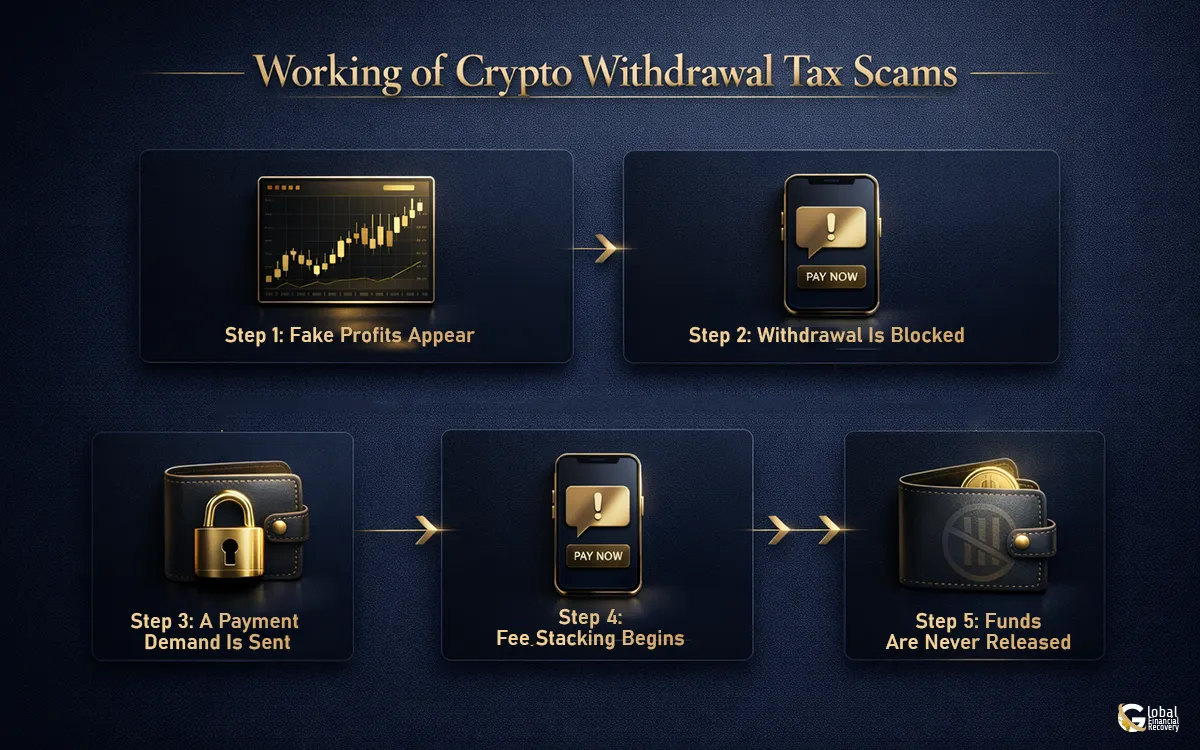
Step 1: Fake Profits Appear
Victims are usually introduced to a trading platform through social media, messaging apps, or investment groups. The platform shows steady profits and growing balances. Everything looks legitimate.
There may even be fake transaction history and customer support chat.
Step 2: Withdrawal Is Blocked
When the victim tries to withdraw crypto, the system suddenly displays a warning:
- “Withdrawal pending tax clearance.”
- “15% withdrawal tax required.”
- “The regulatory fee must be paid before release.”
This is where many people ask, “Do I have to pay tax before withdrawing crypto?”
The answer is no. Legitimate platforms deduct fees automatically. They do not require you to send cryptocurrency separately to unlock your balance.
Step 3: A Payment Demand Is Sent
The victim is instructed to send cryptocurrency to a specific wallet address. This is often described as:
- a crypto withdrawal tax
- a compliance fee
- a regulatory clearance payment
- a blockchain verification fee
The message may include a deadline to increase pressure.
This stage is sometimes referred to as a wallet unlock tax scam or a tax clearance fee scam.
Step 4: Fee Stacking Begins
After the first payment is sent, the scam escalates.
New issues appear:
- “Compliance audit incomplete.”
- “Additional AML verification required.”
- “Processing fee pending.”
Victims often wonder, “Why does my crypto wallet ask for tax before withdrawal?”
Because it is not a real wallet. It is a controlled scam platform designed to extract more payments. Each new fee is another layer of the fraud.
Step 5: Funds Are Never Released
Even after multiple payments, withdrawals remain blocked.
The platform may:
- Stop responding
- Freeze the account
- Ask for one final “release” payment
At this point, the crypto has already been transferred to the scammer’s wallet. Blockchains do not have a mechanism to charge or collect tax payments through private wallet transfers.
How Legitimate Crypto Withdrawals Actually Work
On legitimate crypto exchanges, fees are shown before you confirm a transaction. Trading fees and network fees are deducted automatically from your balance.
You are never required to send a separate cryptocurrency payment to unlock your funds.
If taxes apply to crypto gains, they are handled through official reporting processes — not through private wallet transfers.
If a platform blocks your withdrawal and asks for payment first, that is not standard industry practice.
Common Crypto Wallet Tax Scam Types
Most crypto wallet tax scams follow the same pattern: fake profits, blocked withdrawals, and a demand for payment. However, scammers use different explanations to make the fee sound legitimate.
The table below summarizes the main types of crypto wallet tax scams and how they differ.
|
Scam Type |
How It Works |
What They Say / Do |
|
Crypto Withdrawal Tax Scam |
Withdrawal is blocked until a “tax” is paid in crypto. After payment, more fees appear. |
“15% withdrawal tax required.” “Tax must be prepaid before release.” |
|
Blockchain Verification / Gas Fee Scam |
The platform claims that blockchain verification or gas confirmation is needed before release. |
“Network tax pending.” “Manual gas fee required.” “Blockchain confirmation needed.” |
|
The account suddenly shows frozen or restricted due to unpaid tax or review. |
“Unpaid withdrawal tax detected.” “Regulatory hold applied.” “Unlock fee required.” |
|
|
Compliance / KYC / Regulatory Fee Scam |
Withdrawal blocked for AML, compliance, or regulatory approval. |
“Compliance review pending.” “Regulatory clearance fee required.” “KYC tax payment needed.” |
|
The platform claims a clearance certificate must be issued before funds can be released. |
“Tax clearance certificate required.” “Processing fee before approval.” “Final release charge due.” |
Across all these types, the structure is similar:
- Profits appear real
- Withdrawal is blocked
- A tax, compliance, or regulatory fee is demanded
- After payment, more fees follow
- Funds are never released
If a platform asks you to send cryptocurrency to unlock your own funds, it is likely a crypto wallet tax scam.
Red Flags of a Crypto Withdrawal Tax Scam
If a platform asks you to send cryptocurrency to unlock your own funds, that alone is a major warning sign. Legitimate crypto platforms do not operate this way.
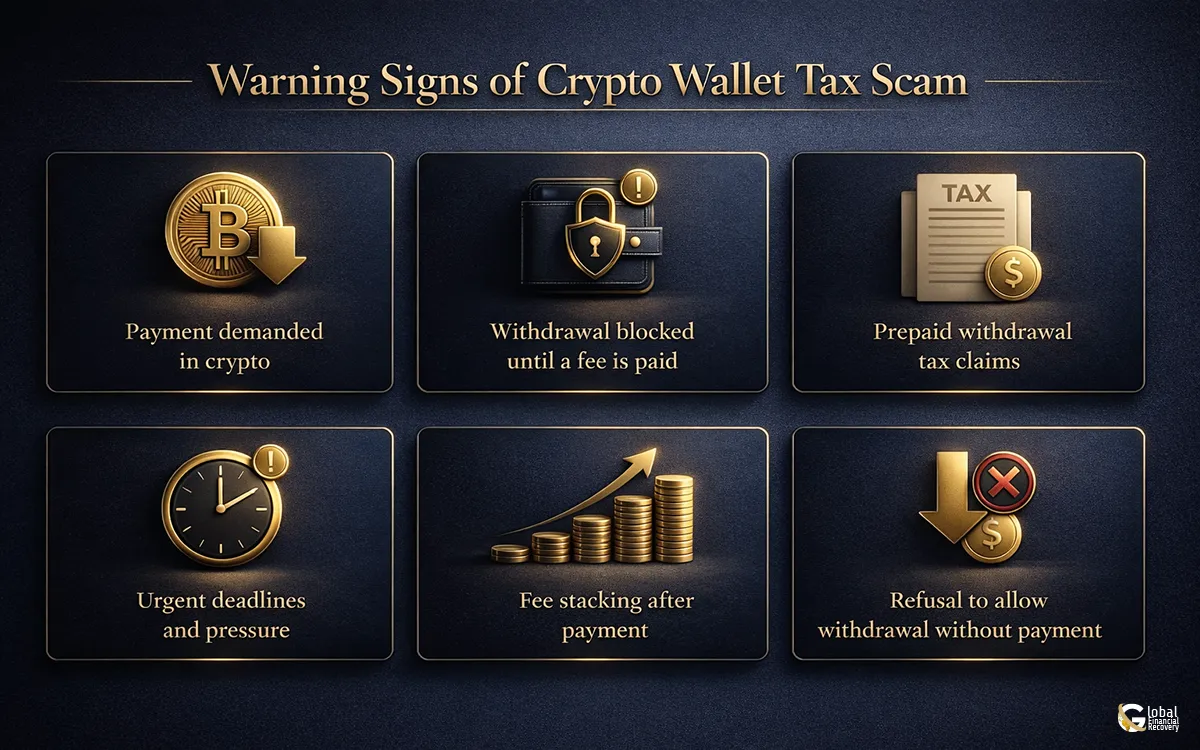
Common red flags of a crypto wallet tax scam include:
- Payment demanded in cryptocurrency.
You are asked to send crypto separately to clear a withdrawal tax, compliance fee, or regulatory charge.
- Withdrawal is blocked until a fee is paid.
Everything appears normal until you try to withdraw; then a “tax” or “clearance” payment is suddenly required.
- Prepaid withdrawal tax claims.
You are told you must pay tax before withdrawing crypto. Real exchanges deduct fees automatically.
- Urgent deadlines and pressure.
Messages warn that your wallet will remain frozen or funds lost if you don’t pay within 24–48 hours.
- Official-sounding technical language.
Terms like “blockchain verification fee,” “AML compliance hold,” or “regulatory clearance required” are used to sound legitimate.
- Claims your wallet is frozen for unpaid tax.
Self-custody wallets cannot be frozen remotely. Any tax-based freeze demand is suspicious.
- Fee stacking after payment.
After paying one fee, new charges appear (processing fee, verification fee, release fee). Legitimate fees do not multiply this way.
- Refusal to allow withdrawal without payment.
If a platform will not release funds unless you send crypto first, it is likely a crypto withdrawal tax scam.
The key rule to remember is simple:
You never have to send cryptocurrency to unlock your own balance.
What to Do If You Already Paid a Fake Withdrawal Tax or Compliance Fee Scam?
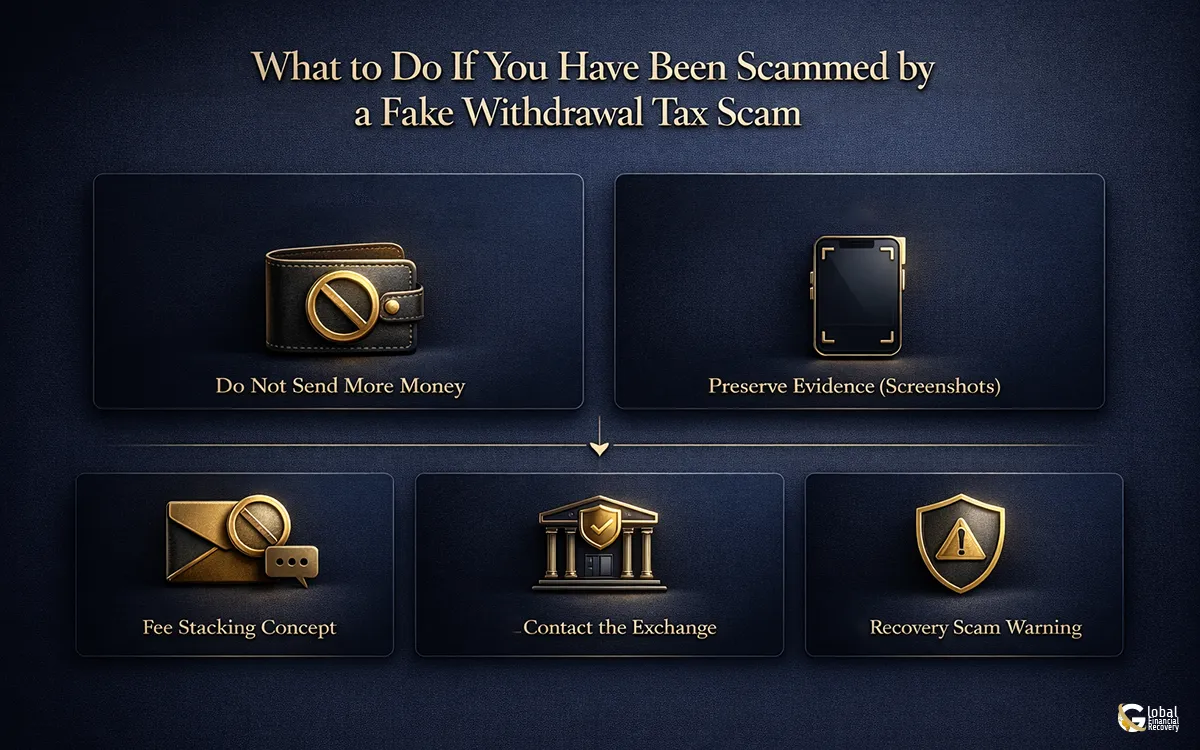
If you’ve already sent cryptocurrency for a “withdrawal tax,” regulatory fee, or compliance charge, the most important thing to know is this: Do not send more money.
Scammers almost always ask for another payment after the first one. They may say a verification fee is still pending or that your tax clearance was incomplete. This is called fee stacking. It does not stop unless you stop.
The next step is to preserve everything. Take screenshots of:
- Your account dashboard
- Payment instructions
- Wallet addresses
- Chat conversations
- Transaction IDs
If you’re wondering, “Can you get crypto back after paying a fake tax?” recovery is difficult, but not always impossible. Acting quickly improves the chances.
Do not trust anyone who guarantees recovery. Recovery scammers often target victims of crypto withdrawal tax scams and demand another upfront “processing fee.” That is another trap.
If the funds were sent from an exchange, contact the exchange immediately and report the transaction. In some cases, exchanges can flag suspicious wallet activity.
In the case that the wallet address is a known scam network, blockchain tracing experts can trace movement patterns. Crypto transactions are also traceable on the blockchain, and they are irreversible. Also, blockchain can help verify the platform to avoid fund loss.
Most importantly, stop communicating with the scam platform. Do not argue. Do not threaten. Do not negotiate. That only keeps you engaged in the system.
If your wallet or account still shows a balance but withdrawals are blocked, assume the funds were never truly there. In most crypto wallet tax scams, the displayed profits are simulated.
How to Avoid Crypto Wallet Tax and Compliance Fee Scams?
The safest way to avoid a crypto wallet tax scam is to remember one rule: You should never have to send cryptocurrency to unlock your own funds.
If a platform blocks your withdrawal and asks for a tax, compliance fee, regulatory charge, or blockchain verification payment, stop immediately. Legitimate crypto platforms deduct fees automatically. They do not demand separate wallet transfers.
Before depositing funds, research the platform carefully. Scam sites often look professional but lack transparent ownership details or verified registration. If profits seem unusually high or guaranteed, that is another warning sign.
If you ever see phrases like:
“Withdrawal tax required”
“Regulatory clearance pending.”
“Compliance fee must be paid first.”
Pause and verify independently before sending anything. Scammers rely on urgency. Slowing down, double-checking, and refusing to send additional crypto can prevent further loss.
You may have already been targeted or paid a fake withdrawal tax. Consider speaking with a trusted cryptocurrency tax recovery service that specializes in blockchain tracing and evidence analysis. Watch out for people who are offering guaranteed recovery or require hefty upfront payments.
Staying Safe from Crypto Wallet Tax Scams
Crypto wallet tax scams are designed to feel official. They use words like “withdrawal tax,” “regulatory clearance,” and “compliance fee” to create urgency and fear. But the structure is always the same: profits appear, withdrawals are blocked, and payment is demanded before funds are released.
Real blockchain networks do not charge tax payments to unlock wallets. Legitimate exchanges do not require separate cryptocurrency transfers for compliance approval. If you are asked to send crypto to access your own balance, something is wrong.
Understanding how these scams operate is the first layer of protection. Recognizing the red flags is the second step. Acting quickly and refusing to send additional funds is the most important step.
If you believe you’ve been targeted by a crypto withdrawal tax scam, you can contact Global Financial Recovery for guidance on potential fund tracing and recovery options.
The more informed you are, the harder it becomes for scammers to succeed.
FAQs (Frequently Asked Questions)
No. Legitimate crypto exchanges deduct trading or network fees automatically from your balance. You do not need to send a separate cryptocurrency payment to unlock your funds. If a platform asks you to prepay a withdrawal tax, it is likely a crypto withdrawal tax scam.
No. Blockchain networks do not issue tax invoices or require manual “verification payments.” Gas fees are automatically included in transactions. If you are asked to send crypto to complete a blockchain verification, it is almost certainly a scam.
Self-custody wallets cannot be frozen remotely for unpaid taxes. Scam platforms may display a fake “account frozen” message to pressure victims into paying a compliance or unlock fee. Real tax matters are not handled through wallet payment demands.
Scammers often use legal terms like AML review, compliance clearance, or regulatory approval to sound official. Legitimate exchanges complete identity verification before trading and do not require crypto payments to pass compliance checks. If payment is requested in cryptocurrency, that is a red flag.
Stop sending additional funds immediately. Save all transaction details, wallet addresses, and communication records. Avoid anyone promising guaranteed recovery. If needed, seek guidance from a legitimate cryptocurrency recovery service that focuses on blockchain tracing and evidence review.
Book A Free Consultation
Recent Posts




Empowering you to reclaim what's rightfully yours. Together, we stand strong against financial fraud.