
Pig Butchering Crypto Scam: How Fake Tax & Withdrawal Fees Trap Victims

- Cryptocurrency
- March 5, 2026
Table of Contents
One of the most common forms of cryptocurrency investment fraud is the pig butchering scam. Regulators and law enforcement agencies are still on the alert that these scams are increasingly attacking ordinary citizens with fake crypto trading websites that appear totally legitimate.
A pig butchering crypto scam isn’t a quick phishing trick or obvious fake website. It usually starts with a normal conversation. Someone builds trust over time, talks about crypto investing, shows what looks like real profits, and encourages you to deposit money. Everything seems genuine until you try to withdraw. That’s when the platform claims you must pay a crypto withdrawal tax, compliance fee, or clearance charge before your funds can be released.
It was approximated by blockchain analysis that in 2025, over 17 billion dollars in cryptocurrency fraud was generated worldwide, much of which was associated with investment schemes like pig butchering and crypto scams that were active in some countries.
Understanding the meaning of a pig butchering scam is important in that the majority of the victims only understand what is going on when they have already spent a lot of money.
In this guide, we explain how pig-butchering scams work, why fake tax or fee demands are a major warning sign, and what to do if you encounter a pig-butchering online scam.
What Is a Pig Butchering Scam?
A pig butchering scam is a long-term crypto investment scam in which a person wins your trust and then sends you to a fake crypto trading platform scam designed to imitate legitimate exchanges. Victims are shown fabricated profits and eventually asked to deposit more funds or pay withdrawal fees to access their money.
It is named so due to the concept of gradually fattening a victim with attention, confidence, and false profits and then stealing as much as possible.
The term comes from the Chinese phrase shā zhū pán (杀猪盘), describing how victims are prepared over time, often through relationships or financial guidance, before being exploited financially.
Most pig-butchering crypto scams begin with a friendly online contact or relationship. The person may present themselves as successful in crypto trading and offer to help you invest. You’re guided to a professional-looking platform where your account appears to grow. The profits and platform interface may appear authentic to the victim, and the advisor seems trustworthy, but everything is controlled by scammers.
In simple terms, pig butchering crypto scams follow a predictable pattern: trust is built, deposits increase, fake profits appear, withdrawals are blocked, and new fees are demanded. This slow, staged approach is why pig butchering scams are considered long-con investment fraud rather than typical online scams.
How Pig Butchering Crypto Scams Work?
Pig-butchering frauds take a common pattern. Although the names, the platform, and the promises might vary, the financial and psychological frameworks are nearly the same. Knowing all the steps will help victims be aware of what has occurred and avoid further loss.

Stage 1: Initial Contact (Wrong Number, Dating App, or WhatsApp Message)
The scam often begins with an unexpected message:
- “Sorry, wrong number.”
- A friendly conversation on a dating app.
- A business opportunity introduced on WhatsApp or Telegram.
- A message from someone claiming to have met you before.
Scammers typically approach victims through social media or messaging platforms, gradually shifting the conversation to private apps.
Many pig butchering scams now start through messaging apps rather than traditional email phishing. At this stage, nothing feels like a scam.
Stage 2: Relationship Building and Emotional Grooming
This is where the “fattening” begins. The scammer invests time, sometimes weeks or months, building trust. They may:
- Share daily life updates
- Send photos (often stolen)
- Claim to work in finance or cryptocurrency
- Talk about long-term goals or even relationships
The emotional connection lowers suspicion. Victims begin to trust financial advice coming from someone they believe cares about them. This psychological grooming is a defining feature of pig butchering scams.
Stage 3: Introduction to a “Profitable” Crypto Opportunity
Once trust is established, the scammer introduces cryptocurrency trading. They may claim to:
- Have inside market knowledge
- Use a special AI trading strategy
- Know a platform with guaranteed returns
- Be guided by an expert relative in finance
The victim is directed to a professional-looking crypto platform, often completely fake. The website may display:
- Live charts
- Account dashboards
- Customer service chat
- Account balances are increasing in real time
These platforms are designed to look legitimate.
Stage 4: Fake Profits Are Shown
After the first deposit, the victim sees profits almost immediately. The account balance appears to grow quickly. Small withdrawals may even be allowed early on to build confidence. This reinforces trust. But the “profits” are not real; they are simply numbers controlled by scammers behind the platform.
Stage 5: Pressure to Make Larger Deposits
Once confidence is established, the scam escalates.
The scammer may say:
- “The market is about to surge.”
- “You qualify for VIP access if you invest more.”
- “This opportunity won’t last.”
Victims are encouraged to:
- Increase deposits
- Take loans
- Use savings
- Borrow from friends or family
The more money deposited, the harder it becomes emotionally to walk away.
Stage 6: Withdrawal Is Suddenly Blocked
This is the turning point. When the victim tries to withdraw funds, the platform refuses.
Common explanations include:
- Account verification issues
- Suspicious trading activity
- Temporary compliance review
- System upgrade delays
Then comes the real trap.
Stage 7: Fake Tax, Compliance, or Clearance Fee Demand
This is where your second article fits perfectly. The platform claims that before withdrawal, the victim must pay:
- A “crypto withdrawal tax”
- A blockchain clearance fee
- A compliance deposit
- An anti-money laundering verification charge
These fees often range from 10% to 30% of the account balance. Scammers may falsely cite tax authorities such as the Internal Revenue Service to make the demand appear legitimate.
However, legitimate exchanges do NOT collect taxes upfront before allowing withdrawals.
Taxes are paid to government authorities, not trading platforms. The demand for advance tax payment is a classic advance-fee fraud tactic, repeatedly warned about by agencies like the Federal Trade Commission. If the victim pays, new fees usually follow.
Stage 8: The Scammer Disappears
Once victims can no longer pay, the scammer:
- Stops responding
- Blocks communication
- Shuts down the website
- Moves on to new targets
By this point, funds have already been transferred through cryptocurrency wallets, often routed through multiple addresses to obscure tracking.
Who Do Pig Butchering Scammers Typically Target?
Pig butchering crypto scams do not target only experienced investors. Scammers often focus on individuals who are new to cryptocurrency or exploring online investment opportunities for the first time.
Common targets include:
- individuals approached through dating or social networking apps,
- professionals interested in passive crypto income,
- retirees or long-term savers seeking investment growth,
- users unfamiliar with crypto withdrawal processes,
- People are introduced to trading through online relationships.
Understanding targeting patterns helps explain why pig butchering scams continue to succeed despite increased public awareness.
Common Red Flags of a Pig Butchering Crypto Scam
Pig butchering scams often follow recognizable warning signs. Identifying these early can help prevent further financial loss, especially in crypto investment or online trading situations.
|
Warning Sign |
What It Usually Means |
|
Unexpected message from a stranger |
Many pig butchering online scams begin with a wrong-number text, a dating app match, or a social media message intended to start a casual conversation. |
|
Quick shift to private messaging apps |
Scammers often move conversations to WhatsApp, Telegram, or Signal to avoid platform monitoring. |
|
Claims of crypto investment expertise |
The individual may present themselves as a successful trader or insider with guaranteed crypto opportunities. |
|
Recommendation of an unknown trading platform |
Victims are directed to fake crypto trading platforms that imitate legitimate exchanges. |
|
Profits may appear unusually fast |
Account dashboards show simulated gains designed to build trust and encourage larger deposits. |
|
Pressure to invest more funds |
Victims may be told they must increase deposits to unlock higher returns or VIP trading levels. |
|
Withdrawal requests are delayed or rejected |
A common sign of a blocked crypto withdrawal scam where funds cannot actually be accessed. |
|
Demand for a crypto withdrawal tax or compliance fee |
Legitimate exchanges do not require upfront tax payments before withdrawals. This is a major indicator of advance-fee crypto fraud. |
|
Requests for repeated payments |
After one payment, additional fees such as verification or clearance charges are introduced. |
|
Sudden loss of communication |
Once payments stop, scammers typically disappear or shut down the platform entirely. |
Many real-world cases follow this exact pattern. For example, a widow lost nearly $1 million in a pig-butchering crypto scam after being guided to a fake investment platform and pressured to keep depositing funds.
The Fake Tax and Compliance Fee Trap in Pig Butchering Crypto Scams
A common turning point in a pig butchering crypto scam occurs when victims attempt to withdraw their funds.
After weeks or months of showing profits, the trading platform suddenly blocks the withdrawal request. Victims are then informed that an additional payment is required before funds can be released. This is known as acrypto withdrawal tax scam, one of the final and most costly stages of pig butchering and crypto scams.
The platform may request payment for:
- a crypto withdrawal tax,
- regulatory or compliance fees,
- blockchain clearance charges,
- anti-money laundering verification, or
- account unlocking deposits.
These explanations are designed to appear legitimate but represent fraudulent demands.
No legitimate cryptocurrency exchange asks users to send separate payments to withdraw their own funds. Taxes on cryptocurrency profits are paid directly to government authorities, not to trading platforms or investment advisors.
Scammers often misuse the name of agencies such as the Internal Revenue Service to create urgency or credibility. Victims may even receive fake documents referencing an “IRS verification” or regulatory approval requirement.
In reality, this stage represents advance fee crypto fraud. Because victims believe their account balance is real, paying a smaller fee may seem like the final step needed to access larger profits.
Once payment is made, additional charges frequently follow, turning the situation into repeated fee requests until the victim can no longer continue.
Understanding this fake compliance fee, crypto, and blockchain clearance fee scam stage is critical, as it is often where the largest financial losses occur in pig butchering scams.
What To Do Immediately If You’ve Paid a Fake Crypto Tax?
If you’ve already paid a crypto withdrawal tax or compliance fee, it’s important to act quickly. Many victims of pig butchering crypto scams continue sending payments because scammers claim additional fees are required to release funds. Taking the right steps early can help limit further financial loss and preserve important evidence.
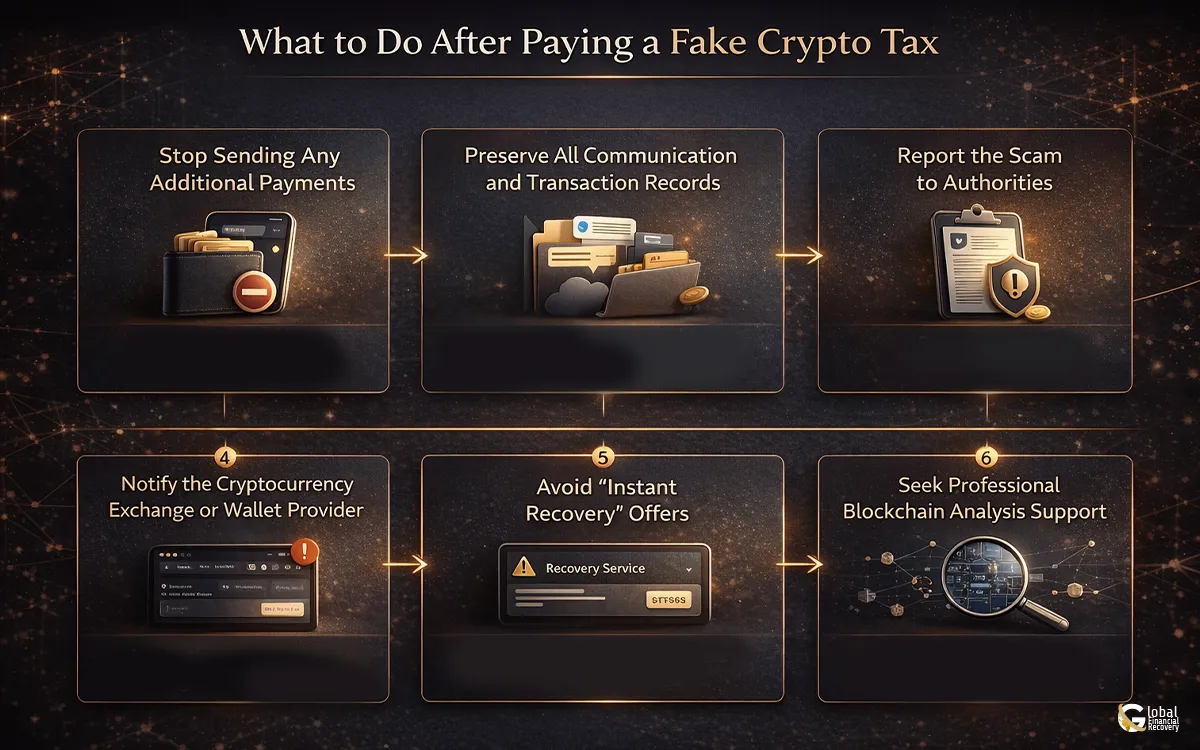
1. Stop Sending Any Additional Payments
Scammers often request multiple charges after the first payment, including verification fees, blockchain clearance costs, or account unlocking deposits.
If a platform continues asking for money to process withdrawals, it is part of an advance-fee crypto fraud. Sending additional payments rarely results in fund release.
2. Preserve All Communication and Transaction Records
Save evidence immediately, including:
- wallet addresses used for transfers,
- transaction IDs or blockchain hashes,
- payment confirmations,
- emails, chat messages, and screenshots from the platform.
This information is critical for investigating a fake compliance fee crypto scam or a blocked crypto withdrawal case.
3. Report the Scam to Authorities
Reporting helps document the fraud and may assist ongoing investigations into organized pig butchering scams.
You can report incidents to:
- FBI Internet Crime Complaint Center
- Federal Trade Commission
Early reporting improves the chances of tracking fraudulent wallet activity.
4. Notify the Cryptocurrency Exchange or Wallet Provider
If funds were sent through a regulated exchange, contact their fraud or support team immediately. In some cases, exchanges may flag or monitor wallet addresses connected to crypto investment scams.
Speed matters, especially if funds recently moved through identifiable platforms.
5. Avoid “Instant Recovery" Offers
After reporting a scam, victims are often targeted again by fake recovery services claiming they can retrieve funds quickly for an upfront fee.
These are commonly known as recovery scams and may lead to further losses.
Legitimate investigations do not guarantee immediate recovery.
6. Seek Professional Blockchain Analysis Support
Blockchain transactions are permanent but traceable. Cryptocurrency recovery specialists may analyze transaction paths to identify exchanges or wallets connected to the fraud.
Acting early increases the likelihood of preserving useful tracing data in pig butchering crypto scam cases.Many victims search for help only after multiple payments have been made. However, once scammers realize payments have stopped, accounts and platforms may disappear.
Taking action immediately after paying a fake crypto tax can help prevent additional losses and support reporting or investigative efforts.
Understanding Pig Butchering Scam Risks
"Pig butchering" and crypto scams are structured, long-term fraud schemes where victims are guided into fake crypto platforms showing fabricated profits. The final stage often involves blocked withdrawals and demands for a crypto withdrawal tax, compliance fee, or clearance payment.
Knowing the pig butchering scam's meaning and stages helps investors recognize when a trading opportunity is actually a pig butchering online scam. Legitimate platforms do not collect taxes or fees before releasing funds, and repeated payment requests signal advance-fee crypto fraud.
If you have been affected by a pig butchering crypto scam, Global Financial Recovery can review your case and help you understand possible next steps.
FAQs (Frequently Asked Questions)
Unlike traditional online scams, pig butchering scams often develop over several weeks or even months. Scammers intentionally invest time building trust and credibility before introducing cryptocurrency investments, which makes the fraud harder to recognize early.
Many investigations have found that pig butchering crypto scams are operated by organized fraud groups running coordinated online investment schemes across multiple countries. These operations often use scripted conversations, fake trading platforms, and shared victim databases.
Fraudulent platforms used in pig butchering scams are professionally designed to imitate real cryptocurrency exchanges. They may include live price charts, account dashboards, trading history, and customer support features to create the appearance of genuine market activity.
Yes. Victims of pig butchering and crypto scams are sometimes targeted again through follow-up fraud attempts, including fake recovery services or individuals claiming they can unlock frozen crypto accounts for a fee.
In many pig butchering investment scams, scammers allow victims to see simulated profits while maintaining full control of the platform. The fraud typically becomes visible only when withdrawal requests fail, or unexpected verification and payment demands appear.
Recover Your Scammed Money Now
Recent Posts



Empowering you to reclaim what's rightfully yours. Together, we stand strong against financial fraud.