
Are Telegram Crypto Wallets Safe: Risks and How to Keep Your Funds Safe
- Cryptocurrency
- Updated On: February 16, 2026
Table of Contents
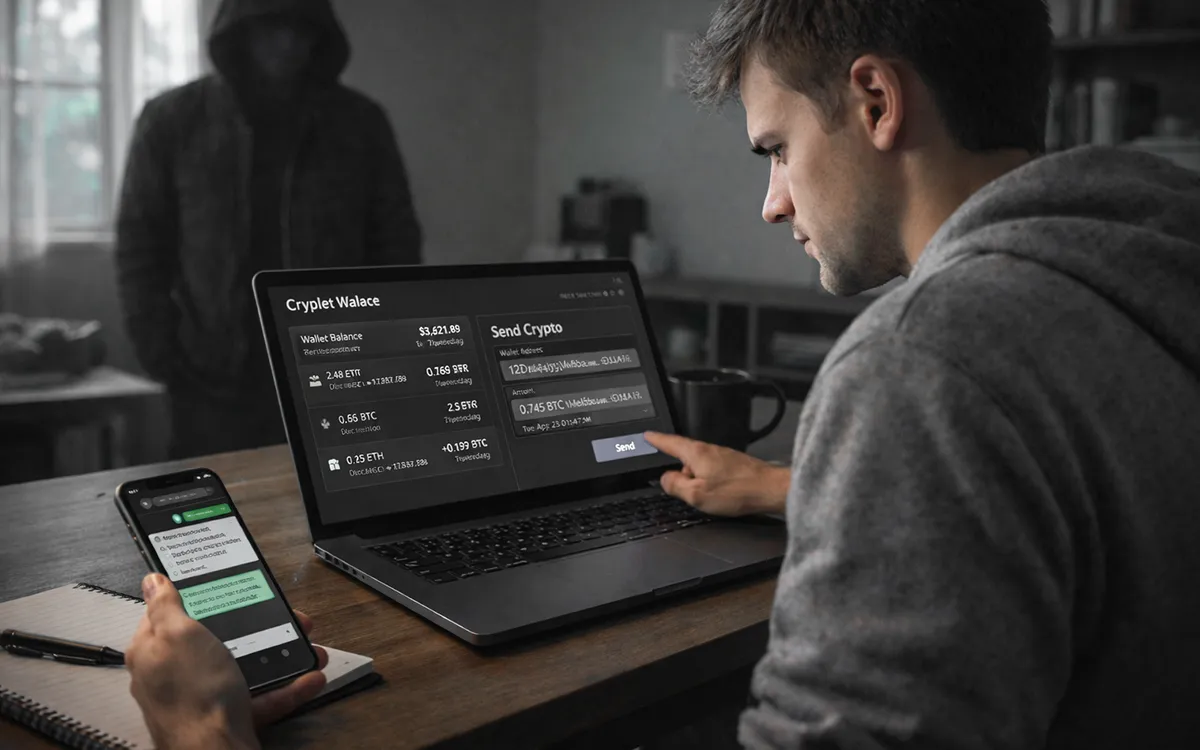
Telegram is no longer just a messaging app; it has become a major playground for fake crypto wallet scams. Daily, users are invited to use Telegram wallet bots that claim to store crypto securely, offer fast withdrawals, or provide access to exclusive investment opportunities.
Unfortunately, many of these wallets are designed to do just one thing: trap your funds.
The rise in Telegram crypto wallet scams has left thousands of users wondering why their balances appear real, but withdrawals never materialize. Fake support agents, cloned wallet bots, and sudden “unlock fees” are now common tactics used to drain victims even further.
This article will help you understand the Telegram crypto wallet risks, spot the warning signs early, and protect your crypto before scammers take advantage.
What Are Telegram Crypto Wallets, and How Do They Work?
Telegram crypto wallets are typically bot-based wallets that enable users to manage their crypto assets through Telegram messages, rather than using a secure wallet app. They’re often promoted inside trading groups, investment channels, or direct messages from admins.
While these wallets may look convenient, most operate as custodial wallets, meaning the private keys are controlled by the bot or the platform behind it. Users see balances and transactions, but they don’t truly own or control the wallet.
This design makes Telegram wallets especially attractive to scammers. A bot can be cloned, shut down, or replaced overnight, leaving users locked out with no way to recover funds. That’s why Telegram wallet scams often involve balances that appear real, but withdrawals fail.
Understanding how these wallets work is essential before trusting them with real money, especially when they’re linked to investment offers or “official” Telegram groups.
Why Telegram Crypto Wallets Are High-Risk by Design
Telegram crypto wallets aren’t risky because of one small flaw; they’re risky because of how they are built and where they operate. These wallets exist inside a messaging app, not a secure financial ecosystem, which creates multiple weaknesses that scammers know how to exploit.
Here’s why Telegram crypto wallets are considered high-risk by design, even when they look professional or “official.”

-
You Don’t Control the Private Keys
The biggest risk with most Telegram crypto wallets is that you don’t own the private keys. The wallet is usually controlled by a bot or an unknown operator, meaning your crypto is technically in their custody.
In real crypto wallets, private keys are what prove ownership. Without them:
- You don’t truly own the funds
- You can’t recover access if something goes wrong
- You’re relying entirely on the honesty of the wallet operator
If the bot decides to block withdrawals or disappears completely, your crypto can be lost without warning.
-
Telegram is a Messaging App, not a Secure Wallet Platform
Telegram was built for communication, not financial security. Unlike regulated exchanges or trusted wallet providers, Telegram does not:
- Verify wallet operators
- Protect users from financial fraud
- Offer dispute resolution or account recovery
Anyone can create a wallet bot, name it something convincing, and start collecting deposits. This lack of oversight is why Telegram has become a hotspot for crypto wallet scams.
-
Anonymous Operators Mean Zero Accountability
Anonymous individuals or teams run most Telegram crypto wallets. There’s often:
- No registered company
- No legal jurisdiction
- No customer support outside Telegram
If funds are blocked or stolen, there’s no authority to complain to and no official process to recover your money. Once the operator vanishes, so does any chance of accountability.
-
Fake Wallet Interfaces Create a False Sense of Security
Many Telegram wallets display:
- Real-looking balances
- Transaction histories
- “Processing” withdrawal statuses
But these dashboards are just visual layers. They don’t guarantee that your crypto is actually being held safely, or at all. In many scams, the balance you see is fake, designed only to encourage larger deposits before withdrawals are permanently blocked.
-
Withdrawal Restrictions Are Built Into the Scam
A common tactic with Telegram crypto wallets is delayed or blocked withdrawals. Users are often told they must:
- Pay a verification fee
- Cover a liquidity charge
- Unlock withdrawals with a tax or gas fee
Legitimate wallets do not ask users to pay extra fees after depositing crypto. These demands are built-in pressure points designed to extract more money before the scam ends.
-
Easy Impersonation Makes Things Worse
Because Telegram allows usernames, bots, and groups to look nearly identical, scammers can:
- Clone popular wallet names
- Impersonate admins or support agents
- Send fake “security updates” via direct messages
Users often don’t realize they’re interacting with a fake wallet until their funds are already gone.
Telegram crypto wallets are risky, not because users are careless, but because the system itself lacks transparency, protection, and accountability. When something goes wrong, there’s no safety net, and scammers rely on that.
That’s why understanding the red flags and knowing how to protect your funds is critical before trusting any wallet that operates solely inside Telegram.
In the next section, we’ll cover the clear warning signs that signal an unsafe Telegram crypto wallet, so you can spot trouble early and avoid costly mistakes.
Red Flags That Signal an Unsafe Telegram Crypto Wallet
Telegram crypto wallet scams rarely rely on just one obvious warning sign. In most cases, users notice small issues first, but dismiss them until real damage is already done.
The table below highlights the most common red flags that signal a Telegram crypto wallet may be unsafe and should not be trusted with your funds.
|
Red Flag |
What It Looks Like |
Why It’s Dangerous |
|
Wallet works only through a Telegram bot |
No official app or verified website, just a bot link |
You don’t control the private keys, and the bot can disappear at any time |
|
You’re asked to pay a fee to withdraw |
“Unlock,” “liquidity,” “tax,” or “verification” fees |
Legitimate wallets never charge fees to release your own funds |
|
Support messages you first |
“Wallet support” contacts you via Direct message |
Real wallets do not initiate private messages—this is a classic scam tactic |
|
Pressure to act quickly |
“Withdraw now or lose access” warnings |
Urgency is used to stop you from verifying or thinking clearly |
|
Wallet link shared in trading groups |
Promoted inside Telegram investment or signals groups |
Scammers commonly use group promotions to spread fake wallet bots |
|
No company details or documentation |
No legal name, address, or terms |
If there’s no accountability, there’s no protection |
|
Admins delete messages or block users |
Questions about withdrawals vanish |
Transparency disappears when a wallet is hiding something |
|
Balance grows, but withdrawals fail |
Profits show, but payouts never arrive |
Fake balances are often used to encourage more deposits |
|
Asked to move funds to “secure” wallets |
Redirected to another Telegram wallet |
This is usually a second-stage scam to drain remaining funds |
|
Recovery agents appear after a loss. |
“We can recover your crypto” messages |
These are often follow-up scams targeting victims again |
Most victims don’t fall for one big mistake; they ignore multiple small warning signs. If you spot even one or two of these red flags, it’s a strong signal that the Telegram crypto wallet is unsafe.
Common Telegram Crypto Wallet Scams Users Are Falling For
Telegram has become a hotbed for crypto activity, but that popularity also attracts scammers who use the platform’s features to spread fraudulent schemes quickly and at scale.
Here are the most common types of Telegram wallet scams you should watch out for:
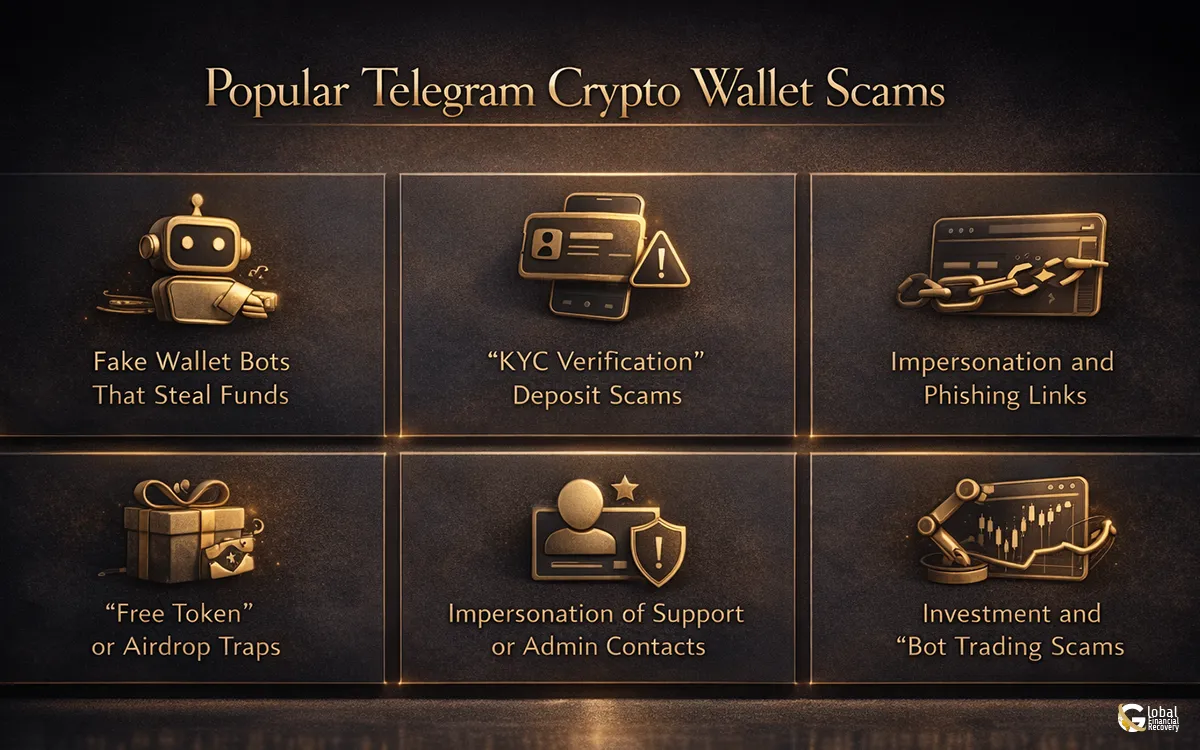
1. Fake Wallet Bots That Steal Funds
Scammers create bots that pose as “official wallet assistants” or “reward wallets.” These bots promise easy access, free tokens, or special incentives, but once you send crypto or approve transactions, the funds are routed to attacker-controlled wallets.
2. “KYC Verification” Deposit Scams
Some scams lure users by asking them to go through a “KYC verification” promoted via Telegram bots or links. In these scams, the victim is told to deposit crypto to complete verification. The deposited funds go straight to scammers, and the victim receives nothing in return.
3. Impersonation and Phishing Links
Fraudsters pretend to be group administrators, customer service representatives, or the representatives of the project and have false profiles and links. These links may result in dangerous wallet interfaces or phishing websites that will steal private keys or seed phrases.
4. “Free Token” or Airdrop Traps
Fraudsters advertise airdrops or giveaways of such coins as Toncoin or other trendy tokens. These proposals seem genuine, but they will ask you to attach a wallet or sign a transaction or authorize an operation so that the attackers can empty the wallet by utilizing harmful contracts.
5. Impersonation of Support or Admin Contacts
Fraudsters monitor public discussions and then message users directly, pretending to be support or admin staff. They ask for wallet access, seed phrases, or deposits “to fix an issue” or “unlock features,” which leads to immediate fund loss.
6. Investment and “Bot Trading” Scams
Telegram investment groups and trading bots often use fake profits to lure users into depositing more funds. When withdrawals fail, victims are pressured to pay additional fees that lead nowhere.
These scams are designed to look real. In the next section, we’ll cover how to secure your crypto wallets and what safer alternatives actually look like.
How to Keep Your Crypto Safe If You Use Telegram
Using Telegram doesn’t automatically mean your crypto is at risk, but how you use it makes all the difference. Telegram was built for communication, not for securing financial assets. When users treat it like a wallet or a bank, that’s when problems begin.
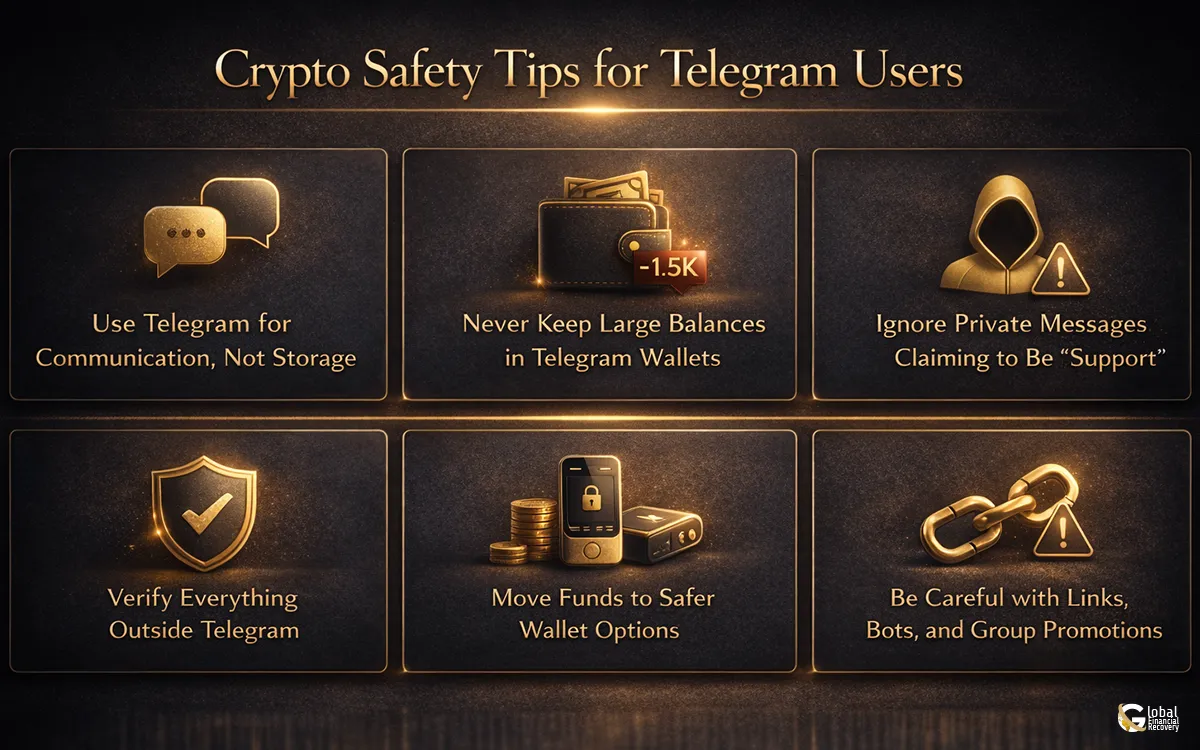
If you choose to use Telegram for crypto-related discussions, signals, or communities, here are the most important steps to protect your funds.
-
Use Telegram for Communication, Not Storage
The safest rule is simple: don’t store crypto on Telegram. Telegram wallet bots should never be treated as long-term storage, no matter how professional they look or how active the community seems.
Telegram is best used for:
- Crypto news and discussions
- Project announcements
- Community updates
Your actual crypto should live in a wallet where you control the private keys, not inside a chat app.
-
Never Keep Large Balances in Telegram Wallets
If you’ve already used a Telegram wallet, avoid keeping significant funds there. Small test amounts reduce risk, but even then, funds should be moved out as soon as possible.
Many users lose money not because they deposited once, but because they kept adding more after seeing a growing balance. If the funds matter to you, they don’t belong on Telegram.
-
Ignore Private Messages Claiming to Be “Support”
One of the most common Telegram crypto scams starts with a direct message. Fake support agents often:
- Message first
- Use urgent language
- Ask for screenshots or wallet details
- Offer “help” with withdrawals
Legitimate crypto wallets do not reach out privately on Telegram. Any unsolicited support message should be treated as suspicious and ignored.
-
Verify Everything Outside Telegram
Never trust links, wallet bots, or instructions shared only inside Telegram groups. Always verify:
- The official website
- Wallet documentation
- Independent reviews
If a wallet or service exists only on Telegram, that’s a serious red flag.
-
Move Funds to Safer Wallet Options
For real security, crypto should be stored in:
- Hardware wallets (cold storage)
- Reputable non-custodial mobile wallets
- Trusted platforms with transparent security practices
Telegram wallets may feel convenient, but convenience is not protection.
-
Be Careful with Links, Bots, and Group Promotions
Scammers frequently use:
- Fake wallet upgrade links
- “Official” bot announcements
- Group promotions promising guaranteed returns
Clicking one wrong link can expose your wallet or lead to a fake interface designed to drain funds. When in doubt, don’t click; verify first.
Early action can prevent further losses.Telegram can be useful for crypto conversations, but it should never be the place where your money lives. The safest crypto users treat Telegram as a tool, not a vault.
In the next section, we’ll explain what to do if you’ve already lost crypto through a Telegram wallet and where to turn for legitimate recovery guidance.
What to Do If You Lost Crypto Through a Telegram Wallet
It can be very frustrating to lose your crypto money using a Telegram wallet. It is common for people to point fingers at themselves or go into panic mode, but the most important thing that you should know is this: you are not alone, and there are steps that you can take immediately.
-
Stop All Contact and Payments Immediately
As soon as you suspect a Telegram wallet scam, stop sending money and stop responding to messages. Scammers often push victims to pay “one last fee” to unlock withdrawals or recover funds. These requests are designed to drain even more money. No legitimate wallet will ask for repeated payments to release your crypto.
-
Secure Everything You Still Control
If you have crypto in other wallets or exchanges, move it to a secure, non-custodial wallet right away. Change passwords, revoke wallet permissions, and enable two-factor authentication wherever possible. This step helps prevent scammers from accessing more of your assets.
-
Save All Evidence
Don’t delete chats or transaction records. Take screenshots of:
- Telegram conversations
- Wallet bot messages
- Transaction IDs (TXIDs)
- Wallet addresses used
This information is critical for tracing funds and reporting the scam later.
-
Avoid “Recovery” Messages on Telegram
After a loss, many victims are contacted by people claiming they can recover stolen crypto. These are often secondary scams targeting people who are already distressed. Real recovery assistance does not happen through unsolicited Telegram messages or upfront guarantees.
-
Report the Scam
Report the wallet bot and the scam accounts directly on Telegram. While this may not return your funds, it helps prevent others from being targeted. You can also report the incident to your local cybercrime authority or financial fraud reporting platform.
-
Seek Professional Crypto Scam Recovery Guidance
Recovering crypto is complex and time-sensitive. In some cases, funds can be traced or flagged before they are fully laundered. Working with professionals who understand blockchain tracking and scam patterns gives you a realistic view of what recovery may be possible and helps you avoid further losses.
If you’ve lost crypto through a Telegram wallet, recovery experts help is available, and taking the right steps now can make all the difference.
Convenience Is Not Security
Telegram wallets may feel fast and easy, but convenience often comes at the cost of control. True crypto wallet safety means owning your private keys, not trusting a messaging platform to protect your funds.
Recognizing this difference is key to avoiding Telegram crypto scams. Education helps stop losses before they happen, and early action matters if they already happened.Global Financial Recoverycan help guide you forward if your crypto has been affected.
FAQs (Frequently Asked Questions)
Many Telegram wallets display balances to build confidence and encourage deposits. The numbers you see are often internal records controlled by the wallet operator, not proof that your crypto is safely accessible or withdrawable.
No. Verification badges on Telegram only confirm an account’s identity, not its security or trustworthiness. Scammers frequently use verified-looking accounts to appear legitimate while running wallet scams.
No. Exchanges are registered platforms with compliance obligations, while Telegram wallets are often run by anonymous operators. This lack of accountability is what makes Telegram wallets especially dangerous.
Many recommendations come from scammers, affiliates, or unverified group admins. In some cases, users recommend wallets without realizing the risks—until withdrawals fail or funds are locked.
“Manual review” is commonly used to stall users while scammers push for additional fees. Legitimate wallets rarely delay withdrawals without clear, documented reasons.
Book A Free Consultation
Recent Posts


Empowering you to reclaim what's rightfully yours. Together, we stand strong against financial fraud.