
Scam Callers Copy Voices of Family and Friends - Hang Up and Check First
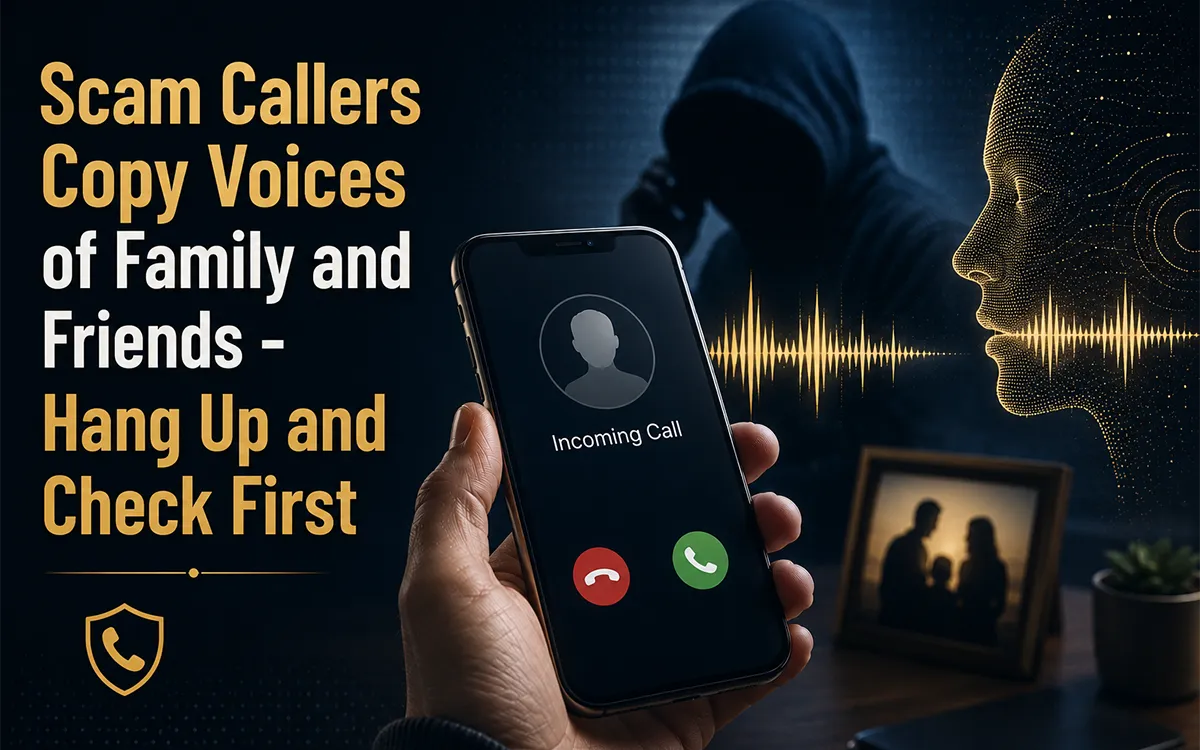
A new kind of phone scam is tricking people across the country. Callers now use fake voices that sound just like a family member, friend, or coworker. Police say these are known as AI scams, and they are becoming one of the most common types of online fraud today.
How It Works
The scammer copies a voice using short clips found online, like videos or old calls. Then they call the victim and pretend to be someone close to them. They may say things like, "I lost my phone, this is my new number," or "I need money right away for a hospital bill," or "Please don't tell anyone about this." These lines are meant to scare people and rush them into acting fast. This kind of trick is called a social engineering scam, and it works because people trust the people they love.
Once someone feels worried or scared, they may send money without stopping to check if the call is real. This is exactly what makes impersonation scams so dangerous.
Other Scams to Watch For
This trick is a lot like other frauds people see online. Some scammers build a fake government website or a fake official website that looks real. Others create a fake arrival card scam to trick travelers filling out entry forms. These scams often lead to identity theft, travel scam losses, and travel fraud for people booking trips or applying for travel papers. Just like an immigration scam or a phishing scam sent by email, the goal stays the same: gain your trust, then take your money or personal details.
What You Should Do
Experts give one clear tip: hang up first, check later. Do not send money right away, even if the voice sounds real. Instead, call that person back using their normal number or a messaging app you already use. Never trust a new number given only during a strange call.
Also watch out for email phishing scams that try to get you to click bad links or type in passwords. Some companies promise cryptocurrency scam recovery help, they can connect you with experts or legal professionals for additional help.
Stay Alert
The best protection is simple: slow down and check things before you act. If a call feels rushed or secretive, stop and confirm it first. A little scam awareness can save your money, your identity, and your peace of mind.
If you're ever unsure about a call or message, contact your local authorities or an official hotline before doing anything.
Book A Free Consultation
Recent News






From case evaluation to financial investigation, Global Financial Recovery provides transparent guidance to help you understand your case and explore your options.