
How Impersonation Scams Target New Crypto Investors

- Cryptocurrency
- Updated On: August 5, 2026
Table of Contents
Making your first purchase of cryptocurrency can be thrilling. You sign up, participate in a couple of forums on the Internet, and begin to learn from videos, social media, and other investors. Unfortunately, scammers do know this. They tend to go after individuals who are trying to learn about crypto, as they are more inclined to believe the wrong person.
Crypto scams are no longer easy to spot. Scammers use fake websites, fake customer support, fake social media accounts, and AI-generated videos and voices to copy real companies and people. As AI improves, these fake identities are becoming more realistic, making it easier to fool even careful investors.
These scams don't usually rely on hacking your wallet. They rely on social engineering, building trust until you willingly share your wallet details, recovery phrase, or send cryptocurrency yourself.
The good news is that once you understand how these scams work, they're much easier to spot. In this guide, you'll learn why new crypto investors are often targeted, the most common impersonation tactics scammers use today, and the simple steps you can take to protect your investments.
What Is a Crypto Impersonation Scam?
A crypto impersonation scam happens when someone pretends to be a trusted person or company to steal cryptocurrency or sensitive wallet information.
The scammer could claim to work for a crypto exchange, wallet provider, blockchain project, or even be a well-known investor or influencer. Their goal is to earn your trust before asking you to do something that puts your crypto at risk.
Instead of hacking into your wallet, they try to convince you to take action yourself. They may ask you to send crypto, share your wallet's recovery phrase, click a fake link, or approve a transaction. By the time people realize something is wrong, the money is often already gone.
What makes these scams so dangerous is how real they look. Scammers use professional websites, fake customer support accounts, copied logos, and even AI-generated videos or voice messages to make their stories believable.
These scams can happen almost anywhere. They are common on social media, Telegram and WhatsApp groups, messaging apps, email, online forums, and even in search results.
The good news is that most crypto impersonation scams follow the same patterns. Once you know what to look for, they become much easier to spot before any money is lost.
Why New Crypto Investors Are Easier Targets
Studying cryptocurrency requires time. For new investors, learning about exchanges, wallets, and blockchain operations is still a process. And scammers take advantage of that, creating scams based on typical newbie mistakes.
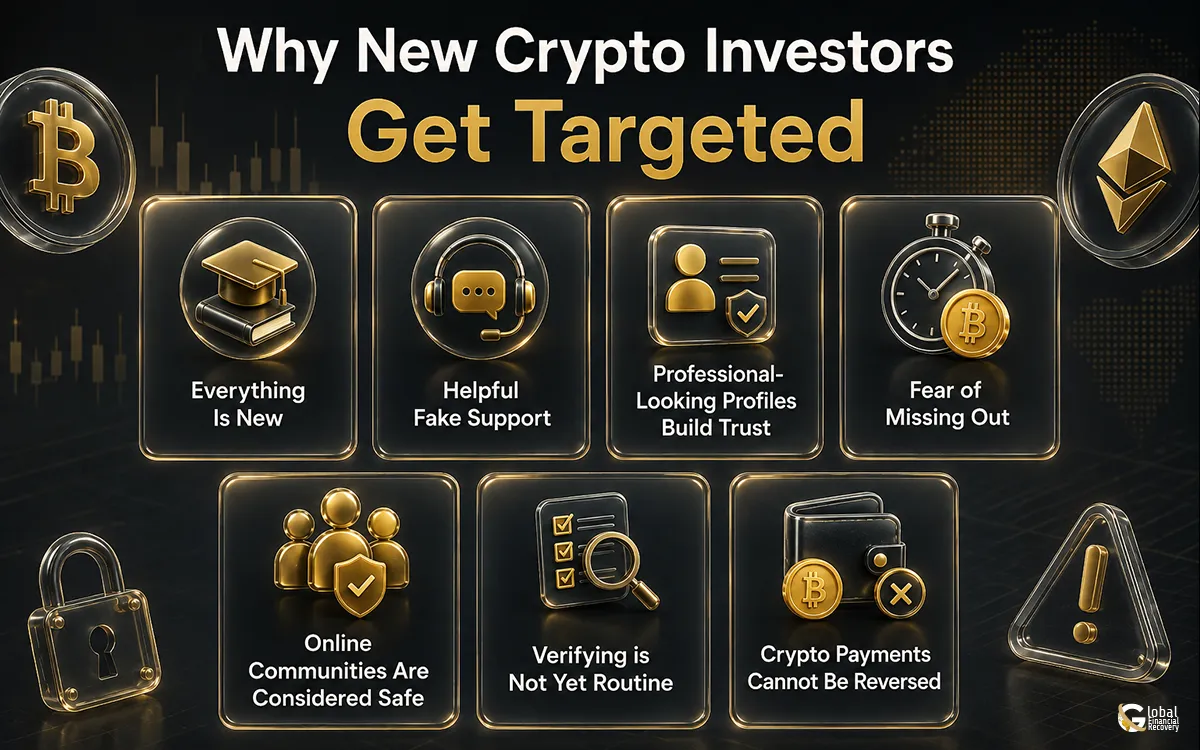
Here is a list of the most obvious reasons why new investors become an easy target:
Everything Is New
For many people, crypto is completely new. Wallets, recovery phrases, gas fees, and blockchain transactions can feel confusing at first. When something goes wrong, a helpful stranger or a fake support account can seem like the easiest place to turn. Scammers know this and take advantage of that confusion.
Helpful Fake Support
Many new investors don't know how real crypto companies provide customer support. Scammers pretend to be support agents, claiming there is a problem with an account or wallet. They then offer to "fix" it while trying to steal money or sensitive information.
Professional-Looking Profiles Build Trust
A polished website, a company logo, thousands of followers, or a verified-looking profile can make a scam seem real. Today, scammers also use AI-generated videos and stolen branding to make fake accounts look even more convincing.
Fear of Missing Out
Many people enter crypto hoping to find the next big opportunity. Scammers create fake urgency with limited-time offers, exclusive groups, or "once-in-a-lifetime" investments to pressure people into acting quickly without checking the facts
Online Communities Are Considered Safe
Telegram, WhatsApp, Discord, and other online communities can be great places to learn about crypto. Unfortunately, scammers also use these platforms to build trust before moving conversations into private chats or promoting fake investment opportunities.
Verifying Is Not Yet Routine
Experienced crypto users usually double-check website URLs, usernames, wallet addresses, and contact details before taking action. New investors often haven't built these habits yet, making it easier for scammers to fool them.
Crypto Payments Cannot Be Reversed
Most cryptocurrency transactions are permanent. Once funds are sent, they usually cannot be canceled or reversed. That's why taking a few extra minutes to verify a request can help prevent a costly mistake.
How Crypto Impersonation Scams Work
Most crypto impersonation scams follow the same pattern. The names, platforms, and stories may change, but the goal is always the same: earn your trust before asking for something valuable.
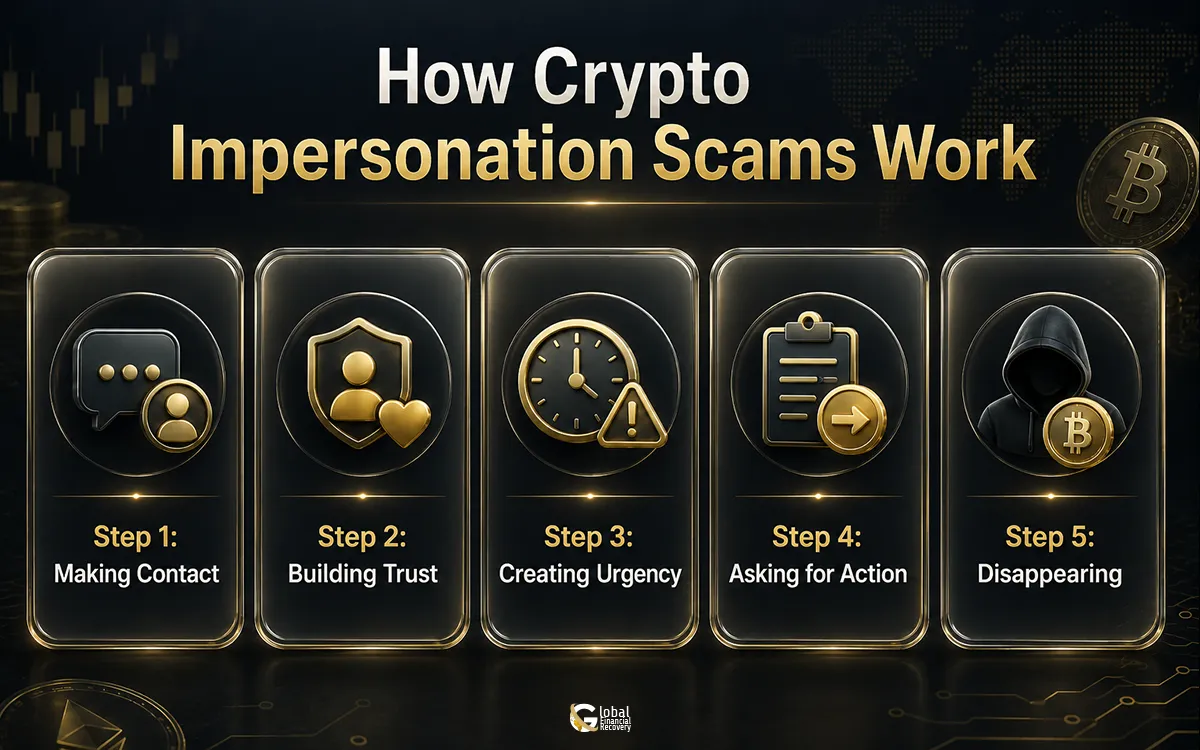
Step 1: Making Contact
The scam usually starts with a message, email, phone call, or social media post. The scammer claims to represent a trusted company, crypto expert, influencer, or support team to start a conversation.
Step 2: Building Trust
Instead of asking for money right away, the scammer spends time gaining confidence. Professional-looking profiles, fake websites, and friendly conversations are used to make the account seem genuine.
Step 3: Creating Urgency
Once trust is built, the scammer creates pressure. They may claim there's a problem with an account, a wallet needs verification, or a limited-time investment opportunity is about to end. The goal is to stop people from slowing down and checking the facts.
Step 4: Asking for Action
This is where the scam happens. The scammer asks for cryptocurrency, a wallet recovery phrase, login details, or approval of a wallet connection. Every request is presented as necessary or completely safe.
Step 5: Disappearing
After receiving the funds or sensitive information, the scammer cuts off contact. The fake account may be deleted, messages removed, or the victim blocked. By the time the fraud is discovered, recovering the stolen cryptocurrency is often much more difficult.
Once scammers have earned someone's trust, they use different identities to carry out the fraud. Below are the most common crypto impersonation scams and the warning signs that can help identify them before any money is lost.
5 Crypto Impersonation Scams Every New Investor Should Know
Most crypto impersonation scams follow the same process, but the identity scammers use can be different. Learning these common tactics and their warning signs can make them much easier to recognize before any money is lost.
|
Scam Type |
How It Works |
Common Warning Signs |
|
Fake Customer Support |
Scammers pretend to work for a crypto exchange, wallet provider, or blockchain project. They offer to "fix" an account or wallet problem. |
Asks for a recovery phrase, private keys, passwords, or remote access to a device. Contacts users first through social media or messaging apps. |
|
Fake Exchange Representatives |
Someone claims to work for a well-known crypto exchange and says an account needs verification or a transaction has a problem. |
Requests a transfer to a "secure wallet," asks for verification fees, or demands payment before allowing withdrawals. |
|
Celebrity & Influencer Impersonation |
Scammers use fake profiles, hacked accounts, or AI-generated videos to promote giveaways or investment opportunities. |
Promises guaranteed profits, asks for crypto upfront, or claims funds will be doubled after sending a payment. |
|
WhatsApp & Telegram Investment Groups |
Fake communities create the illusion that everyone is making money. Members are encouraged to join trading platforms or investment programs. |
Constant success stories, pressure to invest quickly, private messages from admins, or links to unknown trading platforms. |
|
Social Media Impersonation |
Fake accounts copy the branding of crypto companies, influencers, or investment experts to build trust before contacting victims. |
Similar usernames, copied profile photos, suspicious links, requests to continue the conversation privately, or unsolicited investment advice. |
Even with the right precautions, impersonation scams can still be difficult to recognize. Many victims usually realize they are part of a cryptocurrency scam only after the currency has already been sent or sensitive information has been shared. Knowing what to do next can help limit the damage and improve the chances of recovering important evidence.
What to Do If You Have Been Targeted by a Crypto Impersonation Scam
Discovering that you've been scammed can be overwhelming, but acting quickly can help protect your remaining assets and preserve important evidence. Here are the first steps to take.
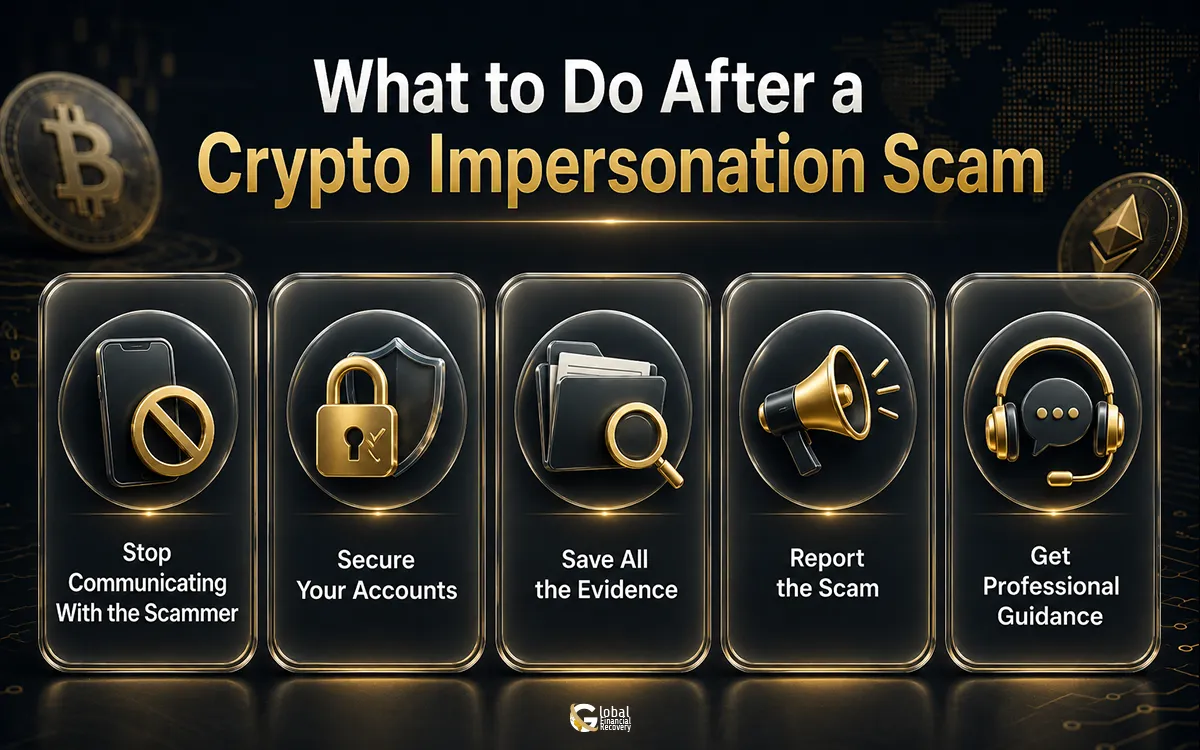
Stop Communicating With the Scammer
End all contact immediately. Don't reply to messages, send more cryptocurrency, or follow any additional instructions. Scammers often try to convince victims to make more payments by promising refunds or account recovery.
Secure Your Accounts
Change your passwords, enable two-factor authentication, and move any remaining cryptocurrency to a secure wallet if there's any chance your accounts have been compromised. Also, review connected wallet permissions and remove access to any suspicious applications.
Save All the Evidence
Keep everything related to the scam, including wallet addresses, transaction IDs, screenshots, emails, chat messages, and payment records. This information can be valuable when reporting the scam or reviewing recovery options.
Report the Scam
Report the fake account, website, or investment group to the platform where the scam took place. Filing a report with your local cybercrime or law enforcement agency can also help create an official record of the incident.
Get Professional Guidance
Recovering stolen cryptocurrency is not always easy. The sooner you act, the better you can understand what happened and what options you may have. Professional recovery service providers like Global Financial Recovery review each case using blockchain data and transaction records to help you understand the next steps.
Be careful when choosing a recovery service. Some scammers target people who have already lost money. They may promise guaranteed recovery or ask for large upfront fees. Take time to check who you're working with before sharing your information or making any payment.
Trust Should Never Replace Verification
Crypto impersonation scams continue to change, but they all rely on one thing: earning trust before asking for action. Whether it's a fake support agent, a cloned social media profile, or an AI-generated video, slowing down and verifying the source is one of the best ways to protect your cryptocurrency.
For new investors, building good security habits early can make a lasting difference. Verify accounts through official channels, never share your recovery phrase, and be cautious of anyone creating pressure to act immediately.
For anyone who has already lost cryptocurrency to an impersonation scam, acting quickly is important. Preserve wallet addresses, transaction IDs, screenshots, and conversations before deleting anything. When you need professional guidance, it's important to choose a crypto recovery service that is honest about how it works and doesn't make promises it can't guarantee. At Global Financial Recovery, get your free case evaluation. They review what happened, look at the evidence you provide, and let you know whether your case is worth pursuing further.
FAQs (Frequently Asked Questions)
Crypto impersonation scams happen when someone pretends to be a trusted person or company. They may pose as a crypto exchange, wallet provider, customer support agent, or even a well-known investor. Their goal is to gain your trust and convince you to send cryptocurrency or share private information.
Yes. Scammers can copy profile photos, names, logos, and posts to make fake accounts look real. Some even buy followers or use AI-generated content to appear more trustworthy. Before responding to messages or sending money, always check the account through the company's official website.
It depends on the details of your case. Cryptocurrency transactions cannot usually be reversed, but quick action can make a difference. Save your wallet address, transaction ID, screenshots, and messages, then have your case reviewed as soon as possible to understand what options may be available.
If you shared your wallet recovery phrase, assume your wallet is no longer safe. Move any remaining cryptocurrency to a new wallet with a new recovery phrase as quickly as you can. Then review your wallet activity and remove any permissions you no longer trust.
Always contact customer support through the official website or app of the crypto exchange or wallet provider. Be careful with unexpected messages on social media, email, Telegram, WhatsApp, or Discord. Legitimate support teams will never ask for your recovery phrase or request cryptocurrency to solve a problem.
Book A Free Consultation
Recent Posts




From case evaluation to financial investigation, Global Financial Recovery provides transparent guidance to help you understand your case and explore your options.