
$2.1 Billion Lost to Social Media Scams in the U.S. as Fraud Cases Rise
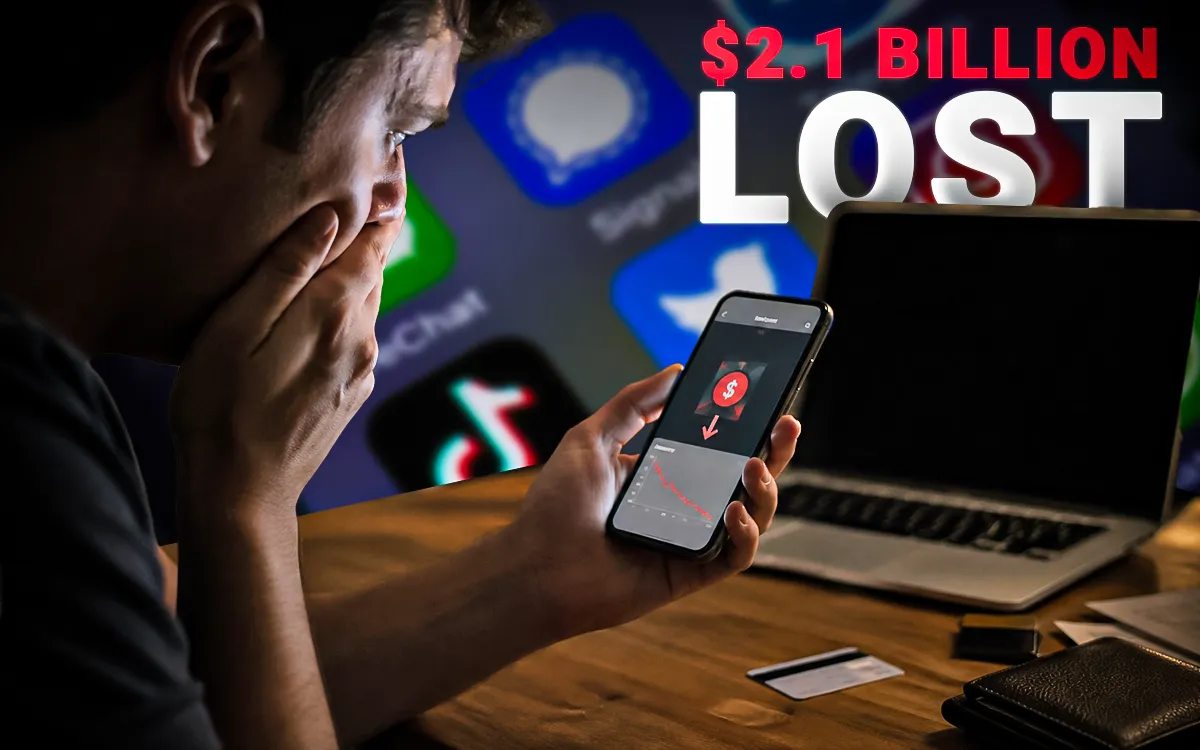
New figures have put a spotlight on a growing problem - Americans have lost around $2.1 billion to scams that began on social media. The number is high, but what stands out more is how common these cases have become.
Most people don’t expect to be scammed when they are casually scrolling. That’s what makes it work. It often starts with something small. A message. A comment. An ad that looks like any other. Nothing feels out of place in the beginning.
Scammers are using platforms people trust and use daily. Facebook, Instagram, and messaging apps have become easy entry points. It doesn’t take much to create a fake profile or page that looks convincing enough.
Investment scams are taking the biggest share of the money. People are shown what looks like proof-of-profit screenshots, testimonials, and even group chats where others appear to be earning. It builds confidence. Some hesitate at first, but the pressure builds. Once the first payment is made, things shift. Either the account goes silent, or new charges appear under different names.
Shopping scams are also catching many off guard. Deals seem attractive. Prices look lower than usual. The website may even look professionally designed. Payments are made quickly, but the product never arrives. In many cases, the site is gone within days.
Romance scams also continue to be a major concern. Scammers build emotional connections over time and then ask for money, often claiming emergencies. Victims in such cases tend to lose higher amounts because of the trust involved.
What makes this situation worse is the scale. One scammer can reach hundreds of people at once. There is no need for advanced systems. A few messages and a believable story can go a long way.
Data suggests that younger adults are reporting more losses. People between 20 and 40 are more active online, and that increases exposure. It doesn’t mean others are safe, though. These scams cut across age groups.
Officials are urging people to slow down before reacting online. Check who you are talking to. Be careful with links. Question anything that promises fast returns or feels urgent.
The $2.1 billion figure is a reminder of how real this issue is. Behind that number are individuals who lost savings, trust, and, in some cases, confidence. And with many incidents still going unreported, the true impact may be even larger.
Book A Free Consultation
Recent News






From case evaluation to financial investigation, Global Financial Recovery provides transparent guidance to help you understand your case and explore your options.