
FBI Warns Americans About ‘Trump Bucks’ Scam Run by Overseas Fraudsters
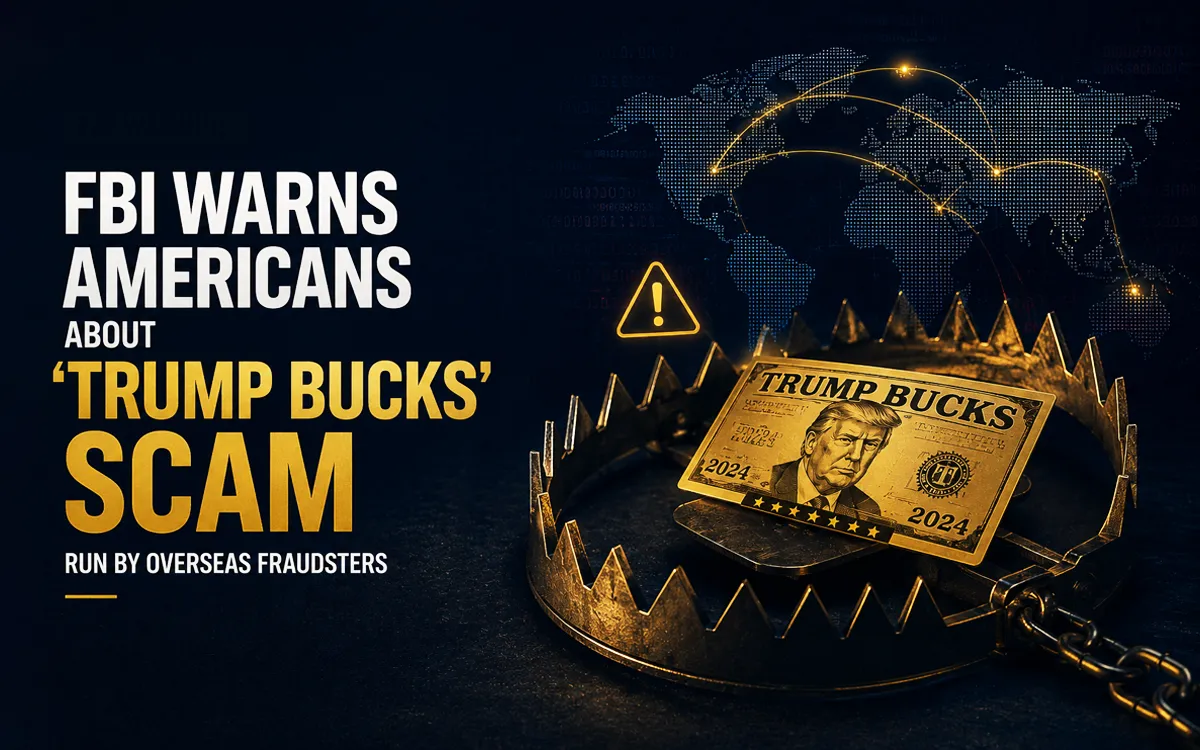
The FBI is asking Americans to be cautious after uncovering a scam involving products sold as “Trump Bucks.”
These products were promoted as collectible coins, certificates, and checks tied to President Donald Trump. People who bought them were told that the items would one day be worth much more money. Some advertisements even claimed that banks would honor them after Trump returned to office.
According to U.S. investigators, the products had no actual financial value. They were simply collectibles sold with exaggerated claims. Some buyers were led to believe that a coin or certificate purchased for a few hundred dollars could eventually be worth thousands.
Federal prosecutors say two people from North Macedonia were behind part of the online scam. They were identified as Goran Spiridonov, 25, and Kristina Janeva, 39.
According to court documents, the two suspects helped collect a large amount of money. Victims across the United States sent them hundreds of thousands of dollars.
The scam was promoted online. Ads appeared on websites, social media, and messaging apps such as Telegram. The promotions used patriotic language and often suggested that buyers were joining an exclusive financial opportunity.
Products mentioned in the scheme included Trump Bucks, Trump Rebate Banking Certificates, and Trump-themed coins and checks.
To many buyers, the offers looked official. Some believed the items were connected to Donald Trump or his business organization. Prosecutors say there was no such connection.
U.S. Attorney Jay Clayton said the products were sold through false statements and misleading advertising. In the end, people spent real money on items that were not going to produce the returns they were promised. The products had no real investment value. Prosecutors say the two defendants face several federal charges. If convicted, they could receive long prison sentences.
Federal officials say the strategy is simple. Use a name that people know. Make the offer look legitimate. Then persuade victims to send money before they have time to question what they are being told.
Federal officials say consumers should be cautious. If someone promises that a collectible item will soon be worth real money, it should be viewed as a serious red flag. People who believe they bought these products or sent money to the scheme can report it to the FBI through IC3.gov.
The broader lesson is simple. When an offer promises huge profits with little explanation, it is worth stopping and asking more questions before spending any money.
Book A Free Consultation
Recent News



From case evaluation to financial investigation, Global Financial Recovery provides transparent guidance to help you understand your case and explore your options.