
Fake Web3 Job Scams Are Stealing Crypto Wallets Worldwide
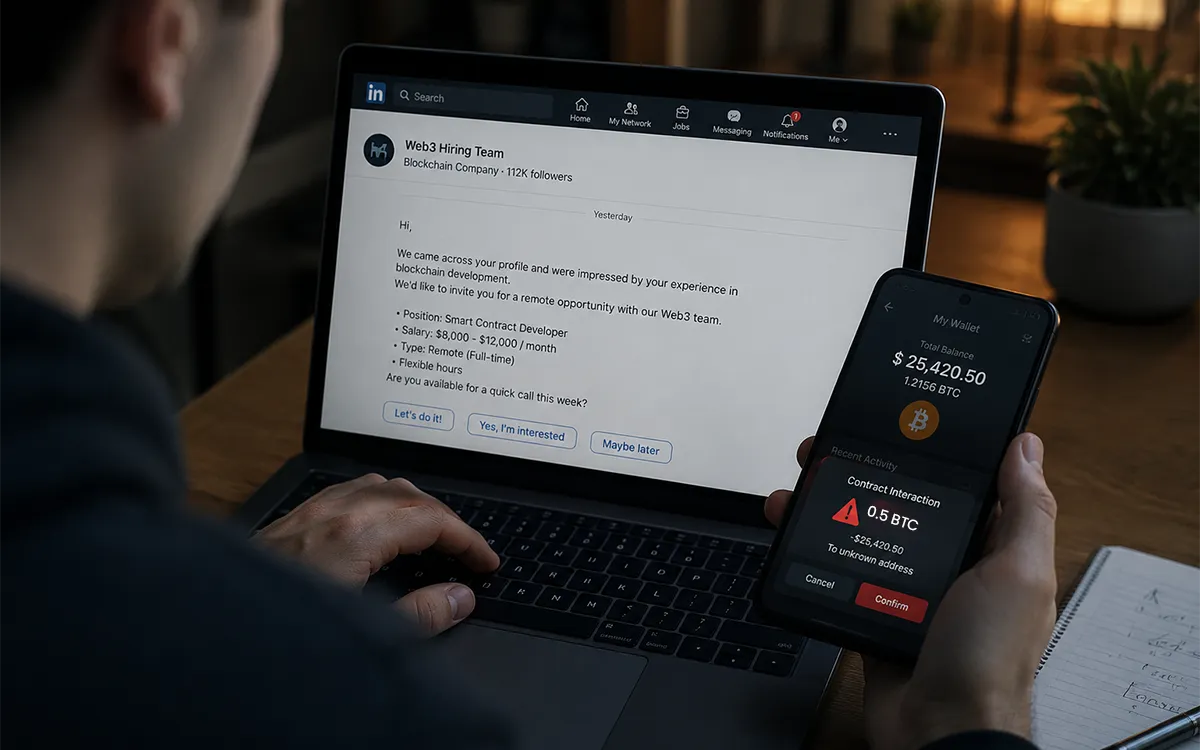
People searching for remote crypto jobs are now becoming targets of a growing online scam. Cybersecurity experts say fake Web3 recruiters are using professional-looking job offers to steal cryptocurrency from applicants across the world.
The scam usually starts with a message on LinkedIn, Telegram, Discord, or email. Victims are offered remote roles in blockchain development, crypto marketing, NFT projects, or trading companies. Most offers promise high salaries and flexible work hours. That is what pulls many people in.
At first, everything feels normal. Applicants may receive interview calls, contracts, company presentations, and links to websites that look completely real. Some scammers even conduct two or three interview rounds before trying to steal funds. This makes the fake companies appear trustworthy.
Experts say crypto scams are rising quickly as interest in Web3 jobs continues growing worldwide. Security companies have also reported more fake hiring scams targeting people searching for remote work in the crypto industry.
In many reported cases, victims lost anywhere from a few hundred dollars to more than $50,000 in cryptocurrency.
The real danger usually appears during the “test task” or onboarding process.
Applicants are often asked to:
- Connect a crypto wallet for “verification”
- Install interview or meeting software
- Download a browser extension
- Run technical commands on their computer
- Share wallet recovery details
These requests may sound routine to someone new to Web3. But they are not.
After the software gets installed, attackers may secretly track browser activity and collect wallet details, passwords, and login sessions. Everything may look normal at first until the crypto wallet drains. That is what makes these scams dangerous. And by the time people realize it, the money is already gone.
Experts say developers and freelancers are common targets because they are more likely to own crypto assets and use Web3 tools daily. Some scam groups also create fake employee profiles, copied websites, and AI-generated photos to look convincing.
Cybersecurity professionals advise job seekers to slow down before accepting offers. Real companies do not ask applicants for private keys, recovery phrases, or wallet access during interviews.
Experts also recommend checking whether recruiters use official company email addresses instead of free Gmail accounts. Small details matter here.
As remote crypto jobs continue growing, security analysts believe fake Web3 recruitment scams could become even more common in 2026. For many users, simple caution may be the only thing standing between a real opportunity and a drained crypto wallet.
Book A Free Consultation
Recent News






From case evaluation to financial investigation, Global Financial Recovery provides transparent guidance to help you understand your case and explore your options.