
Oil Rig Romance Scam: How Victims Are Manipulated Into Sending Crypto
- Romance
- Updated On: June 15, 2026
Table of Contents
“I wish I could call… but I’m on an oil rig.”
It sounds like a small detail. A reasonable explanation for why they can’t meet, can’t video call, or sometimes disappear for hours at a time.
And at the beginning, nothing feels off.
The conversation is easy, consistent, and thoughtful. Maybe even a little too good at saying the right things. Over time, they stop feeling like a stranger and start feeling like someone you trust.
Someone real. That’s what makes this different.
Because by the time something starts to feel slightly off, there’s already an emotional connection in place. And what follows doesn’t look like a typical scam; it feels personal, complicated, and hard to question.
In many cases, this is where a simple online relationship slowly turns into something much deeper and sometimes, into one of the more calculated forms of crypto romance scams, built on trust, timing, and careful manipulation.
Understanding how this pattern unfolds makes it easier to recognize how it starts, how it builds, and where it usually leads, especially when it doesn’t look like a scam at all.
What Is an Oil Rig Romance Scam?
An oil rig romance scam is a type of online fraud where someone pretends to work on an offshore oil rig to build a relationship, and eventually asks for money.
The story usually sounds believable.
They’ll say they’re an engineer, contractor, or supervisor working on a remote oil platform. Because of that, they claim they have limited access to calls, unstable internet, or strict company rules that prevent them from communicating freely.
At first, this explanation makes sense. It even answers questions before you think to ask them. But that’s exactly why this role is used so often.
Being “on an oil rig” gives the scammer a built-in excuse for:
- Not meeting in person
- Avoiding video calls
- Disappearing for long periods
- Delaying plans again and again
More importantly, it helps them control the pace of the relationship.
What starts as a normal conversation slowly becomes more personal. They share stories, talk about their life, and create a version of themselves that feels real and consistent. Over time, trust builds, not all at once, but in small, believable steps. This is where it shifts from just a fake identity to something more calculated.
Because at its core, this isn’t just about pretending to be someone else. It’s a form ofsocial engineering scam, where trust is built intentionally so that when a request comes later, it doesn’t feel suspicious; it feels justified.
And by the time that request happens, most people aren’t thinking about scams anymore. They’re thinking about someone they believe they know.
Why “Oil Rigs” Are the Perfect Cover Story
There’s a reason scammers keep using the same story. Saying they’re “on an oil rig” answers a lot of questions before they even come up and makes unusual behavior feel normal.

For example, communication is often inconsistent. But instead of raising concern, it gets explained away as part of the job.
They might say:
- The signal is weak or restricted
- Calls are not always allowed
- Work shifts are long and unpredictable
So when they disappear for hours or even days, it doesn’t immediately feel suspicious. It also creates distance in a way that feels temporary.
There’s always a reason they can’t meet right now, but there’s usually a plan for later. Maybe they’re finishing a contract. Maybe they’re waiting to return home. That future promise keeps things going without needing to prove anything in the present.
Another part of this story is financial limitation. Even though the job sounds well-paying, they often claim they can’t access their money easily while offshore. There are always restrictions, delays, or unexpected issues that prevent them from handling things on their own.
Individually, none of these things feel like a red flag.
But together, they create a situation where:
- You don’t expect regular communication
- You don’t question the lack of real-world interaction
- And you become more understanding when problems come up
That’s what makes this setup so effective. It doesn’t force trust; it slowly makes everything else feel reasonable.
How the Scam Actually Works (Step-by-Step)
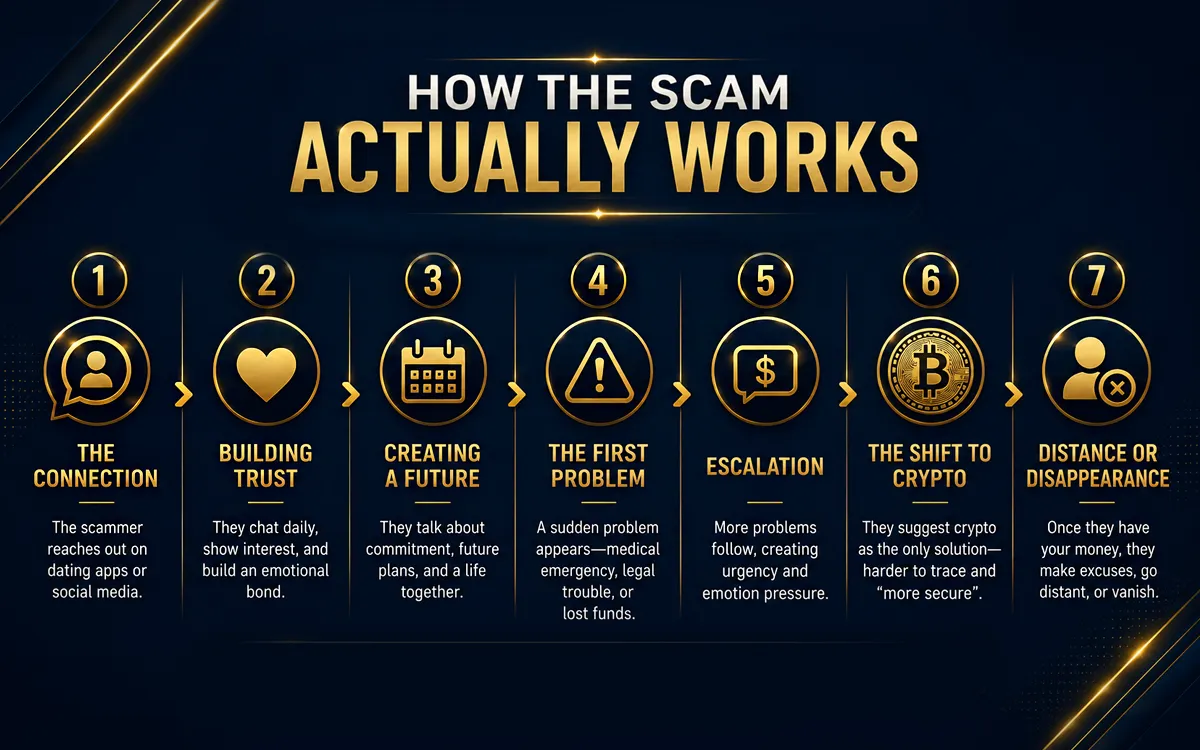
Most oil rig scams don’t happen all at once. They follow a pattern slow, controlled, and easy to miss when you’re in the middle of it.
Step 1: The Connection
It usually starts on a dating app, social media, or even through a random message. The conversation feels normal, friendly, and easy.
Very quickly, they try to move the chat off the platform — to WhatsApp, Telegram, or email. It feels like a small step, but it gives them more control over the interaction.
Step 2: Building Trust
This is where things start to feel more personal. They check in daily. Remember details. Share parts of their “life.”
Sometimes they open up about past struggles or talk about wanting something serious. The connection builds faster than expected, but it doesn’t feel forced.
Step 3: Creating a Future
Once trust is in place, they start talking about a meeting.
They might say:
- “I’m finishing this contract soon”
- “I want to visit you”
- “We can finally be together after this”
It gives the relationship direction and something to look forward to.
Step 4: The First Problem
When something goes wrong.
It could be:
- A work issue
- A medical situation
- Travel complications
The first request is usually small. Just enough to see if you’re willing to help. And because of everything built before, it doesn’t feel like a risk.
Step 5: Escalation
After the first payment, the problems don’t stop, they grow. New reasons come up. New amounts are needed. Each time, there’s urgency attached to it. By now, it’s no longer just about helping. It’s about fixing a situation that feels ongoing.
Step 6: The Shift to Crypto
At some point, the payment method changes.
They may say:
- Their bank isn’t working
- Transfers are blocked
- Crypto is “faster” or “easier”
And if you’re unfamiliar with it, they’ll guide you step by step. This is where many oil rig crypto romance scams become harder to track because crypto transactions don’t work the same way as regular payments.
Step 7: Distance or Disappearance
Eventually, things start to change.
- Replies become slower.
- Excuses become less clear.
- Or the communication stops completely.
In some cases, they don’t disappear right away; they keep asking for more, stretching the situation for as long as possible. When you’re in it, none of this feels planned out. It just feels like things are happening one after another and you’re trying to keep up
A Real Example of How This Happens
Cases like this are not uncommon.
In one reported instance, a 79-year-old woman was targeted by someone claiming to work on an oil rig. Over time, the communication became consistent and personal, building a sense of trust. Eventually, the conversation shifted toward financial problems, with requests framed around leaving the job and visiting her.
What made it convincing wasn’t a single moment; it was how everything unfolded gradually. Each request had a reason. Each delay had an explanation. And because the relationship felt real, the situation didn’t immediately raise concern.
By the time the full picture became clear, a significant amount of money had already been sent.
You can read more about this case here. Examples like this highlight an important point: these scams don’t rely on pressure alone. They rely on timing, consistency, and trust built over time.
And increasingly, similar situations are being seen in crypto romance scams, where the same pattern is used, but the method of payment makes the outcome even harder to reverse.
Red Flags of an Oil Rig Scammer
By the time most people start questioning things, there are usually small signs that didn’t feel important earlier. On their own, they might seem harmless. But together, they often point to the same pattern.
Some of the most common red flags include:
- They mention being “on an oil rig” very early on
- They avoid video calls or always have an excuse for why they can’t talk live
- The relationship becomes serious unusually fast
- They talk about meeting, but there’s always a delay
- A problem comes up that requires money
- The payment method eventually shifts, sometimes to cryptocurrency
- Details in their story don’t fully stay consistent
These things can't automatically mean it’s a scam. However, when multiple signs show up together, especially over time, it’s worth paying closer attention. Because these situations don’t usually change suddenly, they build slowly until something starts to feel off.
Why People Don’t Recognize the Scam Early
From the outside, these situations can seem obvious. But when you’re in the middle of it, it doesn’t feel that way.
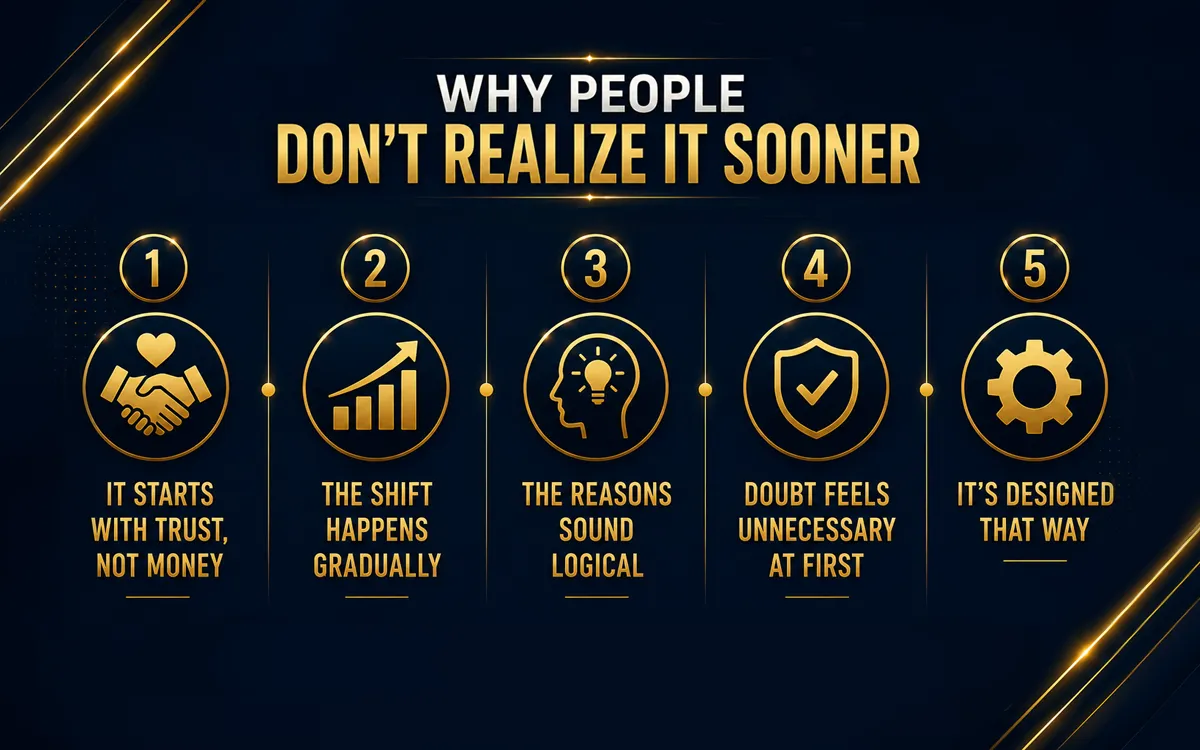
There are a few reasons why.
1. It Starts With Trust, Not Money
These scams don’t begin with a request. They begin with regular conversations, shared details, and consistent attention. Over time, the person becomes familiar- someone you talk to daily, not someone you question.
2. The Shift Happens Gradually
Nothing changes all at once. The relationship builds first. Then small problems appear. Then the requests follow. Each step feels connected to the one before it, so it doesn’t stand out as unusual at the moment.
3. The Reasons Sound Logical
When something goes wrong, there’s always an explanation. Work delays, travel issues, financial restrictions - each one comes with just enough detail to feel believable. Instead of raising concern, it often answers it.
4. Doubt Feels Unnecessary at First
When things feel mostly normal, small doubts are easy to ignore.
It’s common to think:
- “This will sort itself out.”
- “It’s probably just bad timing.”
And by the time those doubts grow stronger, there’s already some level of trust in place.
5. It’s Designed That Way
This isn’t random behavior. It’s a form of social engineering scam, where the goal is to build trust slowly and use it at the right moment. Nothing is rushed, and that’s what makes it effective.
Understanding this doesn’t change what happened. But it does explain why it’s not always obvious when you’re going through it.
What Happens After the Money Is Sent, and Can It Be Recovered?
One of the hardest parts about an oil rig romance scam is that the situation often becomes clear only after money has already been sent.
At that point, most people are no longer trying to understand the relationship they're trying to understand the financial damage left behind. Questions about where the money went, whether the transactions can still be traced, and if recovery is still possible become the main concern.
When cryptocurrency is involved, the situation becomes more complicated because crypto transactions work differently from traditional bank payments. Once funds are transferred between wallets, reversing the transaction is not always straightforward. In many cases, scammers also move funds quickly across multiple wallets or exchanges, making tracing more difficult as time passes.
Still, recovery is not always impossible.
In some situations, blockchain transactions can still be analyzed to follow the movement of funds, identify connected wallets, or understand how the scam operated. The possibility of recovery often depends on factors such as:
- How quickly the scam was identified
- The transaction trail is available
- the platforms or wallets involved
- the records and evidence preserved
This is why many victims choose to seek professional help early, not for guaranteed promises, but to understand better what may still be realistically possible. Recovery professionals can sometimes help review transaction activity, organize evidence, trace wallet movement, and provide guidance based on the specifics of the case.
Firms like Global Financial Recovery approach these situations through case evaluations and transaction analysis, with a focus on realistic guidance rather than guaranteed outcomes. Because in many cases, understanding the situation clearly is the first important step toward deciding what to do next.
What To Do If You Suspect an Oil Rig Romance Scam
Realizing that something may not be right can be overwhelming, especially after spending weeks or months talking to someone consistently.
But once the situation starts raising concerns, acting early becomes important, particularly when cryptocurrency payments are involved.
A few practical steps can help:
- Stop sending additional money or crypto transfers
- Save conversations, screenshots, wallet addresses, and transaction records
- Keep copies of payment confirmations and exchange activity
- Report the account on the platform where the conversation started
- Document timelines, names, email addresses, and any other details shared
Even small pieces of information can become useful later when reviewing how the scam operated.
When crypto transactions are involved, preserving wallet addresses and transaction hashes is especially important, since they can sometimes help trace how funds moved across the blockchain.
Many victims also choose to seek professional guidance to better understand what options may still exist. In situations involving crypto romance scams, early review of transaction activity and evidence can sometimes make a meaningful difference in understanding the next steps.
The most important thing, though, is not to ignore the situation once doubts begin to appear. These scams often continue for as long as communication stays open, and delays can make tracing activity more difficult over time.
The Story Changes: The Pattern Usually Doesn’t
Oil rig romance scams continue to work because they rarely feel like scams in the beginning.
The conversations feel normal. The connection feels genuine. And the requests often arrive slowly enough to seem believable in the moment.
That’s what makes these situations difficult to recognize early.
Today, many of these scams have also moved into cryptocurrency, combining emotional manipulation with payment methods that are far more difficult to reverse or trace once funds are moved.
But understanding how these scams operate, the excuses, the delays, the emotional pressure, and the eventual shift toward financial requests makes the pattern easier to spot before the damage becomes even greater.
And in situations where money has already been sent, especially through crypto, understanding the full picture clearly is often the first step toward figuring out what options may remain.
For people trying to make sense of what happened, speaking with professionals who understand crypto scam cases can sometimes help bring clarity to the situation. Firms like Global Financial Recovery work with victims through free case evaluations and transaction analysis to help them better understand possible next steps with realistic guidance, not guaranteed promises.
FAQs (Frequently Asked Questions)
An oil rig romance scam is a type of online dating scam where someone pretends to work on an offshore oil rig to build trust and start a relationship. Scammers use the job as an excuse for limited communication, avoiding video calls, delaying meetings, and eventually asking for money.
The “oil rig” story helps explain unusual behavior without immediately raising suspicion. It gives scammers a believable reason for poor communication, long absences, and inability to meet in person.
Requests often begin gradually. At first, the scammer may mention a temporary financial problem, travel expense, medical issue, or work-related emergency. Over time, the requests usually become larger or more frequent. In many cases, scammers eventually ask victims to send cryptocurrency because crypto transactions are harder to reverse or trace than traditional bank payments.
Recovery is sometimes possible, but it depends on the specific situation. Factors such as how quickly the scam was identified, the payment method used, the transaction records available, and whether crypto funds can still be traced all play a role.
The first step is to stop sending money or cryptocurrency immediately. It’s also important to save all conversations, wallet addresses, transaction records, screenshots, and payment confirmations. Further, reporting the account on the platform where the contact started can help prevent further scams. Many victims also choose to seek professional guidance to understand the situation better and review possible next steps.
Book A Free Consultation
Recent Posts


Empowering you to reclaim what's rightfully yours. Together, we stand strong against financial fraud.