
Address Poisoning Scam: How Crypto Wallet Address Poisoning Works
- Cryptocurrency
- Updated On: October 14, 2026
Table of Contents
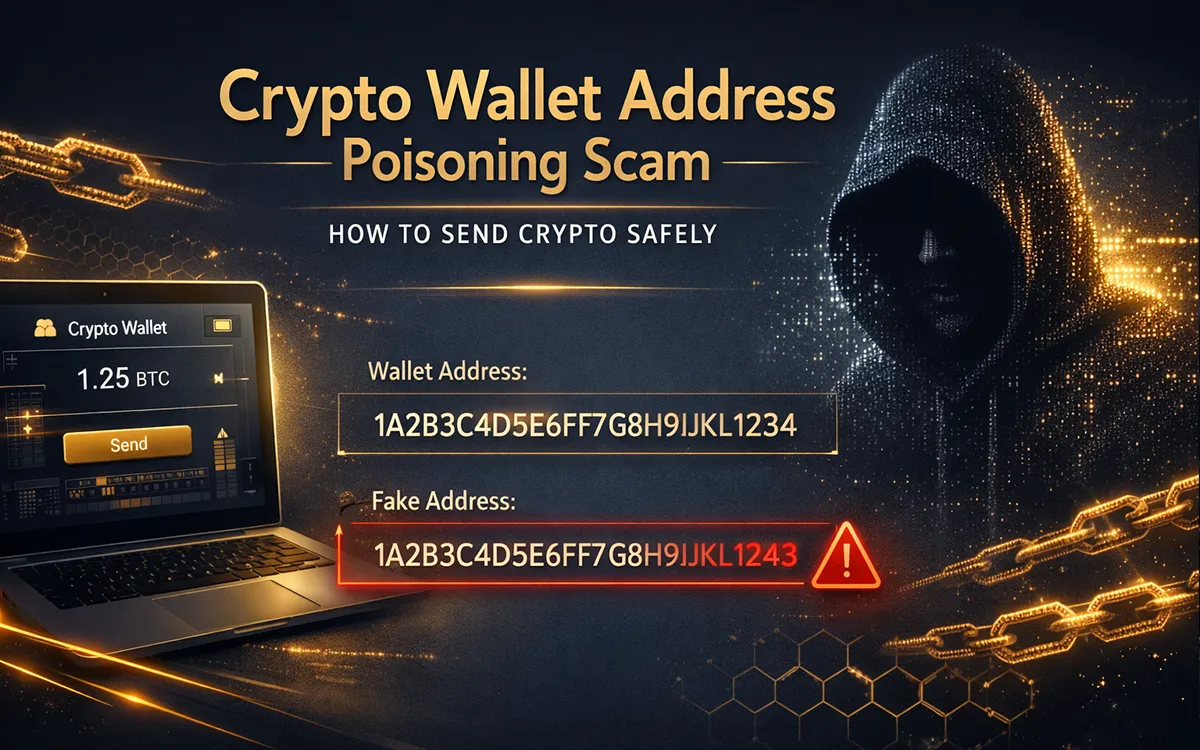
Losing crypto after sending it to the wrong wallet address can be confusing and stressful. It can be even harder to understand when the address looked familiar or appeared in your transaction history. In some cases, this may be a sign of a crypto address poisoning scam.
In an address poisoning scam, scammers use a wallet address that looks similar to one you have used before. They may send a small transaction to make the address appear in your transaction history. Later, it can be copied by mistake when sending crypto. Once the funds are sent, a blockchain transaction usually cannot be reversed.
Knowing how address poisoning scams work, how to spot a fake wallet address, and what to do after sending crypto to the wrong address can help you understand what happened. Keeping the transaction details, wallet addresses, screenshots, and other records can also be important when reviewing the loss. Coinbase’s security guidance explains more about address poisoning and the risks it can create.
What Is a Crypto Address Poisoning Scam?
A crypto address poisoning scam is a type of crypto wallet scam that can trick someone into sending funds to the wrong wallet. Scammers use a wallet address that looks very similar to an address the person has used before.
In crypto address poisoning, the scammer may send a small transaction to make the fake address appear in the wallet’s transaction history. This can make it easier to mistake the fake address for a real one later.
The problem often happens when a wallet address is copied from recent transactions without checking the full address. The crypto may then be sent to the scammer instead of the intended recipient.
This is also called crypto wallet address poisoning or cryptocurrency address poisoning. It does not always involve hacking a wallet or stealing login details. Instead, the scam relies on making a fake address look familiar enough to be trusted.
How Address Poisoning Scams Work
The main trick behind address poisoning scams is making a fake wallet address look familiar. The scammer is not always trying to get access to your wallet. Instead, they want you to copy their address by mistake when you make a crypto transfer.
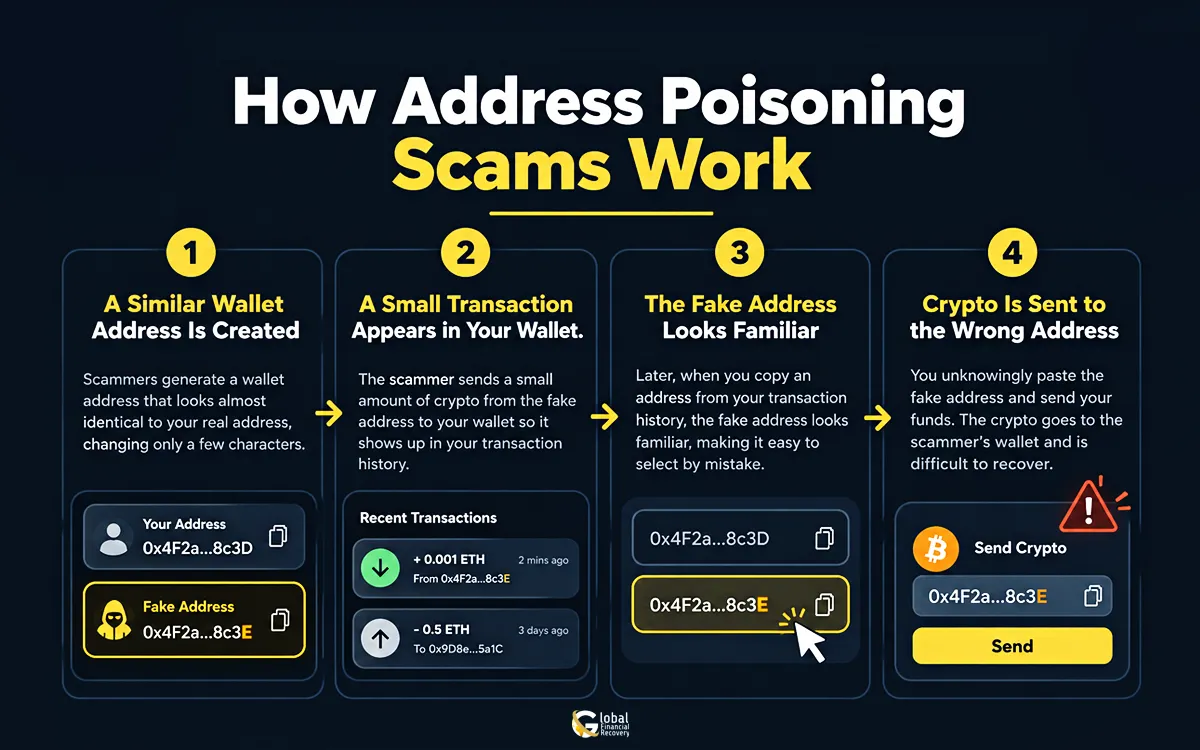
Here is how a typical crypto address poisoning scam can happen:
1. A Similar Wallet Address Is Created
The scammer uses a wallet address that looks similar to an address you have used before. Crypto wallet addresses are long strings of letters and numbers, so it can be hard to remember or check every character.
The goal is to make the fake address look familiar enough that it may not raise concern when it appears in your transaction history.
2. A Small Transaction Appears in Your Wallet
The scammer may send a very small amount of crypto, or sometimes a token with little or no value, to your wallet. This can cause the scammer's address to appear in your recent transaction history.
This is an important part of crypto wallet address poisoning. The scammer wants their address to be visible when you later look for a wallet address to copy.
3. The Fake Address Looks Familiar
When you make another transfer, you may check your recent transactions and see an address that looks like the one you normally use. With a long wallet address, it is easy to focus on only a few characters and assume the address is correct.
This is where a wallet address poisoning scam can become difficult to notice. The address may look legitimate even though it belongs to someone else.
4. Crypto Is Sent to the Wrong Address
The final step happens when the fake address is copied and used for a transfer. The crypto is sent to the scammer's wallet instead of the intended recipient.
Once the transaction is confirmed on the blockchain, it generally cannot be reversed like a card payment. That is why checking the full wal
How Can You Tell If a Wallet Address Is Fake?
It can be difficult to spot a fake wallet address just by looking at it. Crypto addresses are long strings of letters and numbers, and a scammer can use an address that looks very similar to one you already know.
A few warning signs can help you spot a possible crypto address poisoning scam:
- An unexpected small transaction: A small transfer or unfamiliar token suddenly appears in your wallet history.
- A similar-looking address: The sender or recipient address looks close to an address you normally use, but some characters are different.
- An address copied from transaction history: A recent transaction may not always be from the wallet you intended to use.
- No full address check: Checking only the first or last few characters can make it easier to miss a fake address.
Before sending crypto, check the full wallet address against a trusted source. Do not assume an address is safe just because it looks familiar or appears in your transaction history.
For those who have already sent funds to an address that now appears suspicious, keep the transaction details, wallet addresses, screenshots, and other related records. This information can help when reviewing the transfer and tracing the movement of funds on the blockchain. A professional recovery service provider like Global Financial Recovery can also review the transaction, examine the available blockchain records, and help you understand what may have happened and what options may be available.
A Real-Life Address Poisoning Case
A real case from May 2024 shows just how costly an address poisoning scam can be. A crypto user lost about $68 million in Wrapped Bitcoin (WBTC) after sending the funds to a wallet address that closely matched the address they had used for a previous transaction.
According to Chainalysis, the user first made a legitimate transfer to an address beginning with 0xd9A1b. The scammer then used a similar address beginning with 0xd9A1c. The difference was easy to miss when looking at only part of the long wallet address. A small transaction helped place the lookalike address into the user's transaction history.
The user later sent around $68 million in WBTC to the wrong address. Blockchain records made it possible to follow the movement of the funds after the transfer. The attacker eventually returned the $68 million several days later, although this was an unusual outcome and should not be expected in other cases.
This case shows why crypto wallet address poisoning can be so difficult to catch. The wallet itself does not have to be hacked. A person can authorize the transaction themselves while believing they are sending funds to a familiar address.
It also shows why keeping the original transaction hash, wallet addresses, and other records matters after a suspicious transfer. A cryptocurrency scam investigation can use blockchain activity to examine where the funds were sent, whether they moved to other addresses, and what the transaction history may reveal about the incident.
What Information should you keep If you send crypto to the wrong address
Sending crypto to the wrong wallet address can be difficult to fix. Unlike a card payment, a confirmed blockchain transaction usually cannot simply be cancelled or reversed. The first step is to understand exactly where the funds went and whether the transfer was confirmed.
Start by checking the transaction hash and the wallet address that received the funds. These details can confirm whether the crypto was sent to the wrong address and provide a record of the transfer.
The next step is to look at what happened after the transfer. Blockchain transactions are recorded publicly on many networks, which means the movement of funds may be visible. A review can show whether the crypto stayed in the receiving wallet, moved to another address, or was sent through an exchange or another service.
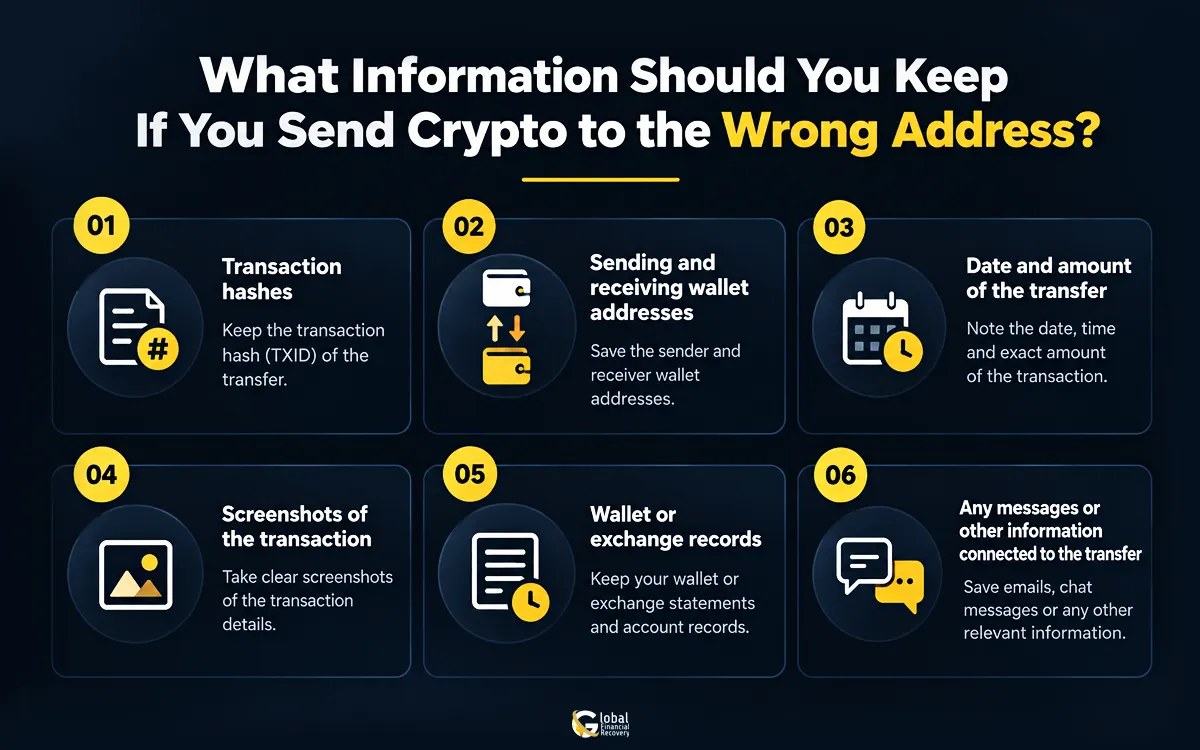
Keep all the information connected to the transfer, including:
- Transaction hashes
- Sending and receiving wallet addresses
- Date and amount of the transfer
- Screenshots of the transaction
- Wallet or exchange records
- Any messages or other information connected to the transfer
These records can be useful when trying to understand a crypto transfer scam or possible address poisoning scam. A professional recovery service provider can review the available transaction and blockchain information to help establish what happened and whether further fund movements can be traced.
Most importantly, do not send additional crypto to the same address simply because someone claims another payment will release, reverse, or recover the original funds. A new payment does not undo the first blockchain transaction.
What Blockchain Records Can Show After a Crypto Loss
A crypto transfer does not simply disappear after it is confirmed. On many blockchains, the transaction and later movement of the funds remain recorded. These records can provide useful information when reviewing a crypto address poisoning loss.
A review can start with the original transaction hash. This can show the wallet address that sent the funds, the address that received them, the amount transferred, and when the transaction took place.
The receiving wallet can then be examined to see what happened next. The funds may have stayed there, moved to another wallet, or been transferred through an exchange or other service. Following these movements can help build a clearer picture of where the crypto went.
This type of review can be useful even when the funds have moved through several addresses. However, blockchain tracing does not automatically mean the funds can be recovered. It helps establish the movement of the crypto and identify information that may be relevant to a wider investigation.
For someone dealing with a wallet address poisoning scam, keeping the original transaction details is therefore important. A professional recovery service provider can review the available blockchain records along with other evidence to help determine what can be established about the loss.
How to Avoid Crypto Address Poisoning
Blockchain records can help show where crypto went after a suspicious transfer, but avoiding the wrong transfer in the first place can prevent a much bigger problem. A few crypto wallet safety tips can reduce the risk of crypto address poisoning and help protect your funds.
-
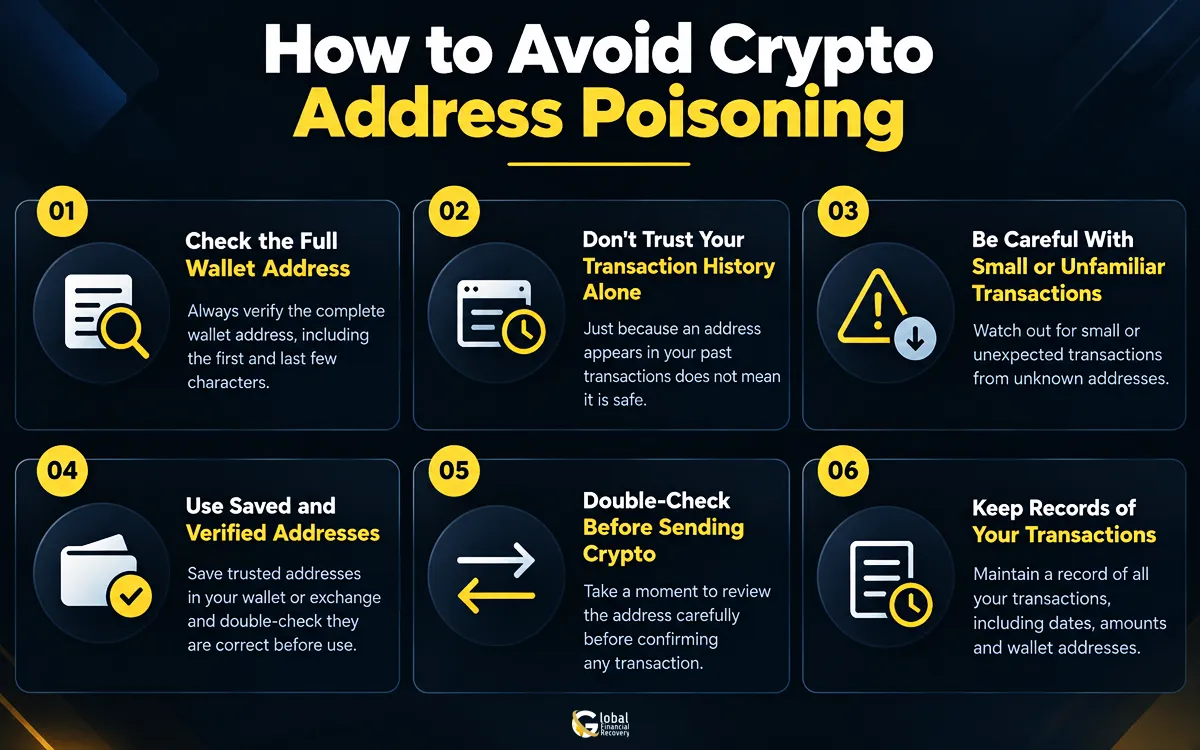
Check the Full Wallet Address
Don't rely only on the first or last few characters of a wallet address. Before sending crypto, compare the full address with a trusted copy or the address you know belongs to the recipient.
A scammer may create an address that looks almost the same at a quick glance. Checking the complete address can help you catch the difference.
-
Don't Trust Your Transaction History Alone
Recent transactions can be useful, but they should not be treated as proof that an address is safe. An unfamiliar small transaction may have been placed in your wallet as part of a wallet address poisoning scam.
Always verify the address before copying it from your transaction history.
-
Be Careful With Small or Unfamiliar Transactions
A small crypto transfer or an unfamiliar token appearing in your wallet may seem harmless. However, it can be a warning sign of crypto wallet address poisoning.
Don't interact with or copy an unfamiliar address simply because it appears in your recent activity. Check where the transaction came from before using any related address.
-
Use Saved and Verified Addresses
Many wallets and exchanges allow users to save trusted addresses or use address books. Using these features can reduce the need to copy a wallet address from recent transactions.
For regular transfers, a saved address that has already been checked can be safer than selecting an unfamiliar address from your transaction history.
-
Double-Check Before Sending Crypto
Take a moment to review the recipient address, network, and amount before confirming a transfer. This is especially important when sending a large amount of cryptocurrency.
A short check can help prevent a mistake that may be difficult to reverse once the transaction is confirmed.
-
Keep Records of Your Transactions
Keep transaction hashes, wallet addresses, and other important transfer details. Good records can make it easier to identify unusual activity and review a transaction later.
If a suspicious transfer does happen, these details can also support an investigation into the loss.
Taking these steps can help protect your crypto from address poisoning, but no single precaution can remove every risk. Staying careful about where wallet addresses come from and checking them before each transfer can make it much harder for a fake address to go unnoticed.
Protecting Your Crypto Starts With the Right Checks
Address poisoning can often be prevented with a few careful habits. Checking the full wallet address, being cautious with unexpected transactions, and verifying an address before sending funds can help reduce the risk of sending crypto to the wrong wallet.
Knowing how to spot a crypto address poisoning scam also makes it easier to recognize unusual activity before it leads to a larger loss. Taking a moment to check transaction details is especially important when sending a significant amount of cryptocurrency.
For anyone who has already sent crypto to a suspicious address, there are still useful steps to take. Transaction hashes, wallet addresses, screenshots, and other records can help show where the funds were sent and whether later movements can be followed on the blockchain.
Need help understanding a suspicious crypto transfer? Global Financial Recovery can review available transaction records and blockchain activity as part of a free case evaluation. This can help provide a clearer view of how the transfer occurred, where the funds moved, and what may be established from the available evidence.
FAQs (Frequently Asked Questions)
A crypto address poisoning scam may involve an unexpected small transaction, an unfamiliar wallet address, or an address that looks very similar to one you normally use. Check the full address before sending crypto, rather than relying only on the first or last few characters. Avoid copying an address from an unfamiliar transaction until you have confirmed that it belongs to the intended recipient.
A confirmed crypto transaction usually cannot be cancelled or reversed. Start by saving the transaction hash, sending and receiving wallet addresses, amount, and date of the transfer. The receiving wallet and later blockchain activity can then be reviewed to understand where the funds went and whether they moved to other addresses or services.
A fake wallet address may look almost identical to a legitimate one, with only a few characters being different. Do not rely on a quick visual comparison or an address found in recent transaction history. Compare the complete address with a trusted source before sending funds, especially when making a large transfer.
To avoid crypto address poisoning, verify the complete wallet address before every transfer and do not rely only on recent transaction history. Be cautious about unexpected small transactions or unfamiliar tokens, use saved or verified addresses where available, and double-check the recipient and network before confirming the transfer.
Yes, the transaction can often be reviewed using its transaction hash and blockchain records. An investigation may examine the receiving wallet and follow visible transfers to other addresses or services. This can help establish how the funds moved, although being able to trace a transaction does not automatically mean the funds can be recovered.
Book A Free Consultation
Recent Posts



From case evaluation to financial investigation, Global Financial Recovery provides transparent guidance to help you understand your case and explore your options.