
Cryptocurrency Transaction Investigation: How the Process Works

- Cryptocurrency
- Updated On: November 4, 2026
Table of Contents
When someone loses money in a crypto scam, one of the first questions is where the funds went. The transaction may show as complete, but that does not explain what happened to the money afterwards.
A cryptocurrency transaction investigation helps examine these movements. It involves checking transaction records, reviewing wallet addresses, and tracing where the funds may have moved. This can help explain what happened after the original transfer and whether other transactions are linked to it.
Bitcoin, for example, records transactions on a public blockchain, where they can be viewed and traced using a transaction ID. Bitcoin.org explains how these public records work. However, finding a transaction is only the starting point. Understanding the full picture may require reviewing other transactions and records related to the incident.
This can be especially useful in cryptocurrency scams, where funds may move through several wallet addresses after the initial payment. Looking at these transactions together can help build a clearer picture of how the funds moved and what happened next.
In this blog, we’ll look at how a cryptocurrency transaction investigation works, what information investigators need, and what the findings can reveal about the movement of funds.
What Is a Cryptocurrency Transaction Investigation?
A cryptocurrency transaction investigation is the process of examining blockchain records and related information to understand how a crypto transaction took place and where the funds went. It can help people understand what happened to their money after a suspicious transfer or a suspected crypto scam.
A simple blockchain search can show details about a transaction, but an investigation looks beyond a single transfer. It may involve checking several transactions, reviewing wallet addresses, and comparing blockchain data with other available records.
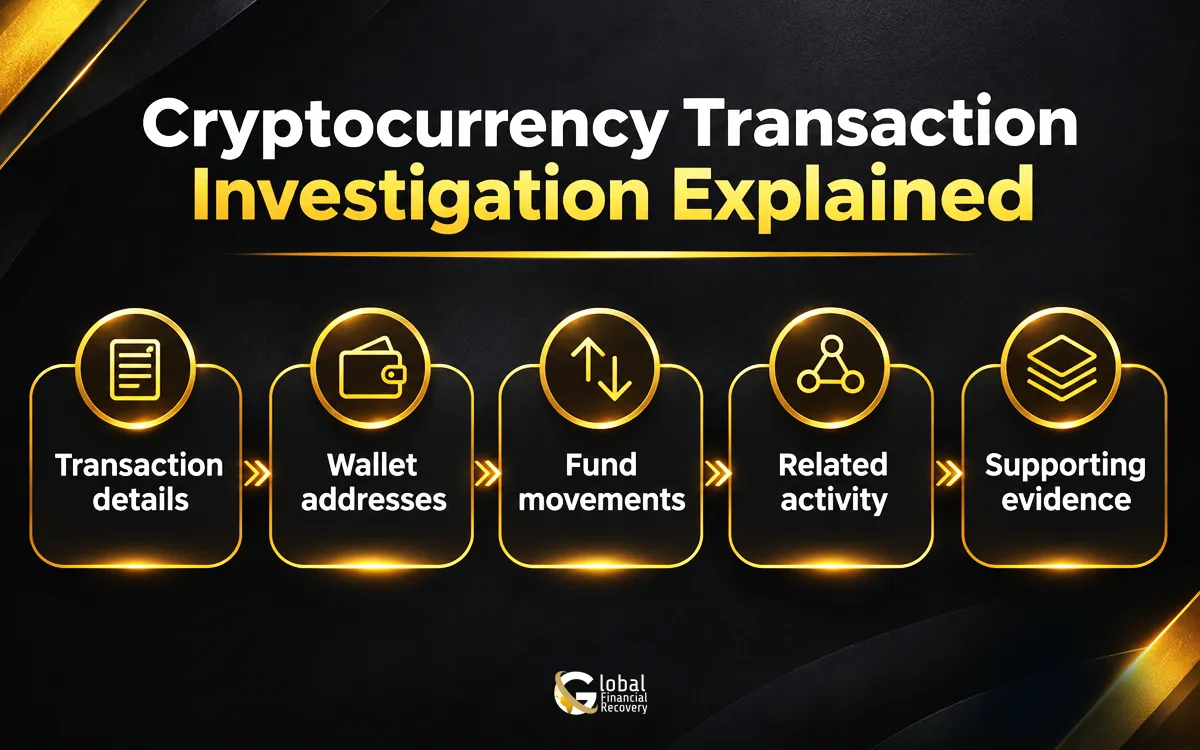
A cryptocurrency transaction investigation may help reveal:
- Transaction details: The amount sent, the date, the time, and the transaction status.
- Wallet addresses: The addresses that sent and received the cryptocurrency.
- Fund movements: Where the cryptocurrency moved after the original transfer.
- Related activity: Other transactions that may be connected to the incident.
- Supporting evidence: Records that help explain the events surrounding a suspected scam.
However, a blockchain record does not always reveal who owns or controls a wallet. Additional information may be needed to understand the full situation. This is why cryptocurrency transaction analysis often involves reviewing several sources of evidence rather than relying on one transaction alone.
What Happens During a Crypto Transaction Investigation?
A crypto transaction investigation follows a series of steps to help explain what happened to the funds. The exact process depends on the case, the available records, and how the cryptocurrency moved after the initial transfer.
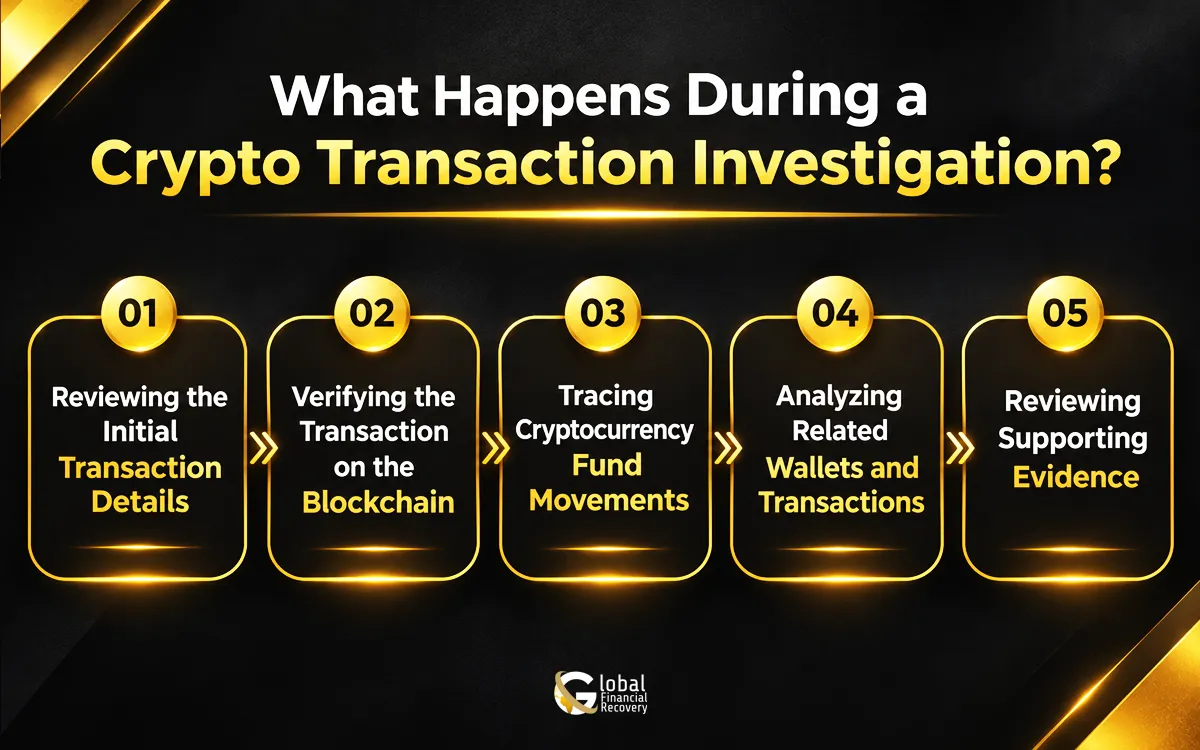
1. Reviewing the Initial Transaction Details
The first step is to gather the available information about the transaction. This usually includes the transaction ID (TXID), wallet addresses, cryptocurrency type, transfer amount, and transaction date.
These details provide a starting point for the investigation. For example, a person who sent Bitcoin to a suspected scam platform may use the TXID to locate the transfer on the blockchain.
Investigators can then review the transaction details and compare them with wallet records, payment receipts, or screenshots from the platform. This helps establish which transfer needs to be examined and provides a basis for tracing further activity.
2. Verifying the Transaction on the Blockchain
Once the transaction details are available, the next step is to check the relevant blockchain. A blockchain explorer allows users to search for a transaction ID or wallet address and view the information recorded on the network.
This step can help confirm whether the transaction was recorded, whether it was successful, and which wallet addresses were involved. It may also show the transfer amount, transaction fees, and timestamp, depending on the blockchain.
Crypto transaction verification is important because it helps separate recorded blockchain activity from claims made by a website, exchange, or investment platform. For example, a platform may display a withdrawal as pending or claim that a payment was never received. Checking the blockchain can help clarify what happened to the transaction itself.
3. Tracing Cryptocurrency Fund Movements
After verifying the original transaction, the next step is to examine where the funds went. Investigators review subsequent transactions to see whether the cryptocurrency moved to other wallet addresses and how those transfers are connected.
For example, funds sent to a suspicious investment platform may later move through several wallets. Tracing these transactions can help show the path the cryptocurrency followed after the initial payment.
This process is known as crypto transaction tracing. It helps build a clearer picture of fund movements, although it may not reveal who controls every wallet or what happened outside the blockchain.
4. Analyzing Related Wallets and Transactions
Tracing the funds may reveal several wallet addresses and transactions that need further review. Investigators examine these connections to identify patterns and determine whether different transfers may be related.
This stage of a blockchain transaction investigation may involve looking at repeated transfers, the timing of transactions, and whether funds moved to known cryptocurrency services. Where multiple blockchain networks are involved, activity on each relevant network may also need to be examined.
However, a connection between wallet addresses does not automatically mean they belong to the same person or are involved in fraud. The findings must be considered carefully and supported by available evidence.
5. Reviewing Supporting Evidence
Blockchain records show transaction activity, but they may not explain the full circumstances of a suspected crypto scam. Supporting evidence can help investigators understand why a transfer was made and how it relates to the reported incident.
This may include:
- Platform records: Account statements, displayed balances, and withdrawal histories.
- Payment records: Receipts and details of transfers made to the platform or other parties.
- Screenshots: Transaction confirmations, withdrawal requests, or messages showing additional payment demands.
- Communications: Emails, chat messages, and other contact with the platform or suspected scammer.
By comparing these records with blockchain data, investigators can assess whether the information supports the reported events and identify gaps that may need further review.
Together, these five steps help build a clearer picture of what happened to the cryptocurrency. The findings can then be used to assess the available evidence and consider what further steps may be appropriate.
However, confirming that a transaction took place does not prove that a platform is legitimate or explain why a withdrawal is blocked. Those questions may require further investigation.
How Do Investigators Trace Stolen Cryptocurrency?
In case of cryptocurrency theft via scams, investigators begin their investigation from the transaction information they have available and then trace the flow of money along the blockchain. The goal is to determine what happened to the cryptocurrency after the first transaction and what clues could be derived from subsequent transactions.
The steps of tracing stolen cryptocurrency can include the following:
- Tracing wallet-to-wallet transfers: Investigators analyze outgoing transactions to see which wallet addresses have received the funds.
- Looking for possible connections: There might be some transactions that can help identify the connection between the wallet addresses.
- Analyzing known services: Investigators try to find out whether there were any transactions with cryptocurrency exchanges or other known services.
- Investigating multiple blockchains: If the funds have been moved between supported blockchain networks, transactions on each blockchain should be analyzed.
For example, cryptocurrency sent to a fake investment platform may be transferred to another wallet shortly afterwards. Following these transactions can help establish a clearer record of the fund movements and identify possible leads for further investigation.
However, tracing cryptocurrency does not automatically reveal the identity of the person behind a wallet or mean the funds can be recovered. Some transfers may be difficult to follow, and identifying who controls an address may require information beyond public blockchain records.
The findings can still help explain how the funds moved and provide useful evidence when reviewing a suspected crypto scam.
What Evidence Is Needed for a Crypto Investigation?
A cryptocurrency transaction investigation often starts with the information available about the original transfer. The more relevant records you can provide, the easier it may be to understand what happened and compare the transaction details with the events surrounding a suspected crypto scam.
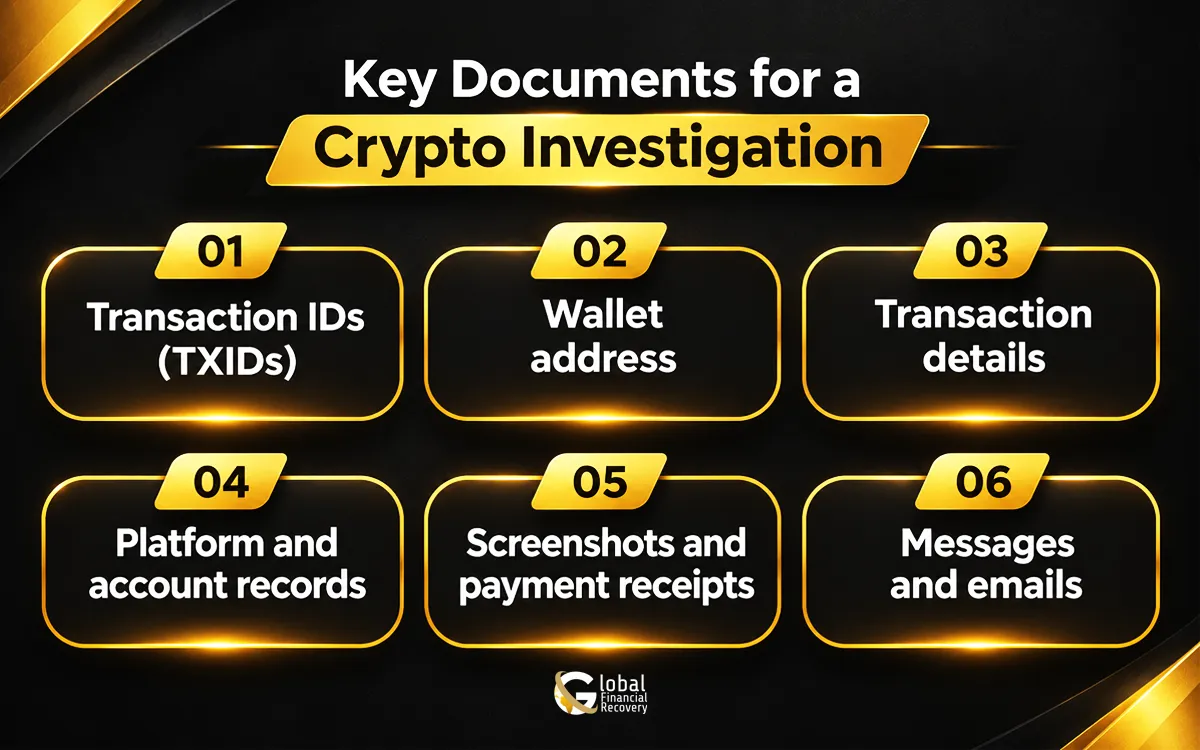
Useful evidence may include:
- Transaction IDs (TXIDs): These help locate specific transactions on the blockchain.
- Wallet addresses: Sending and receiving addresses help investigators examine where the cryptocurrency moved.
- Transaction details: The cryptocurrency type, amount, date, and time help establish a record of the transfer.
- Platform and account records: Account statements, transaction histories, and withdrawal records may help explain what happened on the platform.
- Screenshots and payment receipts: These can show displayed balances, payment confirmations, or requests for additional fees.
- Messages and emails: Communications with the platform or suspected scammer may help explain why payments were made or withdrawals were blocked.
These records can be compared with blockchain data to build a clearer picture of the incident. For example, a transaction ID may confirm that cryptocurrency was sent to a particular wallet, while platform messages may help explain why the transfer was made.
You may not have every record, and that does not mean there is nothing to investigate. Start by saving the information already available and keep the original files where possible. Avoid sharing wallet passwords, private keys, or recovery phrases, as these can give others access to your funds.
What Happens After Reporting a Crypto Scam?
After reporting a crypto scam, the next steps depend on where the incident is reported, the evidence available, and what happened to the funds. Reporting the scam and investigating the transactions are related, but they are not the same process.
Here is what may happen next:
- The report is reviewed: The relevant exchange, platform, or authority may examine the information submitted and request further details.
- Transaction records are examined: TXIDs, wallet addresses, and payment records can help establish how the funds were sent.
- Supporting evidence is assessed: Messages, account records, and screenshots may help explain the events surrounding the transfer.
- Possible next steps are considered: Depending on the findings, this may involve providing additional information, contacting a relevant exchange, or cooperating with the appropriate authorities.
Alongside reporting the incident, reviewing the available transaction records can help build a clearer picture of what happened. Global Financial Recovery, for example, focuses on financial investigation, transaction tracing, and reviewing evidence to help assess cases involving suspected financial fraud. This type of review can help organize the available information and identify questions that may need further investigation.
However, tracing funds does not guarantee that they can be frozen or returned. Any further action depends on the circumstances, the evidence, and the parties able to act on the findings.
It is also important to be careful of people who promise to recover stolen cryptocurrency in exchange for an advance payment. Requests for additional taxes, release fees, or guaranteed recovery payments deserve careful scrutiny, especially after an earlier scam.
How Long Does a Cryptocurrency Transaction Investigation Take?
The amount of time required to conduct a cryptocurrency transaction investigation will depend on various case specifics. While some transactions will be easy to investigate, others will require more time due to the fact that cryptocurrency has been transferred between several wallets or blockchain networks.
However, there are several aspects that may influence the timeline of a case, such as the number of transactions, the presence of transaction records, and the need for additional information from cryptocurrency exchanges or other services.
Also, one needs to keep in mind that conducting an investigation and recovering funds are two different things. Investigation may be used to track down where cryptocurrency was transferred, but further actions require more time. In our article on crypto scam recovery timelines, we discuss what aspects may affect the timeline of this process. There is no fixed timeline for every case. The scope of the investigation and the evidence available help determine how much work may be needed.
What Can a Cryptocurrency Transaction Investigation Reveal?
A cryptocurrency transaction investigation can help explain what happened to funds after a transfer, especially when a payment is linked to a suspected crypto scam. By examining blockchain records and supporting evidence, investigators may uncover several important details.
- Transaction Status: Investigators can check whether a transaction was recorded on the blockchain and whether it was confirmed or remains pending. This helps determine whether the transfer occurred as expected.
- Wallet Addresses: Transaction records can show which wallet addresses sent and received the cryptocurrency. These details help identify the addresses involved and provide a starting point for examining further transactions.
- Movement of Funds: By following related transactions, investigators can examine where the cryptocurrency moved after the original transfer. This may reveal additional wallet addresses and help build a clearer picture of how the funds travelled.
- Connections Between Transactions: Reviewing transaction patterns, timing, and transfers between addresses may reveal possible links between different transactions. These connections need careful examination because they do not automatically prove that the wallets belong to the same person.
- Links to Cryptocurrency Services: Transaction records may indicate that funds reached a known cryptocurrency exchange or another identifiable service. This can provide a useful lead, although identifying an account holder may require additional records or information from that service.
- Evidence Related to a Suspected Scam: Investigators can compare blockchain activity with platform records, payment receipts, screenshots, and communications. These details may help explain why the transfer was made and whether the available evidence supports the reported events.
The findings can help establish what is known about a transaction and identify questions that still need answers. However, blockchain records alone may not reveal who controls a wallet or prove that fraud occurred. Reviewing the transaction history alongside other evidence is often necessary to understand the full situation.
Understanding the Findings and Possible Next Steps
An investigation into a cryptocurrency transaction will allow one to see where the funds were spent, which transactions are related, and what additional information needs to be provided. The results of the investigation can then be considered together with the information that is available in order to get a better picture.
For those who have been victims of crypto-related scams, the information will be useful in determining what exactly happened and what actions can be taken in view of the situation. They may share the collected information with the cryptocurrency exchange or submit it to the relevant authorities.
Request a Free Case Evaluation to discuss your situation with Global Financial Recovery and learn what can be assessed based on the available evidence.
At Global Financial Recovery, we are specialized in performing investigations and transaction tracing in the cases related to suspected financial frauds. The analysis of the available information can help to evaluate the information that is contained in the records and determine which questions need to be clarified.
Thus, it is important to note that tracing cryptocurrencies involves analyzing the flow of funds and the available evidence and does not guarantee any results.
FAQs (Frequently Asked Questions)
You can start by searching the transaction ID (TXID) on the relevant blockchain explorer. This can show the wallet addresses involved and related transfers. Identifying the wallet owner usually requires additional information beyond public blockchain records.
Yes, investigators can examine transactions across multiple blockchain networks when relevant records and tracing methods are available. If cryptocurrency moves between networks, each part of the transaction path may need separate analysis to understand how the funds moved.
Investigators can follow recorded transactions from one wallet address to another to examine the movement of funds. Each transfer may provide further leads, although tracing can become more complex when funds pass through multiple services or different blockchain networks.
Check the withdrawal status, transaction ID, and receiving wallet address. If a TXID is available, verify it on the relevant blockchain explorer. Save screenshots, account records, and platform communications, and contact the platform through its official support channel to clarify the status.
Yes, cryptocurrency transaction records can help document transfers, wallet addresses, amounts, and transaction times. Investigators may compare these records with payment receipts, account histories, and communications to build a clearer picture of a suspected fraud. The relevance and legal use of the evidence depend on the circumstances and applicable rules.
Book A Free Consultation
Recent Posts




From case evaluation to financial investigation, Global Financial Recovery provides transparent guidance to help you understand your case and explore your options.