
Crypto ATM Scams: Why More People Are Losing Money at Bitcoin Machines
- Cryptocurrency
- Updated On: July 21, 2026
Table of Contents
Cryptocurrency kiosks are ATM-like devices commonly known as crypto ATMs or Bitcoin ATMs. They are designed to purchase and transfer cryptocurrencies in cash. As the availability of such machines has grown, scammers have managed to find more ways to abuse them. Instead of hacking the machines themselves, they trick people into sending cryptocurrency through Bitcoin ATMs by pretending to be government officials, bank representatives, technical support agents, investment advisors, or even someone they know.
The scale of the phenomenon grows constantly. According to the Internet Crime Report for 2025 compiled by the FBI, more than 13,400 cases of cryptocurrency kiosk scams were registered, with more than $388 million in losses. Also, the report mentions that the complaints and losses from them have grown significantly compared to the previous year. It is highlighting the growing use of these machines in cryptocurrency scams.
Knowing how these scams work is the first step to identifying them. This guide describes how crypto ATM scams work, the most frequent tactics used by scammers, the signs of danger to look out for, and the measures that should be taken to prevent these scams.
What Is a Crypto ATM or Bitcoin Machine?
A crypto ATM, also known as a Bitcoin ATM, Bitcoin machine, or crypto kiosk, is a self-service machine that allows people to buy cryptocurrency using cash or, in some cases, a debit card. Instead of dispensing cash like a traditional ATM, it sends cryptocurrency, such as Bitcoin, to a digital wallet once the transaction is complete.
Crypto ATMs are real financial devices provided by legal vendors in many countries. It represents a convenient solution to receive cryptocurrency without having an account on a cryptocurrency exchange.
The procedure is simple enough. A customer enters the amount of cryptocurrency he wants to buy, scans the QR code of his crypto wallet, adds cash or pays via another payment method, and cryptocurrency is transferred to the address of the wallet provided.
The device itself is not a fraudulent tool. The fraud occurs prior to the person reaching an ATM in almost all cases. Scammers approach potential victims using phone calls, SMS, emails, social networks, dating websites, or fake investment websites and persuade them to visit a Bitcoin ATM and transfer cryptocurrency to the scammer-controlled wallet.
Once the transaction is completed, it cannot be reversed because it is stored on the blockchain. This is why crypto ATM scams and Bitcoin ATM fraud became so widespread.
Why Are Crypto ATM Scams Increasing?
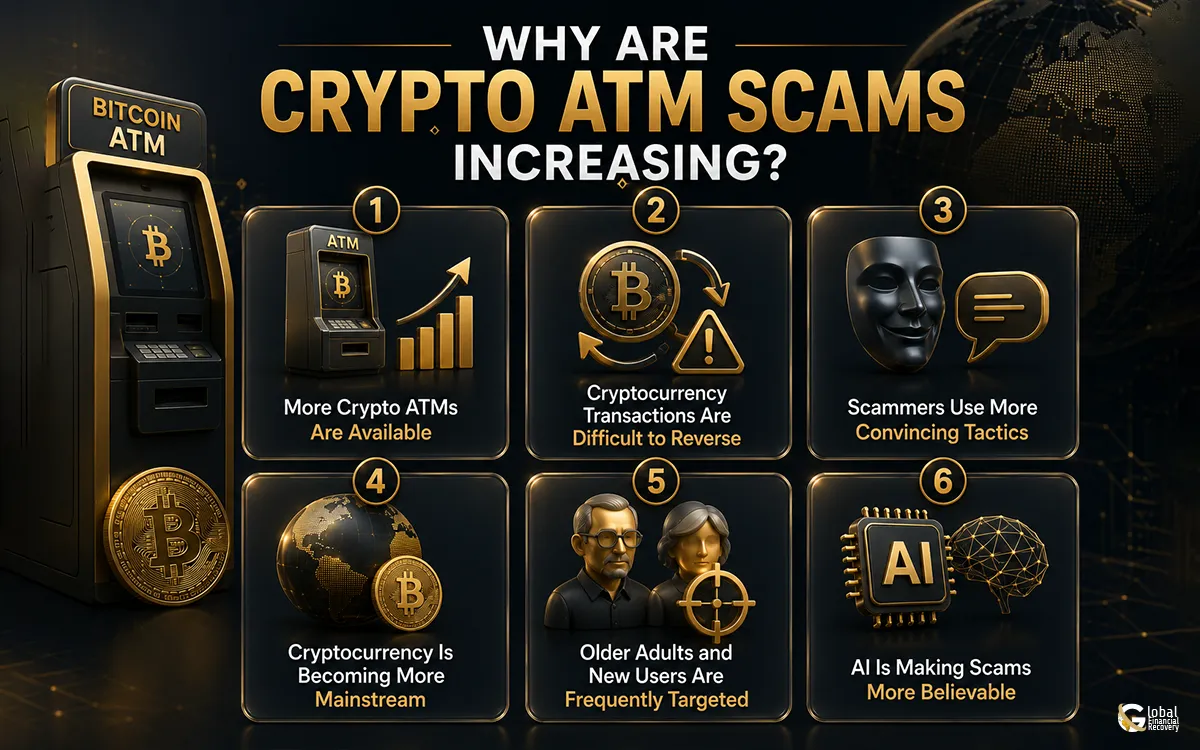
Crypto ATM scams have become more common as cryptocurrency has become easier to access. The growing number of Bitcoin ATMs, combined with increasingly sophisticated scam tactics, has made it easier for criminals to convince people to send cryptocurrency through these machines. Here are some of the main reasons behind this rise.
More Crypto ATMs Are Available
Crypto ATMs are becoming easier to find in convenience stores, shopping centers, and other public places. As more machines become available, scammers have more opportunities to direct victims to a nearby Bitcoin ATM.
Crypto Payments C+an't Be Easily Reversed
Once cryptocurrency is sent through a Bitcoin ATM, the transaction is usually permanent. This makes crypto ATM scams attractive because the funds cannot be cancelled like many traditional bank payments.
Scammers Are Becoming More Convincing
Scammers now impersonate banks, government agencies, tech support teams, and investment companies. They use fear, urgency, and convincing stories to make payment requests appear genuine.
More People Are Using Cryptocurrency
As cryptocurrency becomes more popular, many first-time users are using Bitcoin ATMs without understanding how wallets and QR codes work. Scammers take advantage of this lack of experience.
New and Older Users Are Common Targets
People who are unfamiliar with cryptocurrency or Bitcoin ATMs are more likely to follow instructions without questioning them. Scammers exploit this by guiding victims through the entire transaction.
AI Makes Scams Harder to Spot
AI-generated emails, messages, fake customer support chats, and cloned voices make scams look more believable than ever. As these tools become easier to use, distinguishing between genuine and fraudulent requests becomes more difficult.
While the reasons behind the rise in crypto ATM scams are similar, the tactics scammers use can vary widely. Some pretend to be bank employees or government officials, while others build trust through fake investment opportunities or online relationships. Understanding these different approaches makes it easier to recognize a scam before money is sent. Let's look at some of the most common types of crypto ATM scams.
5 Common Types of Crypto ATM Scams
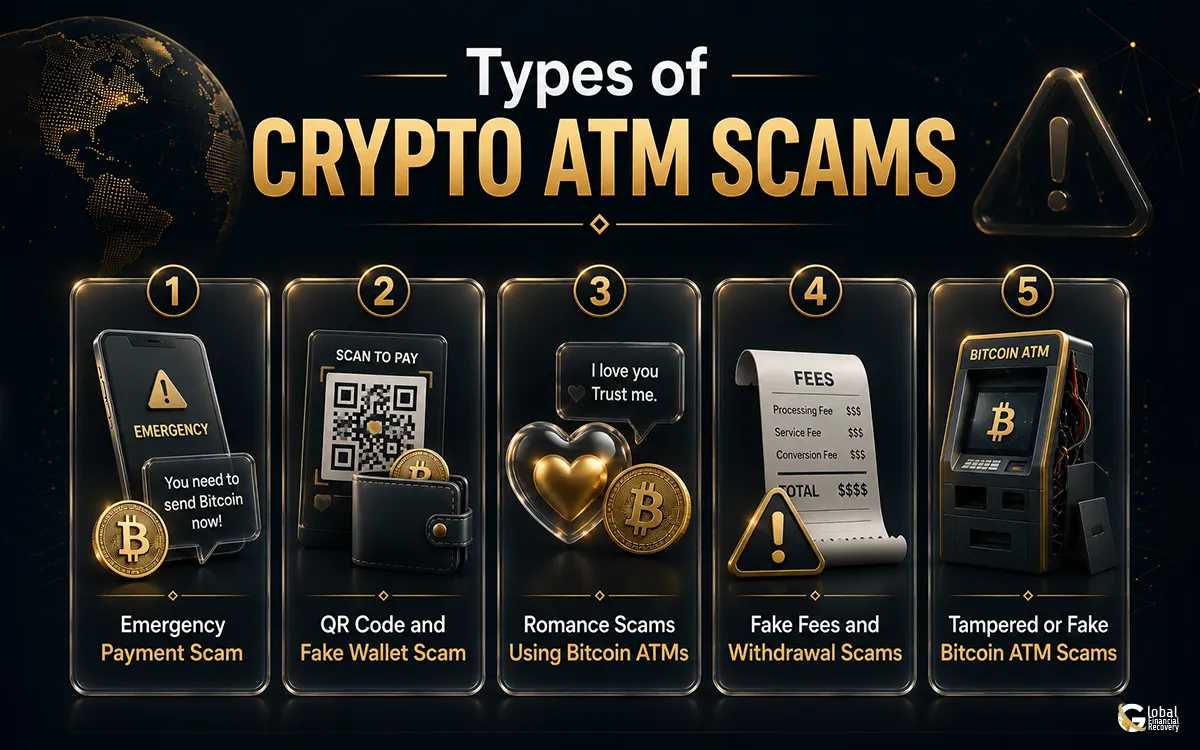
Not every crypto ATM scam follows the same pattern, but they all have one thing in common. The scammer convinces someone to send cryptocurrency through a Bitcoin ATM by creating a false sense of urgency, trust, or opportunity. Here are some of the most common scams reported today.
-
Emergency Payment Scam
Scammers create a false emergency by claiming a bank account has been compromised, suspicious activity has been detected, or money needs to be protected. They direct the victim to a Bitcoin ATM, stay on the phone throughout the transaction, and provide the wallet details. The cryptocurrency is sent directly to the scammer without the victim realizing it.
-
QR Code and Fake Wallet Scam
Scammers send a QR code or recommend a fake cryptocurrency wallet, claiming it is the safest way to receive or store Bitcoin. When the QR code is scanned at a crypto ATM, the cryptocurrency is sent to a wallet controlled by the scammer, even though the transaction appears completely legitimate.
Readers interested in learning more about these tactics can also explore our guide on fake crypto wallet scams, which explains how fraudulent wallet apps and QR codes are used to steal cryptocurrency
-
Romance Scams Using Bitcoin ATMs
Romance scammers build trust over time before asking for financial help. They often claim the money is needed for an emergency, travel, or an investment opportunity, then ask for payment through a Bitcoin ATM. Cryptocurrency payments help scammers hide their identity and make the funds much harder to recover.
This tactic is commonly seen in romance scams, where emotional manipulation is used to convince people to make repeated cryptocurrency payments.
-
Fake Fees and Withdrawal Scams
Victims are told they must pay a withdrawal fee, tax, or processing charge before they can access funds from a fake investment platform. The payment is made through a crypto ATM, but the promised withdrawal never happens. Instead, scammers continue demanding additional fees to steal even more money.
-
Tampered or Fake Bitcoin ATM Scams
Some scammers place fake QR codes, stickers, or customer support numbers on legitimate Bitcoin ATMs. Others set up fraudulent kiosks that appear genuine. Anyone following these instructions may unknowingly send cryptocurrency to a scammer's wallet instead of the intended recipient.
How Crypto ATM Scams Work
Buying crypto at a Bitcoin ATM is not a scam by itself. The machine works exactly as it is supposed to. The scam happens because someone tricks the person using it.
In most cases, the scammer sends a QR code and tells the victim to scan it at the Bitcoin ATM. That QR code contains a cryptocurrency wallet address. After the cash is deposited or the payment is made, the machine sends the cryptocurrency to that wallet.
The victim often believes the wallet belongs to a company, a government agency, or their own account. In reality, it belongs to the scammer.
After receiving the cryptocurrency, the scammer usually moves it through several wallets or exchanges. This makes it harder to track where the funds go.
The Bitcoin ATM cannot tell whether a wallet belongs to a legitimate person or a scammer. It simply sends the cryptocurrency to the wallet address that was scanned or entered.
This is why scammers insist that victims use their QR code. Once the transaction is complete, the cryptocurrency goes straight to the scammer's wallet, and reversing the payment is extremely difficult.
Warning Signs of a Crypto ATM Scam
Crypto ATM scams often follow the same pattern, even when the story changes. Recognizing these warning signs early can help prevent financial loss.
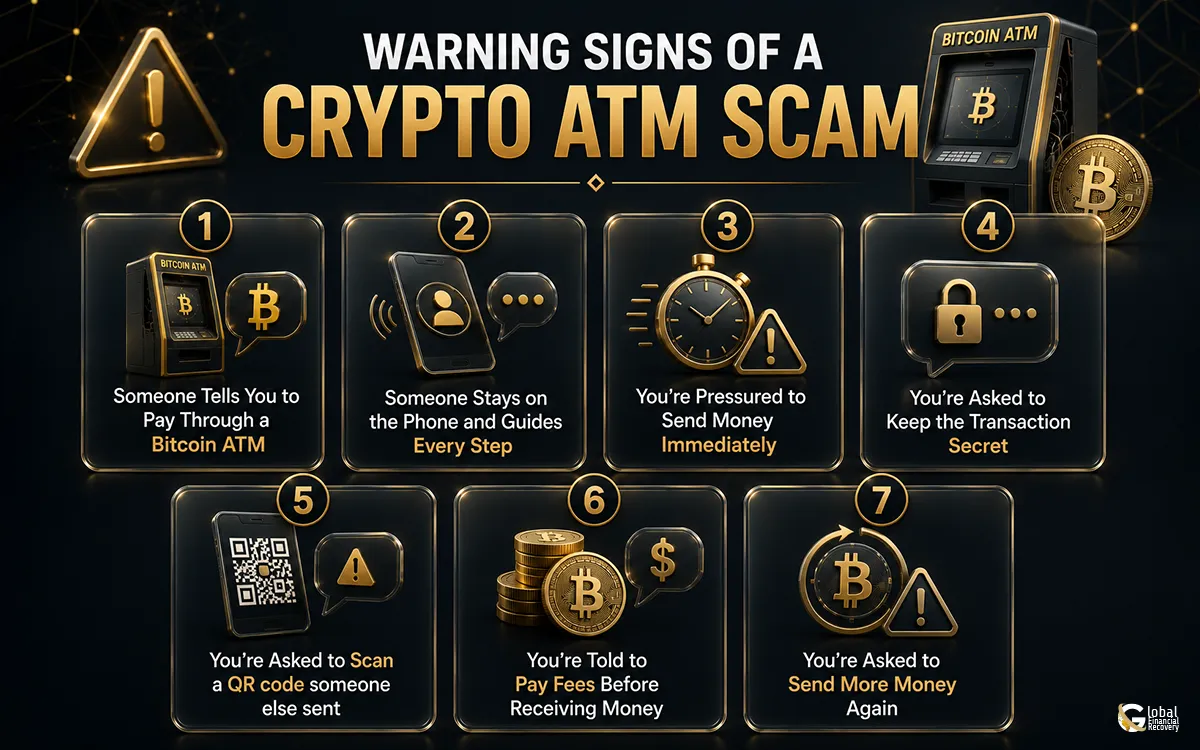
- Someone Tells You to Pay Through a Bitcoin ATM
Legitimate banks, government agencies, and businesses do not instruct people to make payments through a Bitcoin ATM. Being directed to use a crypto ATM is one of the clearest warning signs of a scam.
- Someone Stays on the Phone and Guides Every Step
Scammers often remain on the call or continue messaging throughout the transaction. They tell victims which buttons to press, how much to deposit, and which QR code to scan.
- You're Pressured to Send Money Immediately
Claims that an account is at risk, money will be lost, or immediate action is required are designed to create panic. Scammers rely on urgency to stop people from verifying the request.
- You're Asked to Keep the Transaction Secret
Requests to hide the payment from family, friends, or the bank are a major red flag. Honest organizations do not ask people to keep financial transactions confidential.
- You're Asked to Scan a QR code someone else sent
The QR code controls where the cryptocurrency is sent. Scanning a QR code provided by someone else can send the funds directly to the scammer's wallet.
- You're Told to Pay Fees Before Receiving Money
Taxes, withdrawal fees, verification charges, or processing costs are common excuses scammers use to collect additional payments. The promised funds are never released.
- You're Asked to Send More Money Again
Many scams continue long after the first payment. Scammers create new reasons for additional transfers, causing victims to lose even more money over time.
A single warning sign does not always confirm a scam, but several of these signs appearing together should never be ignored. Taking a moment to verify the request before sending cryptocurrency can prevent a costly mistake.
What to Do After a Crypto ATM Scam
Taking the right steps as soon as possible can help preserve important evidence and support any future investigation. While cryptocurrency transactions are difficult to reverse, acting quickly may improve the chances of tracing where the funds were sent.
-
Collect and Save All Evidence
Keep the ATM receipt, wallet address, transaction ID, screenshots, emails, text messages, and call records. Also note the date, time, location of the Bitcoin ATM, and the ATM operator. This information can support reporting and any future investigation.
-
Report the Scam
Report the incident to your local law enforcement agency and the appropriate cybercrime reporting authority. Notify the crypto ATM operator as well, as they may be able to provide transaction details or other useful records.
-
Contact Your Bank or Card Provider
Report the incident to your bank or card provider, especially when a debit or credit card was used. While the cryptocurrency transaction usually cannot be reversed, the bank can review related payments and keep a record of the fraud.
-
Watch Out for Recovery Scams
Scammers often target victims a second time by promising guaranteed recovery in exchange for upfront fees. Choose services that provide realistic guidance, explain the process clearly, and avoid making promises they cannot keep.
-
Seek Professional Guidance
Cases involving multiple wallets, exchanges, or international transfers often require technical investigation. Professional recovery services review the available evidence, use blockchain analysis to trace the movement of funds where possible, and provide clear, evidence-based guidance on the options available.
At Global Financial Recovery, every case begins with a careful review of the available information. The team helps individuals understand how the scam occurred, what evidence should be preserved, and whether blockchain analysis or other investigative methods may help trace the movement of funds. The focus is on providing clear, realistic guidance rather than making recovery promises.
How to Avoid Crypto ATM Fraud in the Future
Even if you have already been scammed, you can still protect yourself and your loved ones going forward.
Here are simple rules to follow:
- Never use a Bitcoin machine because a stranger told you to
When someone calls, messages, or emails you and tells you to use a crypto ATM, treat it as a red flag.
- Do not scan QR codes from other people
Only use wallet addresses and QR codes you created yourself in your own trusted app.
- Do not keep secrets from your bank or family
When someone says, “Do not tell anyone,” stop and think. Honest institutions do not ask you to hide transactions from family or your bank.
- Be very careful with emotional requests
When someone you only know online asks you to send money through Bitcoin machines, think twice. Consider reading more about modern-day crypto romance scams and elderly scam protection if you or someone you care about is vulnerable to emotional pressure.
- Look closely at the machine
Check for strange stickers, fake support numbers, or instructions that tell you to call or message a private number before using the ATM.
These simple habits can help you avoid many ATM cryptocurrency scams and protect your money.
After a Crypto ATM Scam: What Matters Most
Crypto ATM scams continue to evolve, but the tactics behind them remain largely the same. Scammers create urgency, build trust, and convince people to send cryptocurrency through legitimate Bitcoin ATMs. Understanding how these scams work and recognizing the warning signs can make it easier to spot suspicious requests before money is lost.
When a crypto ATM scam does occur, acting quickly is important. Saving transaction records, reporting the incident, and preserving all available evidence can support future investigations. In more complex cases involving multiple wallets, fake investment platforms, or cross-border transactions, understanding how the funds moved often requires professional help.
This is where reliable guidance becomes valuable. At Global Financial Recovery, every case starts with a free case evaluation with the available evidence. By combining blockchain tracing with investigative expertise, the team helps individuals better understand what happened, what options may exist, and what realistic next steps look like, without making promises that cannot be guaranteed.
Every crypto ATM scam is different, and so is the path forward. Learning more about the transaction, preserving evidence, and understanding the available options are often the most important first steps. For anyone looking for clear, evidence-based guidance, starting with a professional case assessment can provide a better understanding of the situation before deciding what to do next.
FAQs (Frequently Asked Questions)
A Bitcoin ATM transaction is likely part of a scam when someone instructs you to use the machine, provides a QR code to scan, creates a sense of urgency, or asks you to keep the payment secret. Legitimate banks, government agencies, and businesses do not request payments through Bitcoin ATMs.
Recovery depends on several factors, including how quickly the scam is reported, the evidence available, and how the cryptocurrency moved after the transaction. While blockchain transactions cannot usually be reversed, blockchain analysis and transaction tracing may help identify the movement of funds in some cases.
Save the ATM receipt, transaction ID, wallet address, screenshots, and all communication related to the scam. Report the incident to local law enforcement, the appropriate cybercrime authority, your bank if a card was used, and the crypto ATM operator. Acting quickly helps preserve important evidence for any investigation.
Bitcoin ATMs allow scammers to receive cryptocurrency quickly, and blockchain transactions are generally difficult to reverse once confirmed. Unlike traditional bank transfers, cryptocurrency payments can be moved across multiple wallets, making them harder to trace and giving scammers greater control over the stolen funds.
Never use a Bitcoin ATM because someone contacted you by phone, email, text message, or social media and instructed you to do so. Always verify unexpected payment requests independently, use only your own cryptocurrency wallet and QR codes, and avoid sending cryptocurrency to anyone who creates urgency or asks for secrecy.
Book A Free Consultation
Recent Posts



From case evaluation to financial investigation, Global Financial Recovery provides transparent guidance to help you understand your case and explore your options.