
CLARITY Act Puts U.S. Crypto Rules Back in the Spotlight
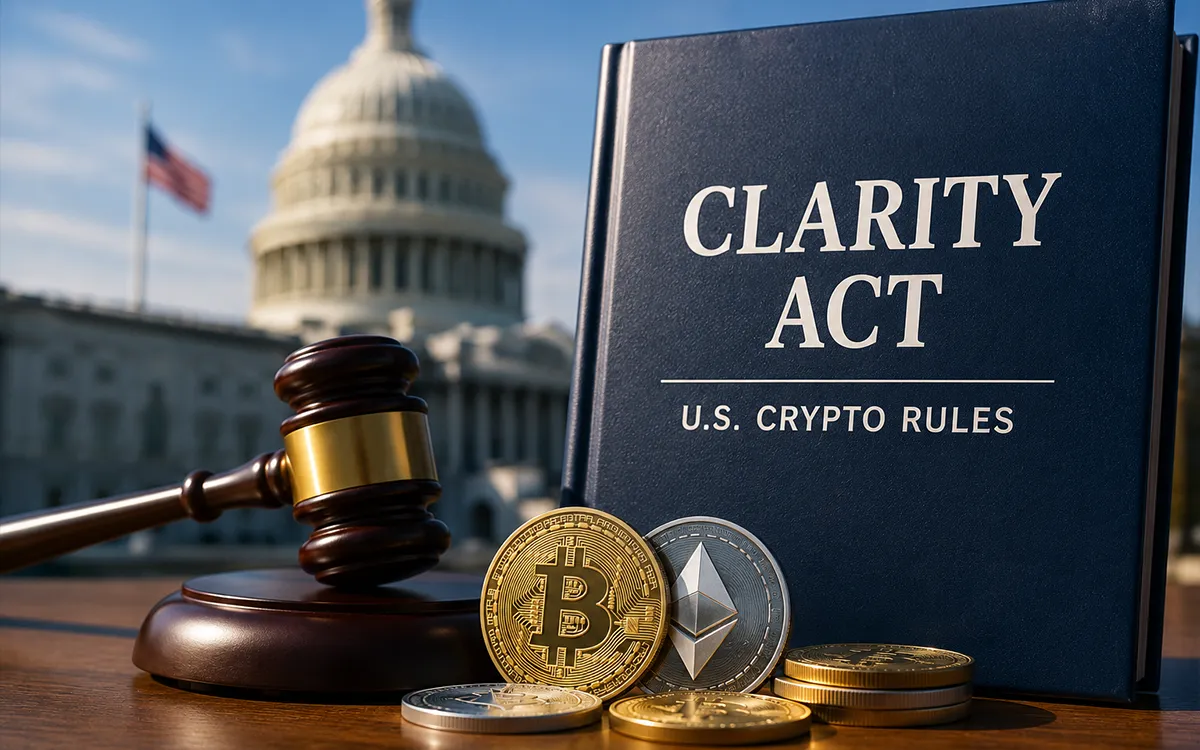
Washington is once again at the center of the cryptocurrency debate as lawmakers continue to discuss the Digital Asset Market CLARITY Act, a bill that could significantly change how digital assets are regulated in the United States.
Attention around the bill continues to build. Crypto companies and investors want clearer answers. Policymakers have also spent years debating which federal agency should regulate much of the digital asset market.
For many businesses in the sector, the biggest problem has not been a lack of interest from regulators. Instead, there has been uncertainty. Companies often found themselves trying to interpret rules that were written long before cryptocurrencies existed. This lack of clarity has also created challenges for investors trying to identify legitimate opportunities and avoid crypto scams.
The CLARITY Act is designed to address that issue. If passed, the legislation would establish guidelines for determining whether a digital asset should be regulated as a commodity or treated as a security.
That distinction matters because it affects which regulator takes the lead. The bill would give the Commodity Futures Trading Commission greater authority over many decentralized digital assets, while the Securities and Exchange Commission would continue overseeing assets that meet the definition of investment contracts.
Backers of the legislation say the change could make compliance easier for businesses operating in the United States. They also argue that clearer rules may encourage companies to build and expand within the country rather than looking abroad. Supporters also believe stronger regulatory clarity could help reduce confusion that bad actors often exploit in crypto investment scams.
The House has already given its approval to the bill. In July 2025, lawmakers voted 294 to 134 in support of the measure. The vote showed backing from both major political parties. The legislation has since moved to the Senate.
Not everyone views the proposal as the perfect solution for crypto regulation. Some consumer protection groups and policy experts have warned that, while the bill may provide clearer rules, it may not include enough safeguards to fully address market abuse and other risks that investors could encounter in parts of the digital asset market.
Investor advocates have also pointed out that regulatory clarity alone may not eliminate fraud. Crypto scams continue to affect individuals and businesses worldwide, often resulting in significant financial losses. In many cases, victims later seek professional assistance for cryptocurrency scam recovery after discovering they have been targeted by fraudulent investment schemes.
Even so, the legislation is widely viewed as one of the most significant crypto-related proposals currently under discussion in Washington.
The Senate now faces a decision that could influence the direction of the digital asset market in the United States. Many companies have spent years calling for clearer regulations. The bill could help provide that clarity. Supporters believe a more transparent regulatory framework may strengthen investor confidence while making it harder for fraudulent operators behind crypto investment scams to take advantage of regulatory uncertainty. Without the bill, the debate over crypto rules may continue for some time.
Book A Free Consultation
Recent News






From case evaluation to financial investigation, Global Financial Recovery provides transparent guidance to help you understand your case and explore your options.