
Imposter Scams in Crypto: How Fake Profiles Trick Investors and How to Spot Them

- Cryptocurrency
- Updated On: June 12, 2026
Table of Contents
Have you ever received a message from a crypto expert, exchange representative, celebrity, or investment mentor that seemed completely genuine?
That's exactly what imposter scammers rely on.
Instead of hacking wallets or breaking through security systems, these scammers impersonate someone you trust. They create fake profiles, copy legitimate companies, and use convincing stories to trick people into sending money or sharing sensitive information. Many of these schemes overlap with social engineering scams, where fraudsters manipulate trust rather than exploiting technology.
And it's a growing problem. According to blockchain analytics firm Chainalysis, crypto scams generated billions of dollars in losses in recent years, with impersonation scams remaining one of the most common tactics used by fraudsters. Crypto imposter scams continue to evolve, with scammers taking advantage of new technologies and communications channels. Scammers have become more sophisticated as they use AI-generated content, fake customer support accounts, and social media impersonation to earn the trust of victims. In some cases, victims are eventually directed to fake crypto wallet scams, fake investment groups, or even crypto withdrawal fee scams designed to extract additional funds.
The good news is that once you understand how these scams work, they become much easier to spot. In this guide, we'll explain what crypto imposter scams are, the warning signs to watch for, and how you can protect yourself.
What Are the Crypto Impostor Scams?
A crypto impostor scam happens when someone pretends to represent a trusted person, company, or organization to gain your confidence and convince you to take action.
For example, you might receive a message that appears to come from a cryptocurrency exchange, a project administrator, a customer support agent, or a well-known figure in the crypto community. The scammer's goal is usually to get you to send cryptocurrency, reveal sensitive information, click a malicious link, or connect your wallet to a fraudulent platform.
What makes these scams effective is that they often look legitimate. Scammers may use copied logos, professional-looking websites, verified-looking social media profiles, and even fake customer support accounts to appear authentic.
Rather than relying on technical hacks, impostor scams rely on trust. The scammer's success depends on convincing victims that they are dealing with a real person or organization.
Common Platforms for Imposter Scams
- Social Media – Fake profiles on Twitter/X and Instagram running phony giveaways
- Chat Platforms – Imposters in Telegram and Discord posing as moderators or admins
- Email/DMs – Phishing messages disguised as security alerts or support tickets
- Fake Websites – Nearly perfect copies of real exchanges designed to capture login details
How the Imposter Scam Works?
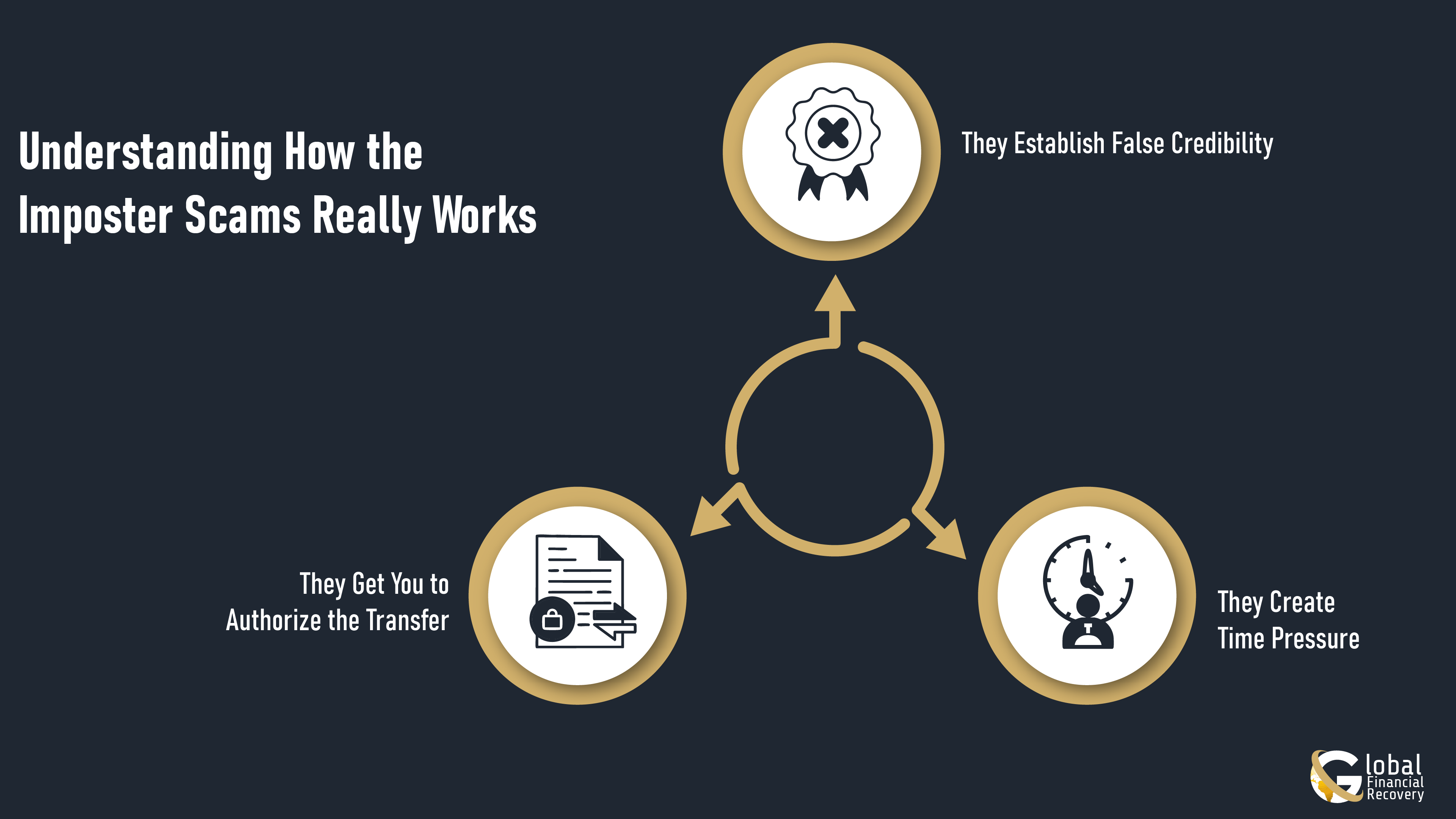
These scams work because they feel legitimate and personalized. Here's how they usually play out:
-
They Establish False Credibility
Imposters start by copying someone trustworthy. You might receive a message from what appears to be a known crypto expert, or visit a website that looks exactly like your regular exchange, except for one letter in the URL. By seeming credible from the start, they get past your initial skepticism.
-
They Create Time Pressure
Once you're engaged, they push urgency. Limited-time offers, account security warnings, or exclusive opportunities that expire soon are all designed to make you act on emotion rather than logic. The pressure is the point.
-
They Get You to Authorize the Transfer
Finally, they convince you to send crypto yourself. They'll provide a wallet address with a plausible reason why you need to send funds first. You're not being hacked, technically; you're approving the transaction. Once sent, the crypto is gone.
Recognizing this pattern helps you spot problems before they become losses. Now, let's look at some of the types of imposter scams to better understand and safeguard yourself.
Different Types of Imposter Scams You Should Know
Crypto impostors use many different tactics to appear trustworthy. While the methods may vary, the goal is usually the same: to convince victims to send money, share sensitive information, or connect their wallets to fraudulent platforms.
Here are some of the most common types of crypto impersonation scams seen today:
|
Scam Type |
How It Works |
Examples |
|
Scammers copy the names, photos, or profiles of famous people to promote fake giveaways or “guaranteed” investments. |
A fake Elon Musk Twitter/X account promising to double your Bitcoin if you send some first. |
|
|
Fraudsters build trust through online relationships, then steer victims toward fake crypto platforms. |
A person you meet on Telegram or dating apps who slowly convinces you to “invest together” in a secret crypto deal. |
|
|
Company or Government Impersonation |
Scammers pose as banks, exchanges, or tax authorities to pressure you into urgent crypto payments. |
An email saying your Binance account will be frozen unless you transfer USDT; a fake IRS caller demanding Bitcoin for “back taxes.” |
|
Fake Customer Support |
Imposters act as official exchange or wallet staff to trick you into sharing sensitive details or paying fake “fees.” |
A fake Coinbase support agent on Telegram or X asking for your seed phrase or requesting remote access to your device. |
|
Fake Websites & Apps |
Lookalike platforms steal login details, seed phrases, or directly drain wallets. |
A phishing site like coinbaase.com, a fake wallet app on the Play Store that requests private keys. |
|
Victims are lured by offers of free tokens or doubled returns if they send crypto first. |
A YouTube stream offering “Send 1 ETH, get 2 ETH back.” |
|
|
Community & Admin Impersonation |
Scammers infiltrate Telegram/Discord groups, pretending to be admins or project founders. |
A “project admin” sends you a personal message to fix wallet issues and asks for your private key. |
|
Malicious links disguised as account alerts or rewards trick users into revealing info. |
An email urging you to “verify your wallet” through a fake link. |
|
|
Posing as recruiters or traders, scammers promise high returns if you invest or deposit upfront. |
A job ad that requires USDT deposits for “training”; a “trader” guaranteeing 20% daily profit. |
|
|
Fraudsters claim they can recover stolen funds but only demand fees without results. |
A recovery website promising to trace your lost ETH for a hefty advance payment. |
|
|
AI Deepfake & Voice Clone Scams |
Scammers use AI-generated videos, voice recordings, or live calls to impersonate trusted figures, company representatives, or influencers. |
A victim receives a video message appearing to come from a well-known crypto personality promoting a fake investment opportunity. |
These are the most common ways impostors try to trick you. Knowing the types helps you stay alert, and next, we’ll go over how we can spot imposter scams.
Key Warning Signs of Imposter Scams
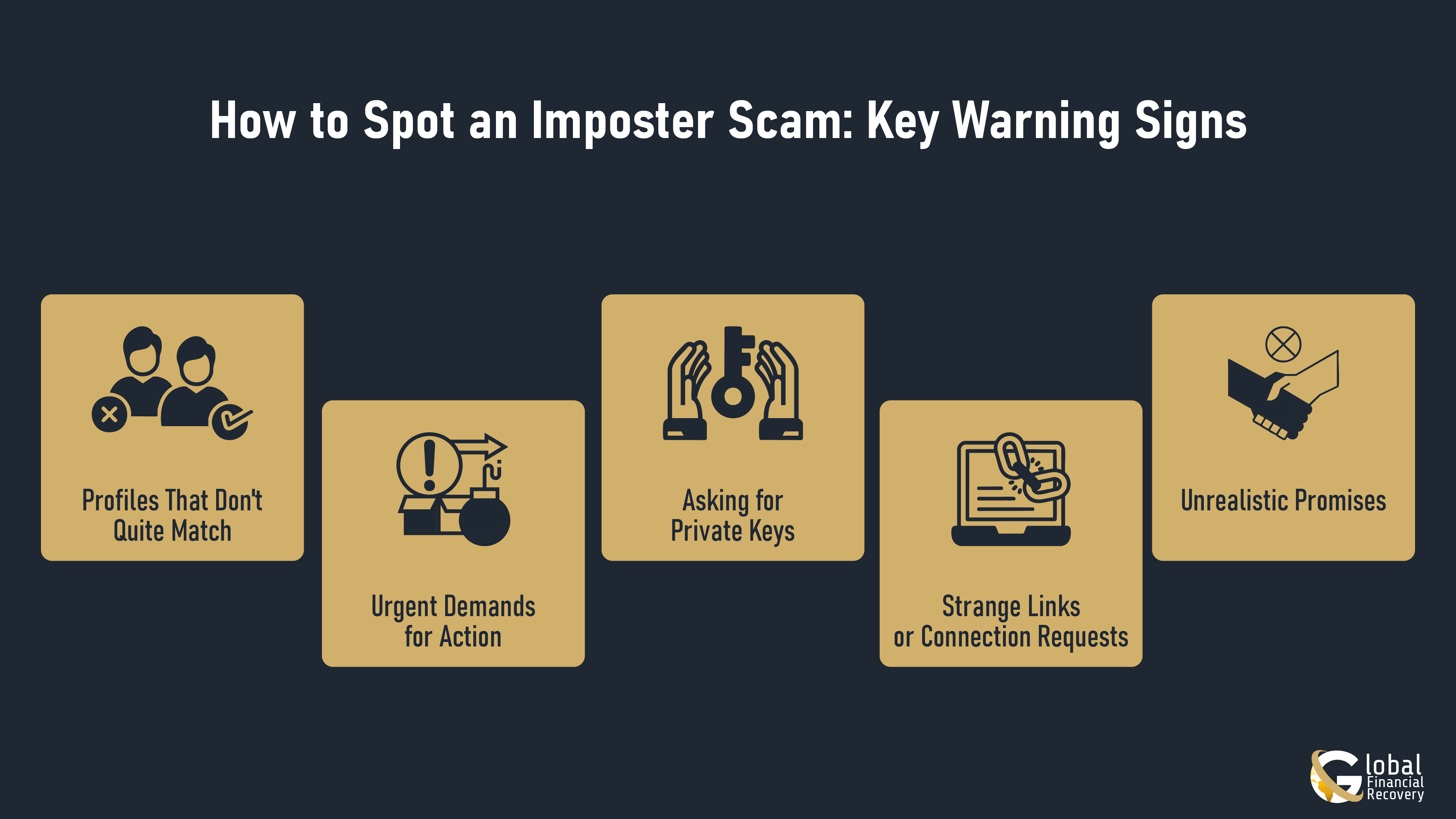
Spotting imposter scams early can save you serious money and stress. Watch for these red flags:
-
Profiles That Don't Quite Match
Imposters duplicate legitimate accounts but with subtle differences, such as a slightly altered username, a newer account with similar branding, or copied content. Checking account age, verification status, and engagement patterns reveals most impostors.
-
Urgent Demands for Action
"Act now or lose this opportunity," and "Your account will be locked unless you respond immediately" are classic manipulation tactics. Legitimate services give you time to think. When someone needs an instant decision, that's usually a problem.
-
Asking for Private Keys
This is the clearest red flag. No legitimate crypto service, exchange, or support team will ever request your private keys or seed phrase. Anyone asking for this information is an imposter attempting theft; no legitimate exceptions exist.
-
Strange Links or Connection Requests
Always examine URLs before clicking. Imposters create nearly identical websites with tiny spelling differences. Any unexpected request to connect your wallet or visit a link should trigger verification steps.
-
Unrealistic Promises
Risk-free returns, guaranteed profits, or instant doubling of your crypto are virtually always scams. Real investing involves risk, and anyone claiming otherwise is an imposter.
These signs make it easier to spot scams before they cost you. Let’s now focus on how to protect your crypto from impostors.
Case Study: Fake Binance Support Impersonators
A common crypto imposter scam involves fraudsters pretending to be customer support representatives from major exchanges such as Binance.
In one variation of this scam, users posted questions in Telegram groups seeking help with account or wallet issues. Shortly afterward, they received direct messages from accounts that appeared to belong to Binance support staff. The profiles often used official logos, similar usernames, and professional-looking responses, making them appear legitimate.
Once trust was established, the scammers claimed they needed the user's seed phrase or wallet details to verify ownership or restore account access. Victims who shared this information quickly lost access to their funds.
The key lesson is simple: legitimate exchanges will never ask for your seed phrase or private keys. If someone claiming to be customer support requests this information, it is almost certainly a scam.
Protecting Your Crypto From Imposters
Building strong security habits matters more than any single action:
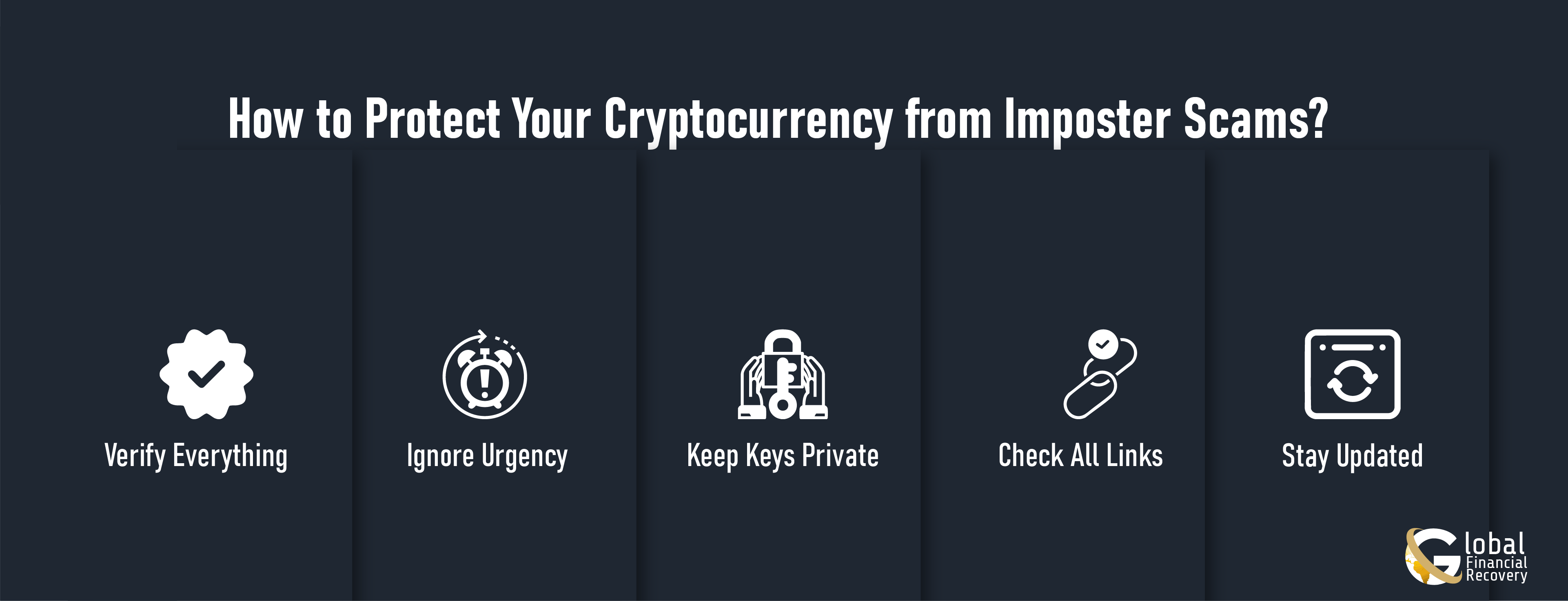
- Verify Everything
Check URLs character by character. Only follow officially verified accounts. When uncertain, navigate directly to the official website instead of clicking links.
- Ignore Urgency
Real opportunities don't disappear because you took time to research. Imposters use pressure because research exposes them. Always pause before acting.
- Keep Keys Private
Your seed phrase and private keys should never be shared with anyone, ever. They're equivalent to handing over complete access to your accounts.
- Check All Links
Before connecting your wallet anywhere, verify the exact URL. Only download apps from official app stores. Be extra cautious with links in messages.
- Stay Updated
Imposter methods evolve constantly. Following crypto security communities and news helps you recognize emerging threats.
By staying careful and verifying everything, you can avoid most scams. Next, we’ll go through what to do if you find yourself a victim.
What To Do If You've Been Targeted by a Crypto Impostor Scam
Discovering that you've been targeted by a scam can be stressful, but acting quickly may help limit further damage. If you believe you've interacted with a crypto impostor, here are some important steps to take:
- Stop Sending Money Immediately
If someone is asking for additional payments, verification fees, taxes, or account unlock charges, do not send anything else. Scammers often continue asking for more money once they know a victim is willing to pay.
- Save All Evidence
Keep screenshots of conversations, emails, wallet addresses, transaction records, account profiles, and any websites involved. This information may be useful when reporting the scam or seeking assistance.
- Secure Your Accounts and Wallets
If you shared passwords, wallet access, recovery phrases, or connected your wallet to a suspicious website, take action immediately. Change passwords, enable two-factor authentication, revoke unnecessary wallet permissions, and move any remaining assets to a secure wallet if necessary.
- Report the Scam
Report the incident to the platform where the scam occurred, such as the exchange, social media network, or messaging app. You should also consider reporting it to the appropriate cybercrime or consumer protection authorities in your region.
- Seek Professional Guidance
Recovering from a crypto scam can be complex, especially when multiple wallets, exchanges, or international transactions are involved. In some cases, professional assistance may help victims better understand what happened, preserve important evidence, and explore potential recovery options.
Organizations such as Global Financial Recovery work with individuals affected by cryptocurrency scams by reviewing case details, analyzing available evidence, and helping victims understand the next steps that may be available based on their situation.
Stay One Step Ahead of Crypto Impostor Scams
Crypto impostor scams continue to evolve as fraudsters find new ways to imitate trusted individuals, companies, and cryptocurrency platforms. From fake customer support accounts and phishing websites to AI-generated content and recovery scams, the tactics may change, but the objective remains the same: earning trust before stealing funds or sensitive information.
The strongest defense is awareness. Verifying identities, checking website addresses carefully, protecting private keys, and taking time to review unexpected requests can help reduce the risk of becoming a victim. While scammers often rely on urgency and emotion, informed decisions and proper verification remain some of the most effective safeguards.
For those dealing with a suspected crypto scam or looking to understand available recovery options, Global Financial Recovery offers a free case review to help assess the situation and explain potential next steps. Getting reliable information early can make all the difference when responding to cryptocurrency fraud.
FAQs (Frequently Asked Questions)
They often begin with a message, email, or post from a profile that looks like a trusted influencer, project, or exchange. The scammer builds trust quickly and then asks for money, private keys, or directs you to a fake website.
Yes. These scams are designed to look convincing, even for people who know the crypto space well. Because they rely on trust and social proof, they can fool beginners and experienced investors alike.
A phishing attack usually involves fake websites or links that steal your login details. An imposter scam focuses on social engineering. The scammer pretends to be someone you trust, like a project admin or influencer, to get you to send funds directly.
Look closely. Is the username slightly off? Are they pushing you to act fast? Do they promise guaranteed returns? Real projects don’t ask for your private keys or rush you into decisions. When in doubt, check the official website or verified accounts directly.
Yes. Many impersonators run “giveaway scams,” where they claim you’ll get free tokens if you send some first. Since the message comes from a profile that looks real, people fall for it, but once you send crypto, it’s gone.
Book A Free Consultation
Recent Posts




From case evaluation to financial investigation, Global Financial Recovery provides transparent guidance to help you understand your case and explore your options.