
Fake vs Legit: How to Verify the Authenticity of a Cryptocurrency Exchange

- Cryptocurrency
- Updated On: July 22, 2026
Table of Contents
Over the last few years, cryptocurrency has become more accessible than ever. With thousands of exchanges and trading platforms available online, buying and selling digital assets now takes only a few clicks. Unfortunately, this rapid growth has also created new opportunities for scammers.
Today, a fake crypto exchange can look almost identical to a legitimate one. Many fraudulent platforms feature professional-looking websites, mobile apps, live price charts, customer support, and even fake account balances that make users believe their investments are growing. By the time victims realize something is wrong, they are often unable to withdraw their funds.
Recent scam trends have made the problem even more difficult to spot. Moreover, Artificial intelligence (AI) is now being used to create convincing websites, fake customer support agents, and realistic reviews that can make a cryptocurrency exchange scam appear trustworthy at first glance.
However, there are practical ways to verify a crypto exchange before you trust it with your money. Knowing what to check can help you avoid fraudulent platforms and recognize warning signs before it's too late.
In this guide, you'll learn how fake exchanges operate, why they have become more sophisticated, the most common red flags to watch for, and a simple process for verifying whether a cryptocurrency exchange is legitimate. If you've already deposited funds into a platform that seems suspicious, we'll also explain the immediate steps you should consider taking.
What Is a Fake Crypto Exchange?
A fake crypto exchange is a scam website or app that looks like a real cryptocurrency exchange but is designed to steal your money. It may appear professional and trustworthy, but its real purpose is to stop you from accessing or withdrawing your funds.
Unlike legitimate crypto exchanges, these fake platforms don't actually buy, sell, or store cryptocurrency. Instead, they create the illusion that you're investing successfully, even though no real trading is taking place.
Many people don't realize they've been scammed because everything seems normal at first. You can create an account, deposit cryptocurrency, watch prices change, and even see your balance or profits grow. But those numbers are often fake, and when you try to withdraw your money, that's when the problems usually begin.
The problems usually begin when they try to withdraw their money.
Victims are often told they must first pay:
- Withdrawal fees
- Taxes
- Security deposits
- Liquidity verification fees
- Account activation charges
- Compliance or anti-money laundering (AML) fees
Once these payments are made, new demands often follow, creating a cycle where victims are repeatedly asked to send more money without ever receiving their cryptocurrency.
This type of crypto platform scam is designed to exploit trust and urgency. Every payment is presented as the "final step" needed to release the funds.
In some cases, the exchange itself is actually a disguised fake crypto wallet, giving scammers complete control over deposited assets from the very beginning.
A legitimate cryptocurrency exchange should never require you to pay additional fees just to access your own funds. While genuine platforms may charge transparent trading or withdrawal fees, these are normally deducted directly from your account balance, not requested as separate cryptocurrency payments.
Understanding this distinction is one of the first steps in successful crypto exchange verification.
Why Fake Crypto Exchanges Are Increasing
Crypto scams haven't just become more common, they've become far more sophisticated. Instead of creating obvious scam websites filled with spelling mistakes and broken pages, today's fraudsters build professional-looking trading platforms that can be almost impossible to distinguish from legitimate crypto exchanges.
Their goal isn't simply to steal your first deposit. They want to earn your trust, convince you that your investment is growing, and encourage you to keep sending more money over weeks or even months.

Several trends have made fake crypto exchanges much more convincing in 2025 and 2026.
-
AI Has Made Fake Exchanges Look More Legitimate
Artificial intelligence has given scammers powerful new tools. They can now build polished websites in a fraction of the time, create realistic trading dashboards, write convincing content, and even operate AI-powered customer support that responds instantly to questions.
Some AI Crypto Scams also use AI-generated videos, cloned voices, and fake customer testimonials to create the appearance of a successful, trustworthy business. As a result, judging an exchange by its design or professionalism is no longer enough.
-
Social Media Has Become the Main Gateway
Today, many victims don't find fake exchanges through Google searches. Instead, they're introduced through social media, messaging apps, or online communities where trust is built before any money changes hands.
Someone might see an advertisement promising guaranteed profits, join an investment group on Telegram or WhatsApp, receive trading advice from a fake expert on Instagram, or even be introduced to crypto investing through an online romantic relationship. By the time they're asked to register on a trading platform, they often believe they're making a safe investment.
This approach relies on psychology rather than hacking, making these Social Engineering Scams especially effective.
-
Fake Exchanges Are Often Part of Larger Scam Networks
A fake exchange is rarely the entire scam. In many cases, it's simply the final destination in a carefully planned fraud operation.
Victims may first encounter a fake investment group, a fraudulent crypto mentor, a phishing website, or someone impersonating a financial professional. Each interaction is designed to build confidence before directing the victim to deposit cryptocurrency into a controlled platform.
Behind many of these operations are organized criminal networks running multiple scam websites at once. They frequently copy the branding of legitimate exchanges, purchase fake reviews, and employ teams posing as customer support agents who keep victims engaged for weeks, or even months, to maximize the amount of money stolen.
This isn't just something a few people are talking about. Industry research shows that investment scams continue to cause billions of dollars in cryptocurrency losses every year. According to the Chainalysis Crypto Crime Report 2025, scammers are also using AI, phishing, impersonation, and social engineering more often to make fake crypto exchanges look real and convince people to trust them.
How a Fake Crypto Exchange Scam Usually Works
Most fake crypto exchange scams follow the same pattern. At first, everything appears normal. You create an account, deposit cryptocurrency, and the platform shows your investment growing. Nothing seems suspicious.
-
Your balance starts growing.
Soon after your deposit, your dashboard may show impressive profits. The numbers keep increasing, making it look like your investment is performing well. In reality, these figures are controlled by the scammers and don't reflect real trading.
-
You're Encouraged to Invest More
As your account balance grows, you're encouraged to deposit more money. You may be told that a bigger investment will unlock higher returns, special trading opportunities, or VIP benefits. Some victims are even allowed to make a small withdrawal early on to build confidence.
-
The Problems Begin When You Withdraw
Everything changes when you try to take your money out. Instead of processing the withdrawal, the platform claims you need to pay a tax, verification fee, security deposit, or other charge before your funds can be released.
-
The Requests Never End
Even after paying one fee, another often appears. The scammers keep inventing new reasons why your withdrawal can't be completed. This continues until the victim either stops paying or realizes the platform was fake from the beginning.
How to Check if a Crypto Exchange Is Legitimate
A fake crypto exchange can look just as professional as a real one. That's why it's important to look beyond the website before sending any money. You don't need to be a crypto expert to spot the warning signs. These simple checks only take a few minutes and can help you avoid losing your cryptocurrency.
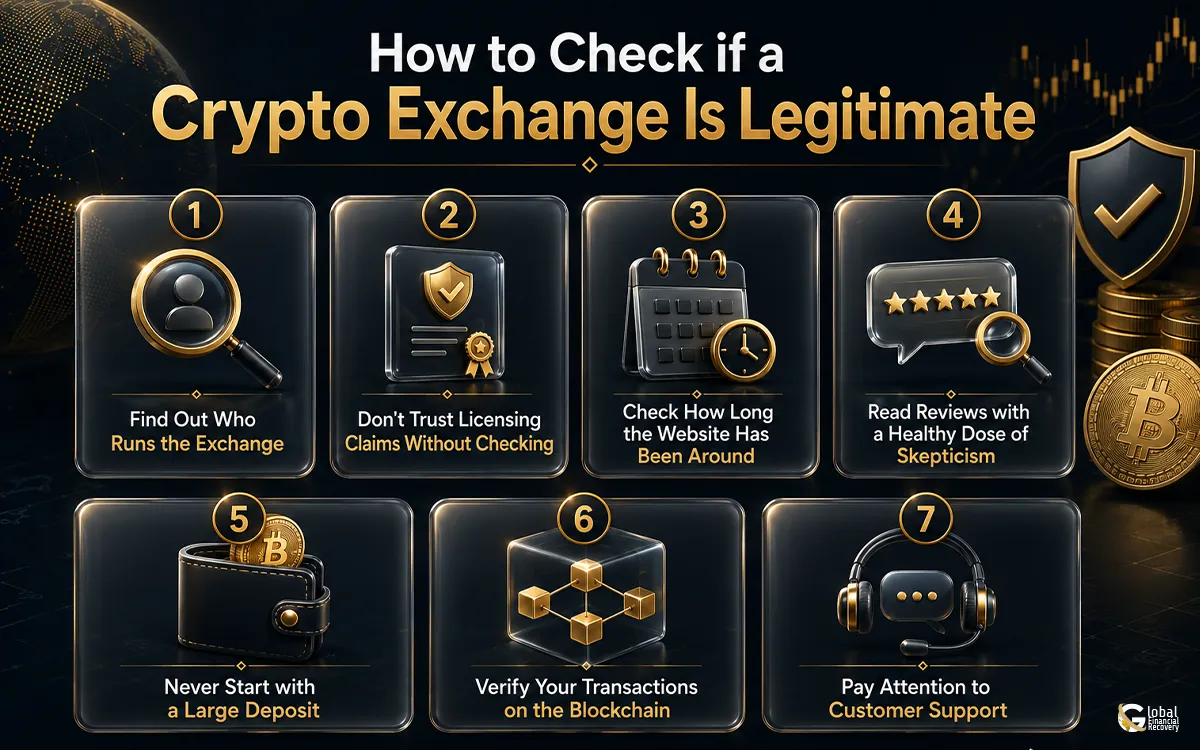
1. Find Out Who Runs the Exchange
A legitimate exchange should be open about who owns the business. Look for the company name, business address, contact details, and information about the team behind the platform.
If you can't find out who is running the exchange, ask yourself one question: Would you trust a bank if you didn't know who owned it? The same rule applies here.
2. Don't Trust Licensing Claims Without Checking
Many fake exchanges claim they're licensed or regulated because they know it builds trust. Don't take their word for it. If the platform says it's regulated, visit the regulator's official website and check whether the company actually appears in its records. If you can't verify the claim, treat it as a warning sign.
Helpful Resource: The International Organization of Securities Commissions (IOSCO) publishes alerts about unauthorized financial firms.
3. Check How Long the Website Has Been Around
Scam websites often don't stay online for very long. Once enough people report them, scammers simply launch a new website under a different name. A quick domain lookup can show when the website was created. While a new website isn't always a scam, it's a good reason to be extra careful.
4. Read Reviews with a Healthy Dose of Skepticism
Reviews can be helpful, but they can also be fake. If every review sounds the same, only talks about huge profits, or hundreds of five-star reviews suddenly appear within a few days, don't assume they're genuine. Look for detailed reviews that describe real experiences, not just big earnings.
5. Never Start with a Large Deposit
Even if everything looks legitimate, don't send a large amount of cryptocurrency right away. Start with a small deposit and, more importantly, test whether you can withdraw it. If the exchange asks you to pay extra fees before releasing your own money, stop immediately. That's one of the biggest warning signs of a fake crypto exchange.
6. Verify Your Transactions on the Blockchain
Every real cryptocurrency transaction leaves a record on the blockchain. If an exchange says your crypto has been received or sent, you should be able to verify that using a blockchain explorer. If the transaction can't be found, don't rely only on what the platform is showing you.
7. Pay Attention to Customer Support
Good customer support answers questions clearly and explains problems honestly. Be cautious if support keeps changing its story, avoids simple questions, asks you to continue the conversation on Telegram or WhatsApp, or demands more cryptocurrency before helping you. A legitimate exchange won't pressure you into making another payment.
Remember: If Something Feels Wrong, Stop
Scammers rely on people making quick decisions. If an exchange refuses withdrawals, keeps asking for more money, or pressures you to act immediately, don't ignore that feeling.
Take a step back, verify the platform, and seek independent advice before sending another dollar of cryptocurrency.
Red Flags That Most Victims Miss
Many people only realize they've been using a fraudulent crypto exchange after trying to withdraw their funds. By then, scammers often begin demanding additional payments or creating new excuses for why the withdrawal can't be completed.
Recognizing these warning signs early can help you avoid further losses.
|
Red Flags |
Why It Matters |
|
You're asked to pay a withdrawal fee before receiving your funds. |
Legitimate exchanges usually deduct fees from your balance rather than asking for separate payments. |
|
Your account is suddenly "frozen" for compliance reasons. |
Fraudulent platforms often use fake compliance or AML checks to delay withdrawals. |
|
Customer support keeps asking for one more payment. |
Every payment is presented as the final requirement, but new fees continue to appear. |
|
The platform guarantees profits or promises zero risk. |
No legitimate exchange can guarantee investment returns. |
|
Support is only available through Telegram or WhatsApp. |
Most reputable exchanges offer multiple official support channels. |
|
You're pressured to act immediately. |
Creating urgency is a common scam tactic that discourages victims from seeking advice. |
|
The platform has very little independent information online. |
A lack of credible history should encourage further investigation. |
|
You cannot verify the company's registration or leadership. |
Transparency is an important characteristic of legitimate financial businesses. |
|
Friends or online contacts strongly encourage larger deposits. |
This is common in fake investment group scams, where scammers pretend to be successful investors. (Internal Link) |
|
You're told your wallet has been frozen until you pay another fee. |
This may indicate a wallet freeze scam, where scammers invent restrictions to demand more money. |
One warning sign on its own doesn't always prove an exchange is fraudulent. However, if you notice several of these issues together, it's worth pausing before sending any more cryptocurrency.
What to Do If You've Used a Fake Crypto Exchange
Realizing you've been using a fake crypto exchange can be frightening. You may feel pressured to keep paying because the platform claims it's the only way to unlock your funds. Before you do anything else, remember this: if an exchange keeps asking for more money before letting you withdraw, it's almost certainly a scam.
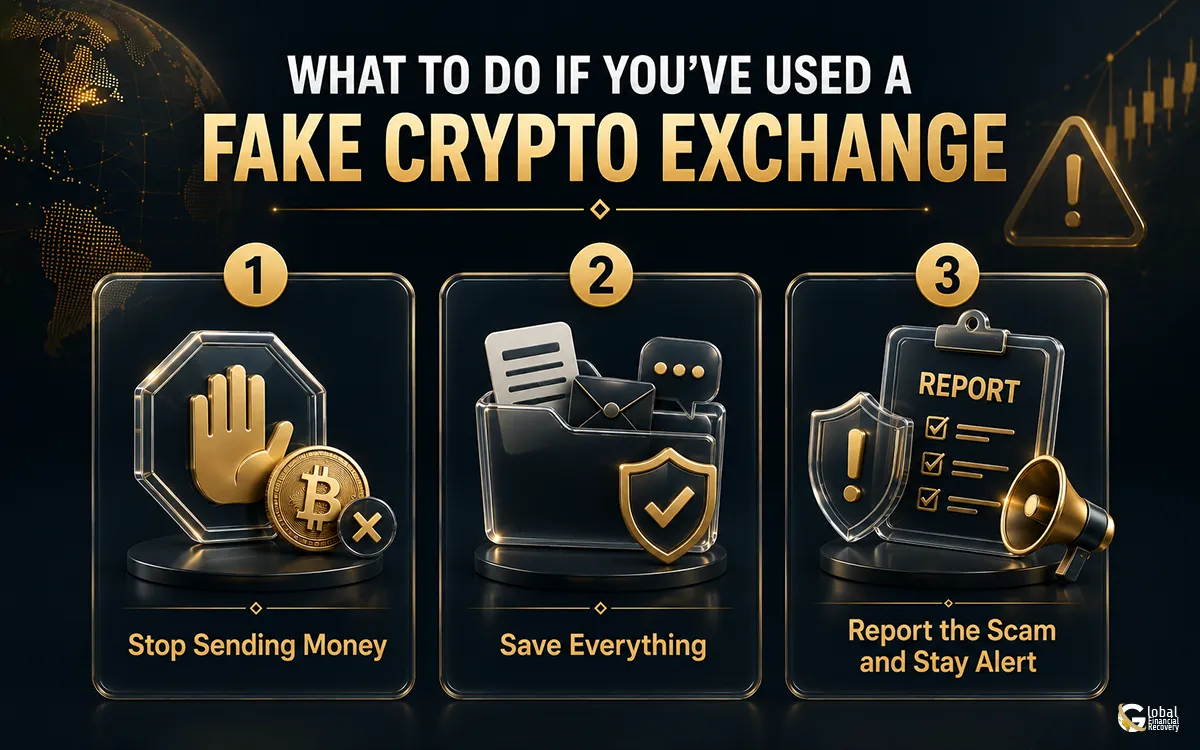
1. Stop Sending Money
Scammers often invent new reasons why you need to make "just one more payment." They may call it a tax, verification fee, security deposit, wallet activation fee, or liquidity charge.
These payments don't unlock your funds—they simply give the scammers more money. If you're being asked to pay again before you can withdraw, stop immediately.
2. Save Everything
Don't delete your account or your conversations. Instead, save as much information as you can, including screenshots, transaction IDs, wallet addresses, emails, chat messages, and payment records.
Even small details can be useful if you decide to report the scam or have your case reviewed.
3. Report the Scam and Stay Alert
Report the incident to your local cybercrime or law enforcement agency, and notify any legitimate crypto exchanges that were involved in your transactions.
Just as importantly, be careful of recovery scams. After a crypto scam, victims are often contacted by people who promise they can recover the funds for a guaranteed fee. Be cautious of anyone who promises guaranteed results, asks for large upfront payments, or contacts you unexpectedly, claiming they already know about your case.
Stay One Step Ahead of Crypto Scammers
Fake crypto exchanges are designed to look convincing. They use professional websites, fake profits, and constant communication to make victims believe their money is safe. By the time withdrawals are blocked, many people have already invested far more than they originally planned.
The best way to protect yourself is to verify a platform before depositing funds, question any unexpected payment requests, and never rely solely on online reviews or social media recommendations. A few minutes of research can prevent a costly mistake.
For anyone who has already been affected, acting quickly is important. Save all transaction records, wallet addresses, screenshots, and conversations, and avoid sending any additional payments, no matter what explanation is given.
At Global Financial Recovery, every case begins with a review of the available evidence and blockchain transactions to help victims understand what happened and what options may be available. Recovery is never guaranteed, but having the facts can make it easier to decide on the right next step.
Think you've used a fake crypto exchange? Request a free case review to better understand your situation and explore your available options.
FAQs (Frequently Asked Questions)
A legitimate crypto exchange clearly identifies the company behind the platform, provides verifiable contact information, supports blockchain transaction verification, and does not make unrealistic profit promises. Checking regulatory claims, independent reviews, and the age of the website can also help identify potential risks.
Common warning signs include guaranteed investment returns, pressure to deposit more cryptocurrency, withdrawal restrictions, requests for additional fees before releasing funds, fake licensing claims, and customer support that avoids answering direct questions or moves conversations to private messaging apps.
Yes. Fraudulent exchanges often display fake balances and fabricated profits to create the illusion of successful investments. The numbers shown on the platform do not prove that cryptocurrency is actually being held or traded.
A blockchain explorer allows anyone to verify whether a cryptocurrency transaction has been recorded on the blockchain. By searching the transaction hash or wallet address, it is possible to confirm whether funds were actually sent, received, or remain unconfirmed.
Stop sending additional funds immediately, save transaction records, wallet addresses, emails, screenshots, and chat conversations, and report the incident to the relevant financial regulator or law enforcement agency. Preserving evidence early can support any future investigation or recovery efforts.
Book A Free Consultation
Recent Posts



From case evaluation to financial investigation, Global Financial Recovery provides transparent guidance to help you understand your case and explore your options.