
How Scammers Trick Crypto Investors with Fake Tax Demands?

- Investments
- Updated On: June 29, 2026
Table of Contents
Crypto scams are becoming more convincing every year, and fake tax demands have become one of the most common tricks used by scammers today.
For many victims, the scam does not end after the initial investment. The real shock comes when they try to withdraw their money and suddenly get asked to pay a "tax fee," "clearance charge," or "account verification payment" first. Since the platform often looks professional and the pressure feels real, many people end up sending even more money, hoping their funds will finally be released.
The scale of the problem is significant. According to recent blockchain crime reports, crypto scams and fraud were estimated to have caused roughly $17 billion in losses globally during 2025, with impersonation scams and fraudulent investment platforms remaining among the most common threats.
Scammers use fake support agents, forged documents, and urgent messages to make these demands appear legitimate. In reality, these fake crypto tax demands are often part of the scam itself. Understanding how these schemes work can help you identify the warning signs, avoid further losses, and make informed decisions about recovery options.
What Are Crypto Tax Scams?
Crypto tax scams involve a variety of fraudulent schemes wherein criminals impersonate officials of tax authorities. They also impersonate other relevant financial agencies to steal cryptocurrency from investors.
Such scams often involve fraudulent tax demands claiming that investors owe taxes on their crypto earnings. They usually include names of internationally recognized institutions like the IRS, HM Revenue & Customs, or other national tax agencies in the fake communication.
How does the Crypto Tax Scam Work?
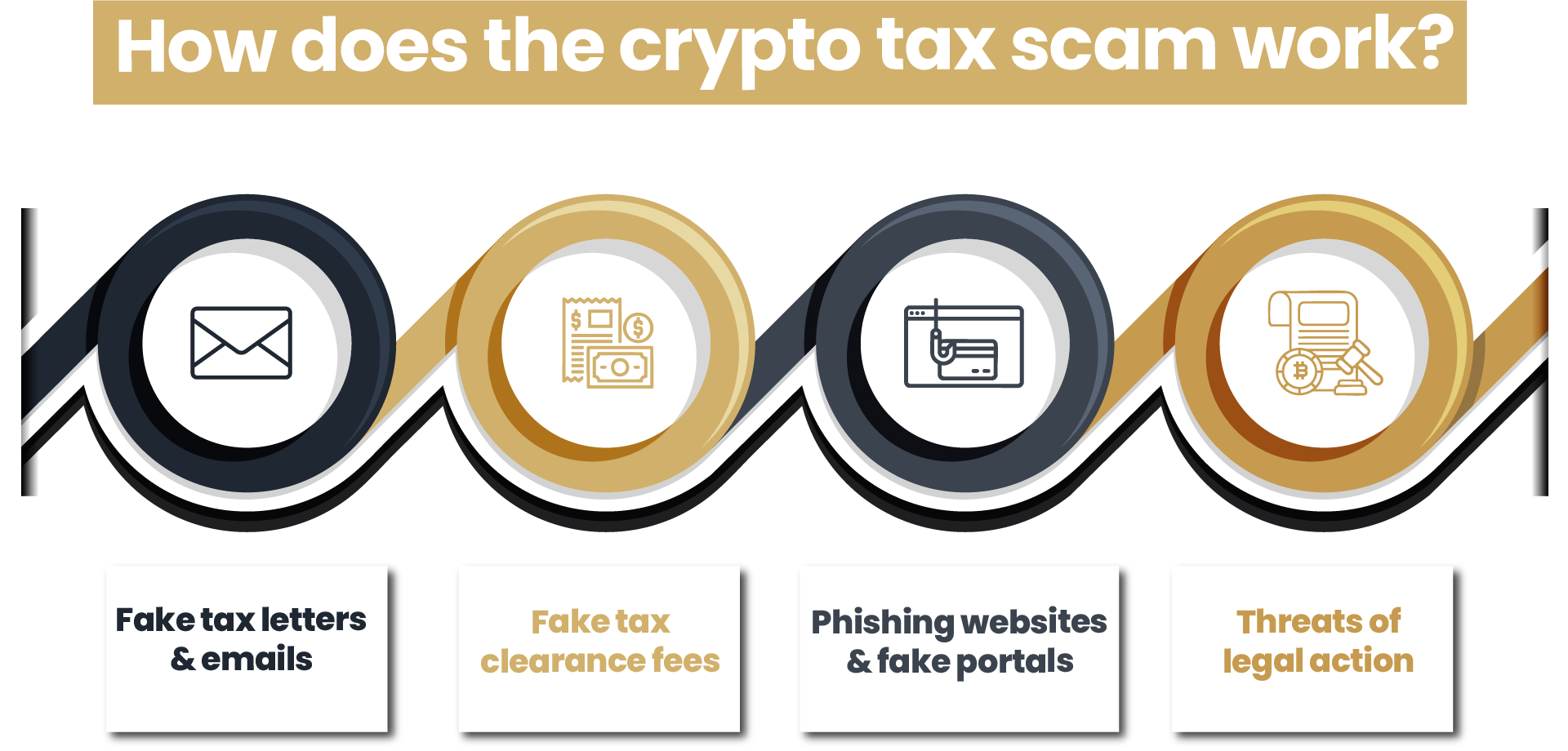
These scams can happen in several ways:
- Fake Tax Letters & Emails: Scammers claiming that an investor owes tax on crypto transactions send them official-looking emails or letters.
- Fake Tax Clearance Fees: Investors are told that they must pay a "crypto tax clearance fee" before withdrawing their funds from an exchange.
- Phishing Websites & Fake Portals: Fraudsters will set up fake government websites requiring login details to steal access to the investor's wallets.
- Threats of Legal Action: Scammers use urgency, stating that unless the investor complies with their demands, legal action or asset seizure will be threatened.
Once victims make payments, scammers disappear, leaving them with financial losses and potential identity theft risks. Learn more about IRS tax fraud.
Why Do Scammers Use Fake Crypto Withdrawal Fees?
One of the most common types of crypto tax scams involves fake withdrawal fees. This scam preys on investors who are trying to withdraw their cryptocurrency from exchanges or wallets.
Scammers will claim that before withdrawing funds, investors must pay a crypto tax clearance fee or processing fee to comply with tax regulations. Victims believe this is a normal tax procedure and send payments directly to the scammer.
Common tactics scammers use are:
- Posing as Crypto Exchange Representatives: Scammers pretend to be from exchanges like Binance, Coinbase, or Kraken, asking for tax fees before allowing withdrawals.
- Fake Government Notices: They impersonate tax authorities and claim the fee is a mandatory government requirement.
- Creating Urgency: They threaten to block accounts permanently if the investor doesn’t pay immediately.
Since crypto transactions are often irreversible, victims lose their money instantly, making it nearly impossible to recover stolen funds.
Read more about how to avoid and spot crypto withdrawal fee scams.
How Fake Crypto Tax Fees Work & Why They’re Dangerous?
Fake crypto tax fees work by creating panic and urgency among investors. Many victims panic when they see a “crypto tax violation” notice, especially if it claims they could face hefty fines or legal consequences.
These scams work through various deceptive tactics:
- Fraudulent Tax Notices: Scammers send out fake tax notices in phishing emails or letters impersonating tax authorities.
- Fake transaction approvals: Victims receive messages saying their transaction is "under review" due to unpaid taxes.
- Requests for Crypto Payments: Unlike real tax agencies, which accept standard payment methods, scammers demand payment in cryptocurrency.
Why These Scams Are Dangerous?
- The irreversible nature of transacting in crypto means a permanent loss for the victims in most cases.
- Identity theft is possible, for which contacts' stolen personal data may be used.
- Fake tax demands Hackers access additional assets from victims by hacking their crypto wallets to do the greatest harm.
Real-World Cases of Crypto Tax Scams & Victim Stories
Case 1: Fake IRS Crypto Tax Demand
The victim received an email message claiming to be from the IRS, which demanded payment of $10,000 for tax debts owed on cryptocurrency. Through the IRS cryptocurrency scam website, the offender tricked the victim into giving away key wallet information, which resulted in a $20,000 cryptocurrency loss.
Case 2: Crypto Exchange Withdrawal Fee Scam
A trader on a fake crypto exchange was told they had to pay a 5% withdrawal tax before they could access their profits. After paying, the scammer blocked their account, leading to a total loss of $15,000.
For more real-life cases of crypto tax scams and how victims have recovered stolen funds, visit Crypto Tax Scam Case Studies.
Red Flags: How to Identify a Fake Crypto Tax Demand
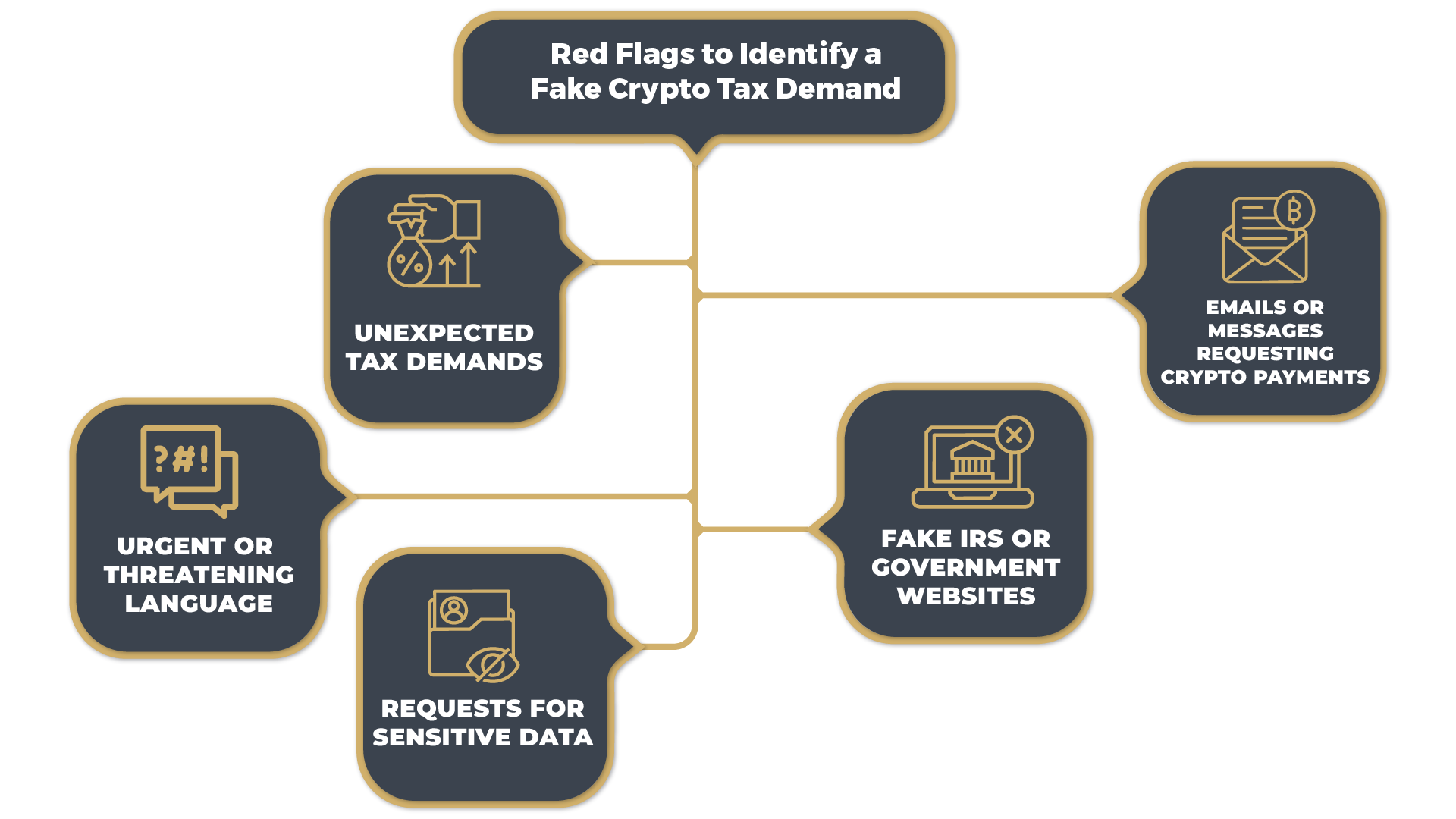
Knowing how to spot crypto tax scams can help investors avoid financial losses. If you receive a tax-related message regarding your cryptocurrency, watch out for signs of fake crypto withdrawal fees:
- Unexpected tax demands from unknown sources or unofficial email addresses.
- Emails or messages requesting crypto payments instead of traditional banking methods.
- Urgent or threatening language, such as legal action warnings or account suspension threats.
- Fake IRS or government websites requesting personal or financial information.
- Requests for sensitive data, like wallet keys or login credentials.
By verifying tax notices with official government websites, you can prevent becoming a victim of these scams.
How to Protect Your Crypto from Fake Tax Scams?
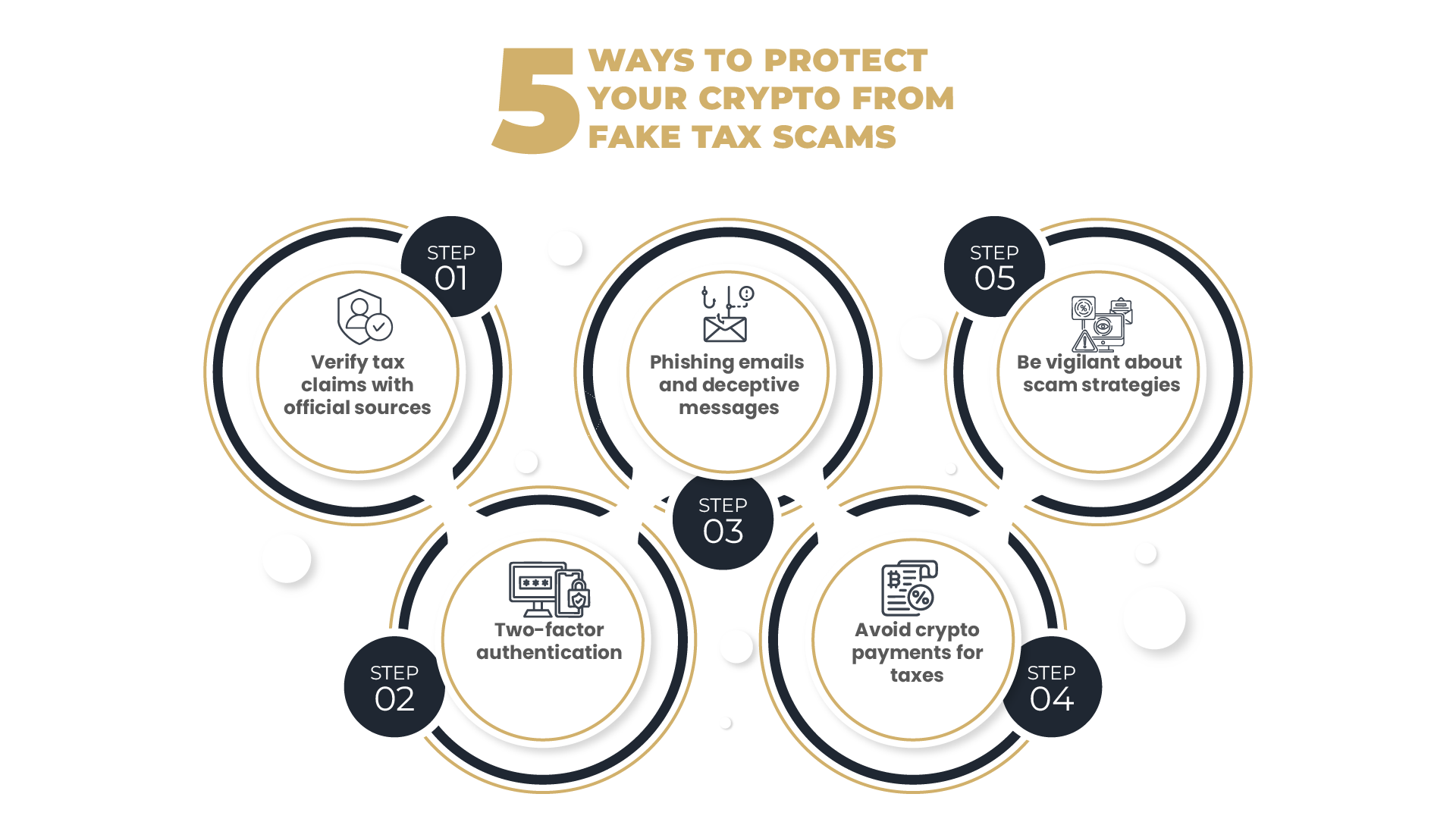
To safeguard your crypto assets from tax scams, follow these essential steps on how to avoid crypto tax scams:
- Verify Tax Claims with official sources: Look on government websites and call up the tax authorities themselves.
- Two-Factor Authentication (2FA): It provides an extra security layer to your crypto exchange and wallet accounts.
- Phishing Emails and deceptive messages: Refrain from opening suspicious links or replying to an unknown source.
- Avoid Crypto payments for taxes: Legitimate tax agencies do not accept payments in cryptocurrency.
- Be Vigilant about Scam strategies: Keep up with what's happening concerning financial safety, and invest the time to learn about and be informed by evolving forms of fraud.
By applying these crypto tax scam prevention tips, you can minimize the risk of falling victim to crypto tax scams. Therefore, protect your crypto from fraud.
Recovery Steps to Take If You Were Scammed
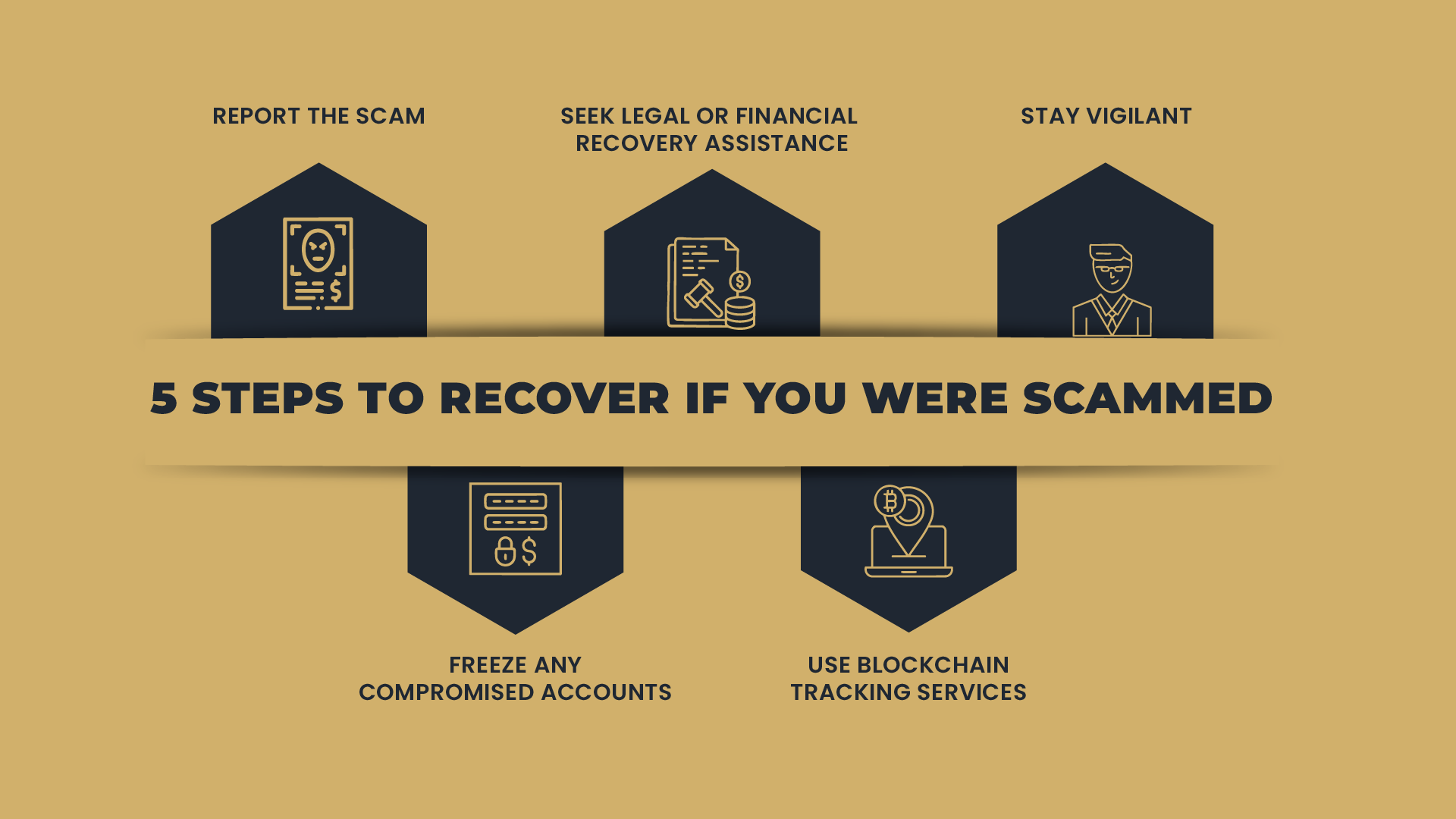
If you’ve already fallen victim to a fake crypto tax scam, act quickly to mitigate the damage. Follow these crypto scam recovery steps:
- Report the scam to Tax Authorities and Crypto Exchanges:
Immediately contact the IRS and your crypto exchange to report the scam. Quick action helps prevent further unauthorized transactions and minimizes losses. - Freeze Compromised Accounts:
Lock or freeze any affected crypto accounts to stop further fraud. Contact support and enable two-factor authentication for added security. - Seek Recovery Assistance from Crypto Fraud Specialists:
Consult crypto fraud recovery experts who can help trace stolen funds and work with legal authorities for asset recovery. - Use Blockchain Tracking Services:
Utilize blockchain tracking tools to trace the stolen funds, identify involved wallets, and explore recovery options. - Stay Vigilant and educate others:
Continuously monitor your accounts for suspicious activity and share your experience with others to raise awareness and prevent future scams.
Acting swiftly increases the chances of stopping further fraudulent transactions. Eventually recovering lost crypto from tax scams or stolen assets.
The Scam Usually Doesn’t End With One Payment
Fake tax scams are built to keep victims sending money for as long as possible. What begins as a simple withdrawal request often turns into repeated demands for “tax payments,” “wallet verification,” “account unlocking,” or “clearance fees.” Each payment is presented as the final step, while access to the funds continues to be delayed.
Scammers use pressure, urgency, and professional-looking communication to make the situation feel real. Fake support agents, fabricated documents, and constant reassurances are often used to convince victims that their money is still recoverable after one more payment.
Understanding how these scams operate is important because recognizing the pattern early can help prevent further financial loss. Preserving transaction records, wallet addresses, screenshots, and communication history can also help create a clearer view of how the fraud was carried out.
For individuals dealing with suspicious crypto transactions or investment-related fraud concerns,Global Financial Recovery offers blockchain investigation support and educational guidance focused on crypto scam awareness and fund tracing.
Need Help Recovering Stolen Crypto?
FAQs (Frequently Asked Questions)
Legitimate tax authorities never send unexpected tax notices via email, text, or social media demanding crypto payments. If you receive a tax demand:
- Check the official website of the tax agency and verify the claim.
- Contact the agency directly through their official phone number, not from links in emails.
- Look for spelling errors or unusual formatting in emails, as scammers often make small mistakes.
- Be cautious of high-pressure tactics where you’re threatened with immediate legal action.
No, legitimate tax agencies do not charge fees for withdrawing cryptocurrency. If a platform claims you must pay a tax fee before withdrawing, it is likely a scam. No official tax agencies, such as the IRS, UK HMRC, or others, operate this way.
If you suspect you have been scammed:
- File a complaint with the financial authorities, like the IRS, the SEC, or other relevant national bodies.
- Get in touch with your crypto exchange immediately to have the transaction flagged or resolved.
- Secure your wallets and any passwords associated with them if the scammer attempts further fraud.
Seek assistance from fraud recovery services such as Global Financial Recovery, which specializes in crypto scam cases.
Yes, crypto tax scams are increasing as more people invest in cryptocurrency. Scammers typically find victims through:
- Phishing Emails: Fake emails claiming to be from tax agencies.
- Social Media & Online Ads: Ads promising "easy tax solutions" or "urgent tax clearance" for crypto users.
- Fake Customer Support Calls: Impersonators pretend to be from crypto exchanges and request "tax payments" before withdrawals.
Recovering lost crypto is difficult but not impossible. You should:
- Act quickly and report the scam.
- Work with fraud recovery specialists who use blockchain forensics to track funds.
- Notify your bank or crypto exchange, as some transactions can be stopped if caught early.
Book A Free Consultation
Recent Posts


From case evaluation to financial investigation, Global Financial Recovery provides transparent guidance to help you understand your case and explore your options.